

3 Minutes
Bright screens grab attention. Longevity keeps it. Samsung Display's latest move—branded QD-OLED Penta Tandem—does both.
At the heart of this upgrade is a five-layer organic light-emitting stack built around a blue-emitter backlight. Samsung shifted from a four-layer design last year and introduced new organic materials to squeeze more performance out of the same underlying QD-OLED architecture. The result is higher peak brightness, improved power efficiency, and a sturdier panel life cycle.
Numbers matter. Samsung says the Penta Tandem structure yields about 30% better luminance efficiency and roughly double the lifespan compared with its earlier QD-OLEDs. The company recently secured the Penta Tandem trademark, though panels using this tech already appeared in several brands' QD-OLED TVs during 2025.
If you care about brightness, here’s the headline: TV panels can hit up to 4,500 nits on a 3% window. Monitors, tuned for desktop use, can reach peak levels around 1,300 nits on the same small-window measurement. At the same time, the panels earned VESA DisplayHDR True Black 500 certification—meaning deep blacks (0.0005 nits or lower) with sustained peak output up to 500 nits on a 10% window.
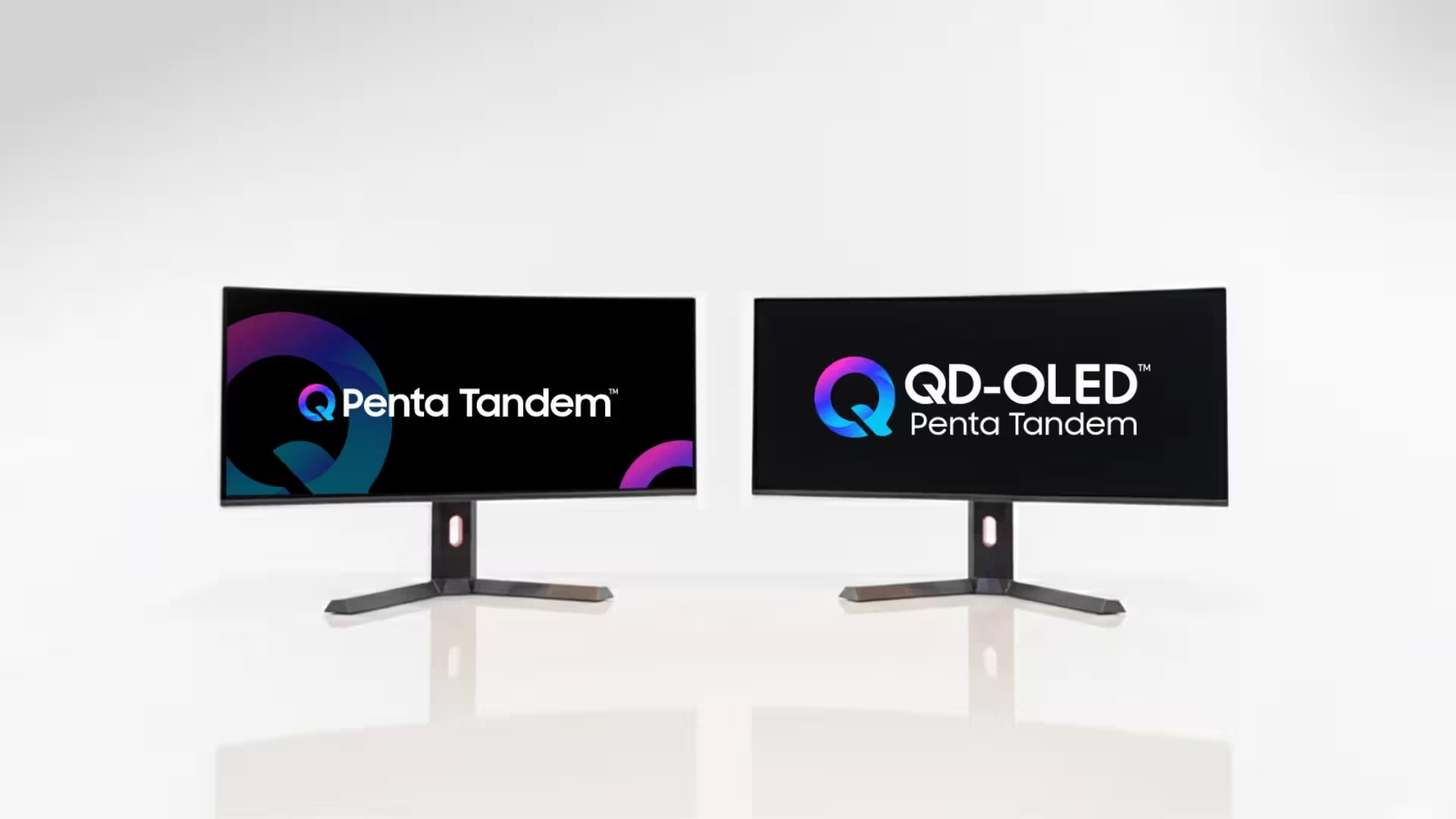
Gamers and pixel snobs should take note. Samsung’s 27-inch QD-OLED monitor panel, launched last year, packs 160 ppi—currently the highest pixel density among OLED gaming panels. Samsung Display also remains the only supplier mass-producing 27-inch 4K (UHD) self-emissive panels; competing 27-inch OLEDs from other vendors have generally topped out at QHD.
Samsung plans to roll Penta Tandem across its QD-OLED monitor portfolio this year. The company lists four active monitor panel formats:
- 27-inch UHD (3,840 × 2,160)
- 31.5-inch UHD (3,840 × 2,160)
- 34-inch WQHD (2,560 × 1,440)
- 49-inch Dual‑QHD (5,120 × 1,440)
“A multi-layer organic light-emitting structure is not simply about adding more layers,” Brad Jung, VP and head of the Large Display Marketing Team at Samsung Display, said, stressing that material selection and precise layer tuning are what make Penta Tandem effective. The company points to nearly five years of mass-production experience since 2021 as the foundation for this iteration.
So what changes for buyers? Expect brighter highlights without sacrificing the inky blacks OLEDs are known for, better efficiency for longer runtimes or lower power draw, and panels that should tolerate extended heavy use without the rapid aging that has dogged some earlier OLED implementations.
Will Penta Tandem make OLED the default choice for monitors and TVs? Maybe not overnight. But it removes another hurdle—brightness and longevity—bringing OLED one step closer to mainstream dominance on both desktops and living-room screens.










Leave a Comment
Comments
No comments yet. Be the first.