
3 Minutes
When memory costs spiked, smartphone makers did what cooks do with an unexpected grocery bill: they changed the menu. Cheaper, low-margin phones were quietly deprioritised, while high-end models — the ones that can carry fatter component bills — moved to the front of production lines.
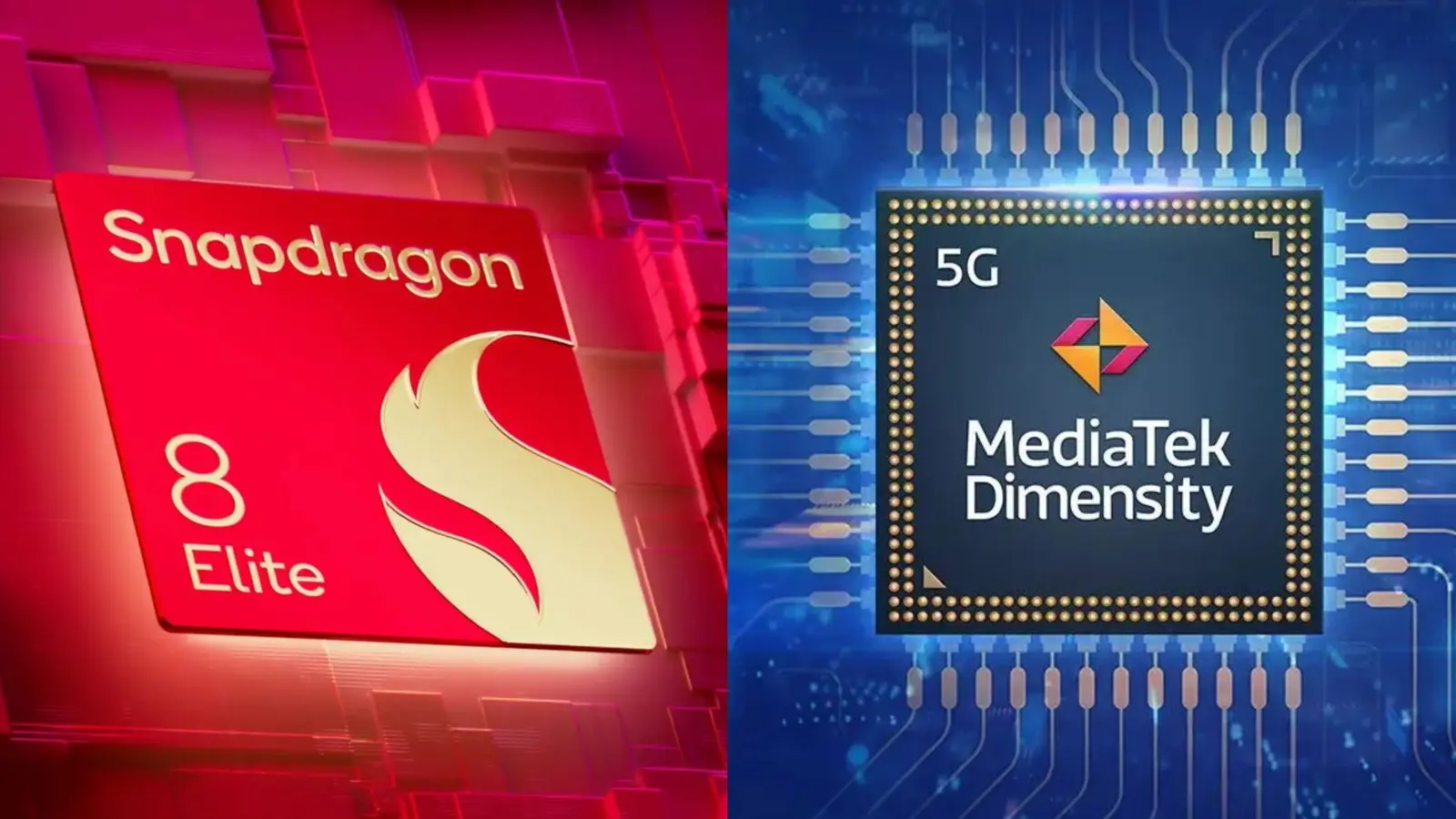
That shift is visible in Counterpoint’s latest shipment figures. MediaTek still leads, but its edge has narrowed. The vendor’s share slipped from 38% in Q1 2025 to 32% in Q1 2026 as weaker demand hit the entry and mid tiers where MediaTek is strongest. Engineers and brand teams are sticking with the current Dimensity 9500 in many designs, and a jump to a 9500+ looks unlikely. Instead, the mid-range Dimensity 8450 is doing steady work, powering popular Oppo Reno15 variants and buoying shipments in that segment.
Qualcomm, long the other heavyweight, also felt the squeeze. Its share fell year-on-year to around 23% in Q1 2026. Timing played a role: the Galaxy S26 series arrived late in the quarter, so many Galaxy sales landed only in the final month, and several models used Samsung’s own Exynos 2600 instead of Snapdragon silicon. At the same time, Snapdragon 4 and 6 series chips — staples of budget and mid-tier phones — are under pressure from the same market realignment that hobbled MediaTek.
.avif)
Samsung’s in-house strategy paid off this quarter. Exynos shipments rose versus Q1 2025 as more Galaxy phones relied on internal chips. It wasn’t just the 2600 flagship; midrange devices turned to the Exynos 1680 in the Galaxy A57 and the Exynos 1480 in the Galaxy A37, nudging Samsung’s chipset share up to roughly 7%.
Apple sits third in the chipset ranking, a position that largely mirrors its standing as a smartphone maker. Still, the company booked higher A-series shipments thanks to strong iPhone 17 demand. The iPhone 17e in particular outperformed its predecessor, the 16e, and that helped push Apple’s chipset share to about 19% in Q1 2026.
Then there’s Unisoc, quietly carving out space by partnering with Xiaomi’s Redmi line. The T7250 was a dependable choice for 4G-only models, while the newer T8300 helped Unisoc expand in the 5G segment. That combination kept Unisoc near the mid-teens in market share around 14%.
HiSilicon’s shipments dipped slightly, but the premium end still shows strong demand. Huawei continues to lean on Kirin 9000-class chips for flagship models like the Mate 80 series, so while volumes eased, the high-end presence remains meaningful.
The headline is simple: rising memory prices are reshuffling the chipset leaderboard, favouring premium silicon and in-house solutions while compressing volume at the budget end.
Numbers tell the story cleanly — MediaTek at roughly 32%, Qualcomm near 23%, Apple 19%, Unisoc 14%, Samsung about 7%, and HiSilicon at 4% in Q1 2026 — but the real question is how manufacturers will respond next. Will they double down on premium tiers, accelerate in-house chip plans, or find new ways to cut BOM costs? Keep an eye on the next quarter; the chipset map could look even more different by then.


Leave a Comment
Comments
No comments yet. Be the first.