
3 Minutes
Google is quietly rewriting the rules for sideloading on Android. Short pause. Big change.
Starting June 2026, most Android devices will receive a new system service that quietly lays the groundwork for verifying who builds apps. Think of it as a background gatekeeper: not intrusive at first, but critical when verification rolls into effect later this year.
July brings the first public pieces. Google will launch the Android Developer ID Status API globally and open early access to the Android Developer Console API. At the same time, limited distribution accounts will enter early access. These accounts are aimed at students, hobbyists and learners — developers who need to share apps with small test groups. You can share with up to 20 devices without a government ID or any fee.
In August, expect those limited distribution accounts and the refreshed Developer Console API to go global. Google will also unveil an advanced installation flow designed for power users who insist on installing apps from unverified developers. A concession to enthusiasts, yes. A security buffer, also yes.
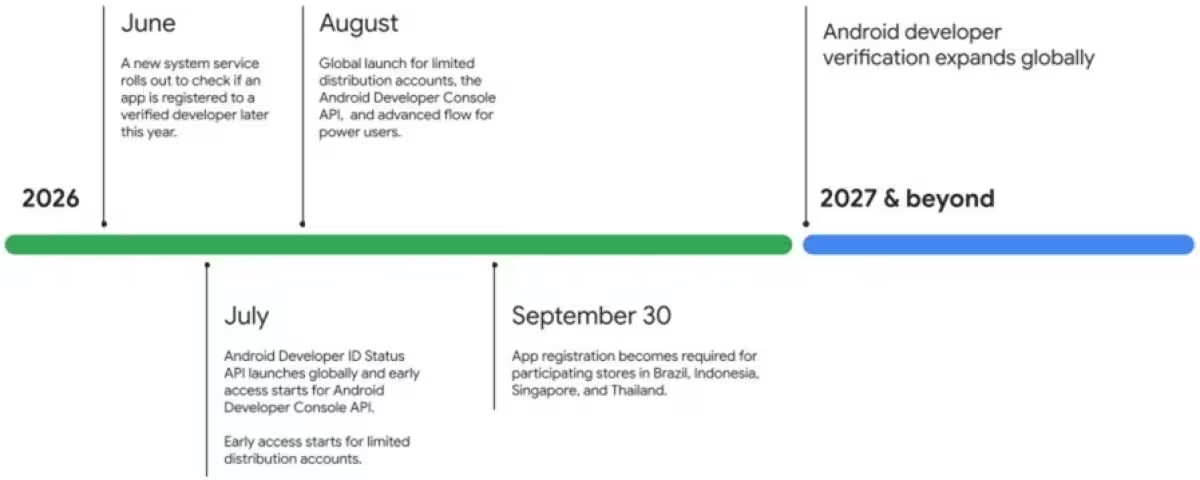
Then the rules get real. On September 30, new developer verification protections activate in Brazil, Indonesia, Singapore and Thailand. Participating app stores will be required to register apps and verify developers. That list includes Play Store, Honor App Market (Honor), Oppo App Market (OPlus), Galaxy Store (Samsung), V-Appstore (vivo), Palm Store (Transsion) and GetApps (Xiaomi). Users retain the ability to sideload unregistered apps, but only via Android Debug Bridge or the new advanced flow.
Google plans to expand the developer verification requirement globally in 2027, after collecting feedback from partners, developers and users. So this is a staged rollout, with room for adjustments as real-world friction points emerge.
If you distribute apps in Brazil, Indonesia, Singapore or Thailand through any of the listed stores, you must complete developer verification by September 30.
What does this mean in plain terms? Developers will need paperwork and onboarding sooner than many expected. App stores will take on more compliance duties. Users will see a trade-off: more protection against malicious installers, but potentially more friction when trying to run an app that comes from outside the verified ecosystem.
Will this curb malware disguised as apps? Will it slow independent experimentation? Both outcomes are possible. The safest bet is practical: developers and small publishers should start the verification process now, and power users should learn the new advanced flow if they want to keep sideloading without the 24-hour wait Google previously signaled.
Expect more updates as the timeline unfolds — and plan accordingly, because sideloading on Android is about to change in ways that matter.






Leave a Comment
Comments
No comments yet. Be the first.