
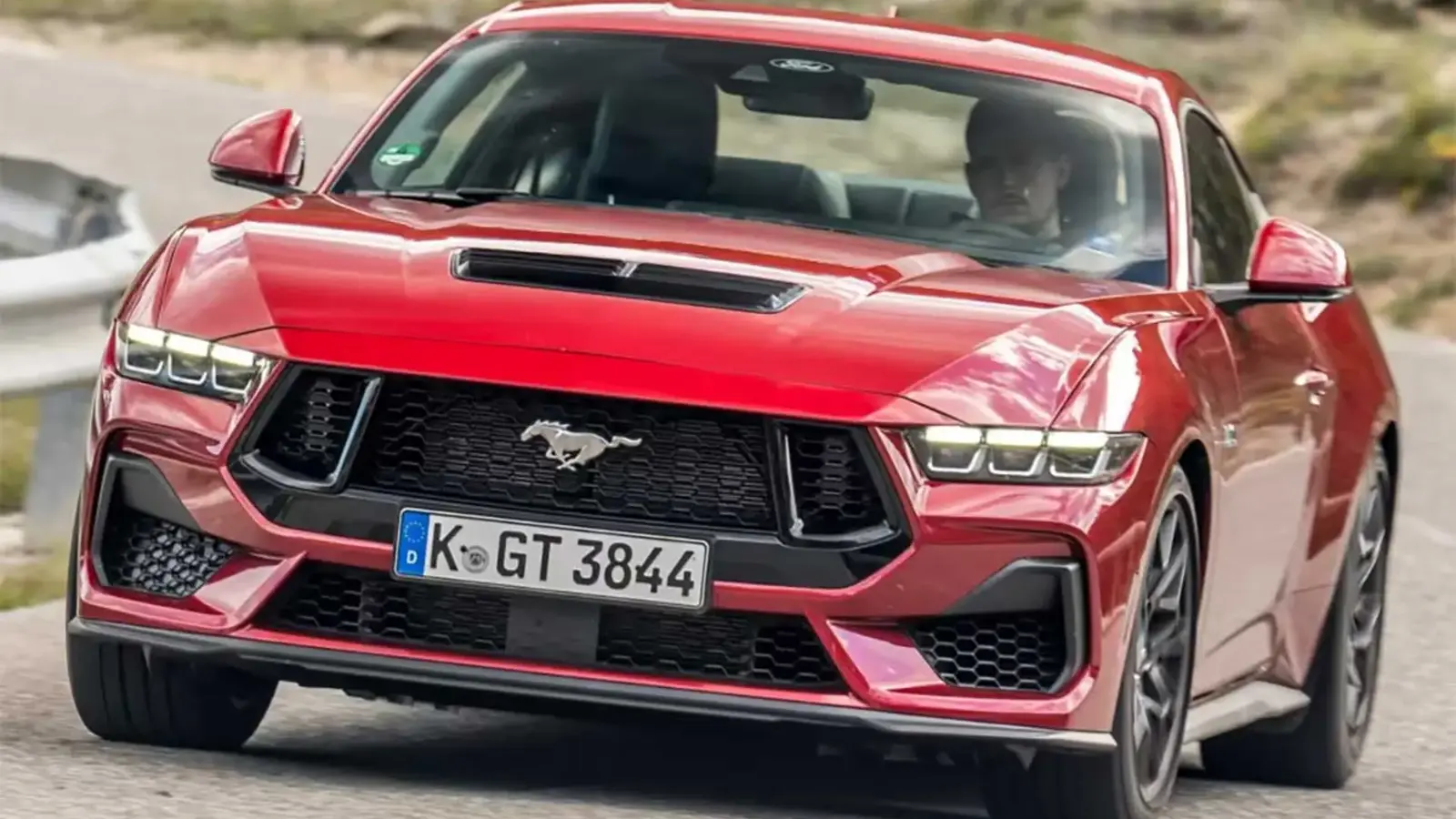
Why the Mustang remains rear-wheel drive
Since its debut in 1964 the Ford Mustang has built its reputation as a classic rear-wheel-drive muscle car. Even the latest halo model, the Mustang GTD, uses a 5.2-liter supercharged V8 delivering roughly 815 horsepower and 900 Nm of torque, with all that power directed exclusively to the rear wheels. That devotion to a front-engine, rear-drive layout is as much about heritage and driving character as it is about engineering.
Corvette and Charger show AWD is possible — but under different circumstances
Rivals have taken different technical paths. Chevrolet's 2023 Corvette E-Ray added a front-mounted electric motor to create an AWD system while keeping the V8 to the rear, producing a combined 655 hp and a 0-60 mph time around 2.5 seconds. General Motors even pushed hybrid performance further with high-power halo models like the ZR1X.
Dodge, too, has brought all-wheel-drive options to some modern Charger variants by using architectures that accommodate transfer cases and front drive components. Those examples demonstrate AWD is achievable — but only when the underlying platform and packaging allow it.

Packaging and platform limits: the core issue
The technical obstacle for Mustang AWD is simple: packaging. The current Mustang architecture uses a classic front-engine layout with limited space in the engine bay and under the nose. Adding the batteries, wiring, and electric drive units needed for a true front-axle hybrid or an AWD system requires room the Mustang's front end doesn't provide. By contrast, the mid-engine C8 Corvette freed up space up front for batteries and electric motors, making the E-Ray concept feasible.
Ford's platform also lacks the structural provisions and drivetrain paths to route power easily to the front wheels the way Dodge or General Motors can on their respective platforms. Retrofitting a conventional mechanical AWD system would require major changes to the engine bay, front subframe, steering, and packaging — essentially a redesign of the car.
What about a hybrid Mustang?
Ford CEO Jim Farley has hinted at a hybrid Mustang in the 2030 timeframe that could use a front electric motor to add instant torque and improved acceleration. But rumors of a near-term hybrid or a September 2025 plan for one- or two-motor front-axle solutions never materialized. The challenge remains: unless Ford rethinks the Mustang's architecture or develops a new platform with room for front-axle electrification, AWD is unlikely.
- Key constraint: insufficient physical space in the front for batteries and motors
- Platform limitation: no easy path for power transfer to the front axle
- Brand identity: many Mustang buyers still expect a V8, rear-wheel-drive experience

Market positioning and what could change
Ford faces a trade-off between preserving Mustang tradition and responding to market demands for electrification and performance AWD. If Ford decides to reinvent the Mustang around a new platform — or offers a secondary AWD-specific variant — all-wheel drive could arrive. For now, however, the Mustang remains true to its muscle-car roots: a rear-wheel-drive V8 icon.
"Until Ford changes the car's basic architecture, the rear wheels will continue to carry the V8's load," is a fair summary for enthusiasts tracking the Mustang's future.
The bottom line: AWD is technically possible, but not practically achievable for the current Mustang generation without substantial redesign. Enthusiasts can expect hybrid and electrified Mustangs eventually, but full-time AWD will likely require a platform-level rethink.


Leave a Comment
Comments
No comments yet. Be the first.