
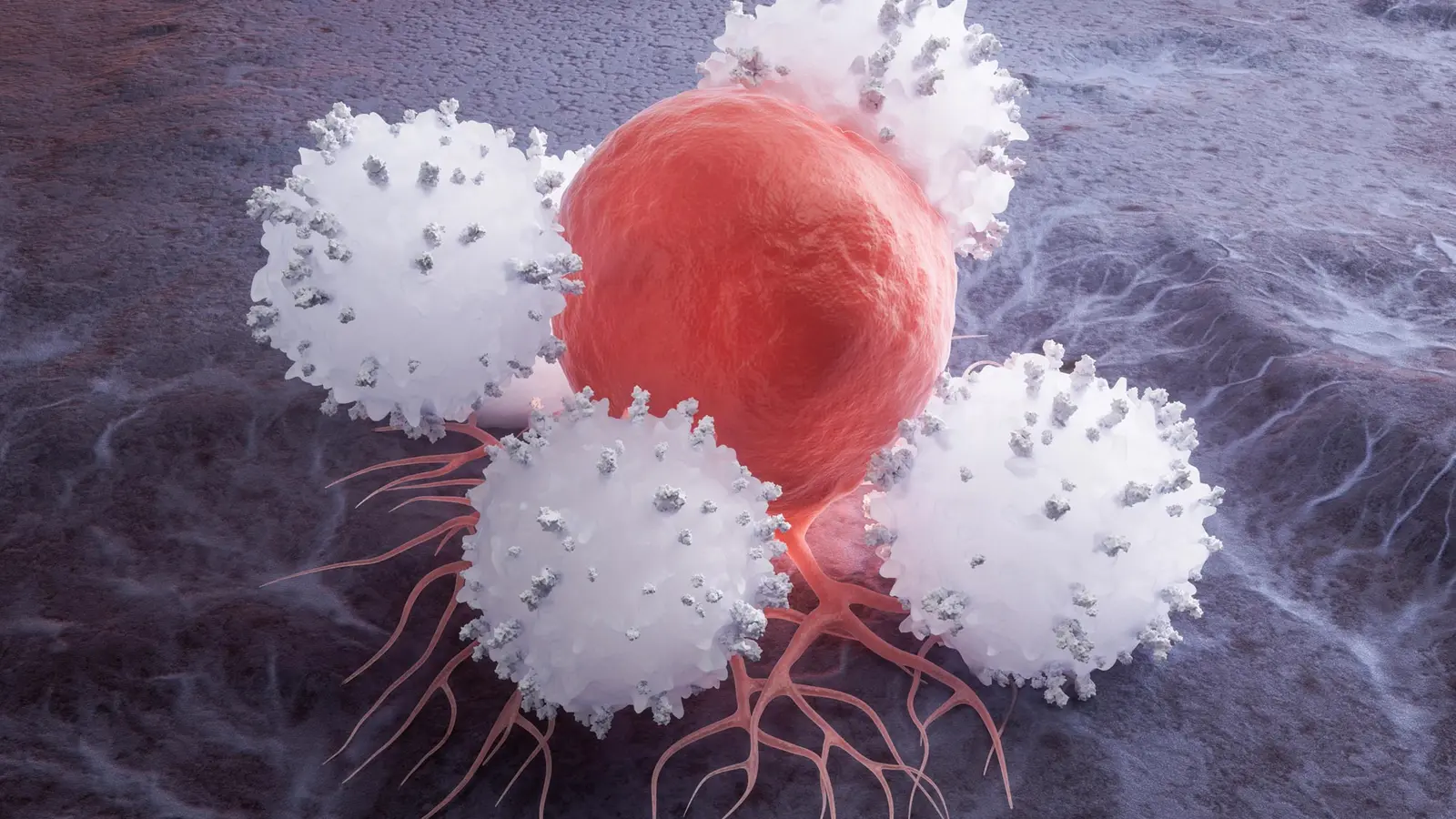
They never finish. Immature blood cells in aggressive leukemia get frozen mid-journey, multiplying without ever taking on a useful role until bone marrow is crowded out. Why some of these progenitors stall has been a stubborn mystery — but a new line of work from Iowa State University points to a surprisingly simple explanation: a missing molecular nudge, and the cellular conversation that must accompany it.
Raquel Espin Palazon and her team followed a thread that began with progranulin, a protein found across plants and animals and already known for roles in growth, inflammation and tissue repair. Progranulin also happens to be the most highly expressed gene in human macrophages, the big, hungry white blood cells that engulf pathogens. That raised a question: if macrophages crank out so much progranulin, what is it doing for them?
Studying progranulin in mammals is awkward. One gene makes the protein everywhere, so removing it disrupts many systems at once. The researchers turned instead to zebrafish — a model that offers genetic tricks not possible in mice or humans. Zebrafish carry two progranulin genes; one acts mainly in blood. By disabling that blood-specific copy, the team could watch what fails when progranulin is missing.
The answer revealed itself in developing myeloid cells, the precursors that give rise to macrophages and neutrophils. Without the blood-form of progranulin, those progenitors could not complete their transformation. Macrophages failed to appear in normal numbers, and the lineage that regenerates tissue after injury was notably impaired.
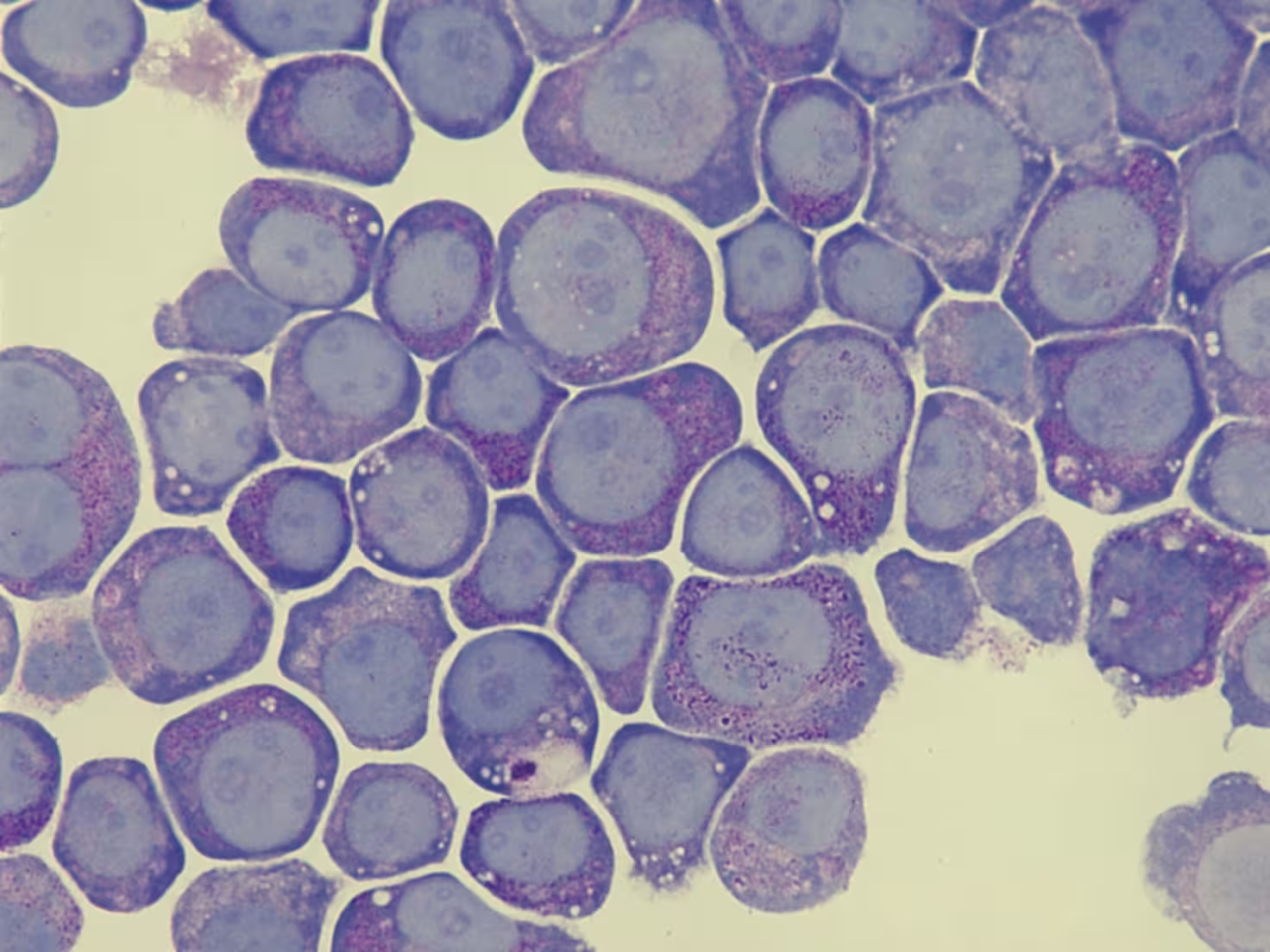
An image of human leukemia cells captured by Raquel Espin Palazon, an associate professor genetics, development and cell biology at Iowa State University.
That discovery suggested a provocative therapeutic idea: could progranulin coax immature leukemia cells to finish turning into normal, short-lived white blood cells and thus stop their destructive expansion? Initial tests in human leukemia cell lines were promising in spirit but inconsistent in outcome. Something else was missing.
Back in the fish, the team found the missing piece: JAK2/STAT3, a signaling pathway that ferries messages from the cell surface into the nucleus. Both progranulin and active JAK2/STAT3 signaling were required for progenitors to become macrophages. It was an interaction invisible in simple dish experiments but obvious in the intact animal.

When the researchers added progranulin to human leukemia lines that already displayed active JAK2/STAT3 signaling, the stalled cells began to differentiate. They resumed a normal life cycle, matured into functional white blood cells and then died as expected — eliminating the pool of cells that had been crowding the marrow.
Restoring the missing signal nudges malignant precursors into a normal life cycle, where they finish maturing and then die.
The result is elegant and, importantly, practical in concept: differentiation therapy that does not kill cancer cells directly but forces them to finish development. It echoes earlier approaches used in other blood cancers, but this mechanism — the combination of progranulin and JAK2/STAT3 activity — is a fresh target with distinct biology.
The study produced another insight with potential clinical ripple effects. Embryonic macrophages do not all arise the same way. In zebrafish the team distinguished two embryonic macrophage lineages; only one depends on progranulin plus JAK2/STAT3 and that population is better at regenerating damaged tissue. If one macrophage subtype is the real workhorse for healing, then efforts to manufacture macrophages for therapy will need to recreate that specific identity rather than assuming all macrophages are interchangeable.
That nuance matters. Laboratories can already grow macrophages in vitro, but translating those cells into regenerative medicine or immune therapies requires precise control over cell identity and function. The discovery of a progranulin-dependent pathway offers a biological lever to pull when designing such cells.
How soon could this become a treatment for leukemia? Not tomorrow. Espin Palazon is candid: moving from discovery to a drug or cellular therapy typically takes years, if not a decade or more, and will depend on sustained research and pharmaceutical interest. But the path is clearer now, because researchers know what two pieces need to be present for myeloid progenitors to mature.
More broadly, the work underlines why animal models still matter. The interaction between progranulin and JAK2/STAT3 emerged only in the living organism, where cell types, timing and a web of signals produce outcomes that isolated cells in a dish cannot mimic. Sometimes a complex problem needs an equally complex context to be solved.
There is a human story tucked into the science: therapies that coax cancer cells to become ordinary, harmless cells rather than obliterating them could reduce collateral damage to the body. It is an attractive, gentle idea — and now, thanks to fish, genes and a careful search for missing signals, it is a hypothesis the field can chase with purpose.

Leave a Comment
Comments
No comments yet. Be the first.