
Shipments tell one story; installed bases tell another. Counterpoint Research’s Q2 report — covering April through June — gives us a shipment-focused snapshot of where mobile operating systems landed during the quarter. Keep in mind: these percentages measure devices shipped in Q2, not active devices in the wild.
Globally, Android remains the uncontested leader at 75% of shipments, climbing from 73% in Q1. iOS sits in second with 20%, slipping from 22% as Apple’s share eases. And then there’s HarmonyOS: still a small player on the world stage but steady at 5%, unchanged from the previous quarter.

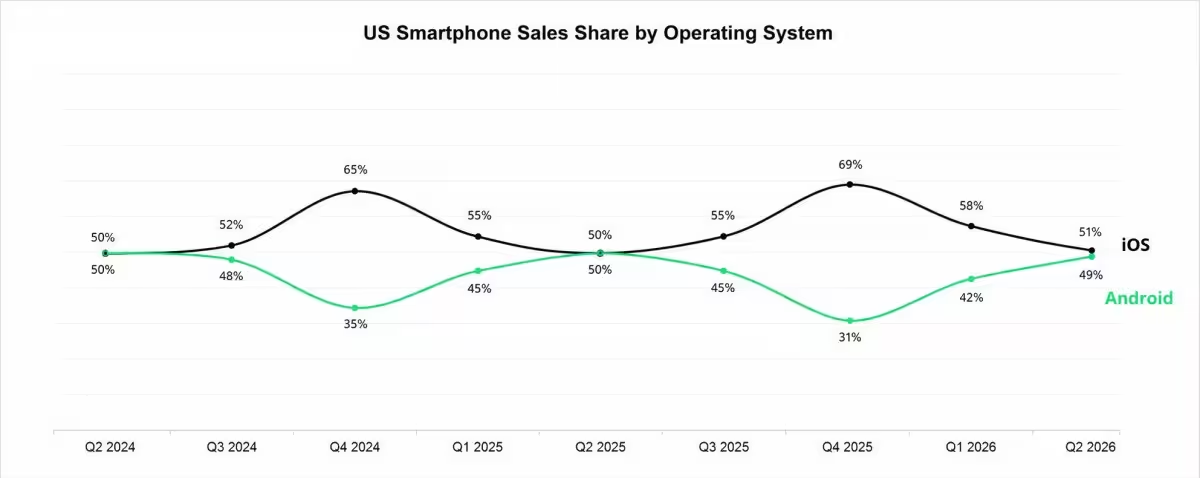
Look closer and regional fault lines appear. The United States is almost a toss-up now — iOS leads with 51% versus Android’s 49%. That’s a long way down from iOS’s high-water mark of 69% in Q4 2025. What changed? A mix of device refresh timing, competitive pricing, and stronger Android flagships; small shifts in consumer demand can tilt this market quickly.
China tells a different tale. Android overall fell to 58% from 63%, but Huawei’s HarmonyOS is gaining traction — up to 24% from 19% last quarter. Apple remains third at 18%, a slight rise from 17%. HarmonyOS’s growth reads like a local comeback: stronger domestic supply, deeper integration with Huawei hardware, and a consumer base that’s receptive to homegrown alternatives.

Then there’s India, where the picture is stark and decisive. Android commands 91% of shipments (up from 90%), while iOS trails at just 9% (down from 10%). Price sensitivity and the dominance of budget and mid-range Android models keep Apple’s share compact in a market driven by value-first purchases.

One more headline from the report: global smartphone shipments fell 11% year-over-year in Q2. The pain was felt heaviest in entry-level and mid-tier segments, particularly across emerging markets, where buyers are more likely to delay upgrades during economic slowdowns. Premium devices remain relatively resilient, but the overall shift reflects inventory correction and a maturing market.
Numbers like these are snapshots, not destinations. They map who moved units this quarter, who’s gaining footholds in specific regions, and who’s losing momentum. The next question is not just who ships most phones, but who can convert those shipments into lasting engagement and ecosystem lock-in. Pay attention: the battleground for users, not just units, is quietly changing.


Leave a Comment
Comments
No comments yet. Be the first.