
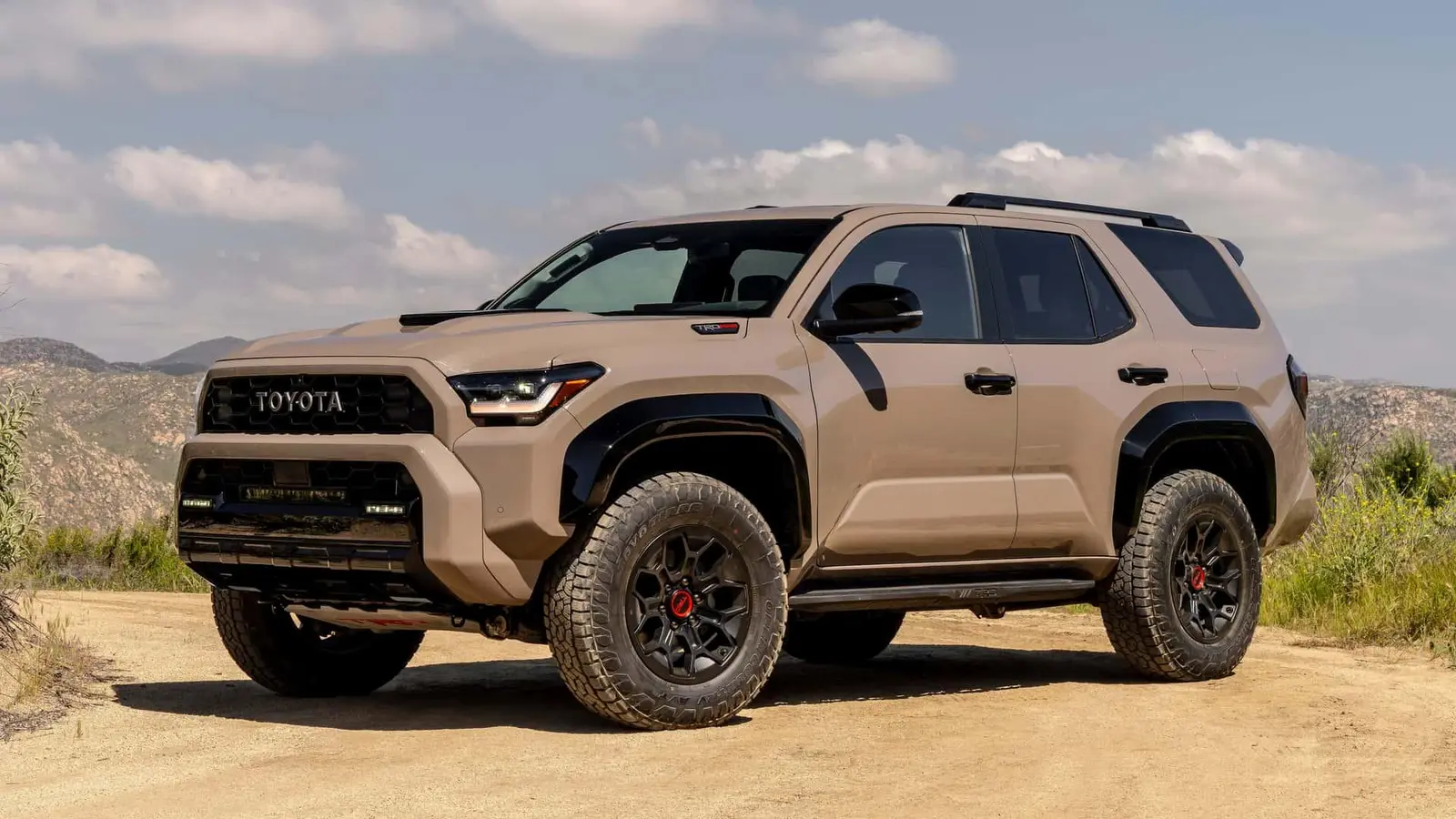

Why the 4Runner is Suddenly Dominating the Off‑Road SUV Market
Toyota's latest generation 4Runner has quietly shifted from niche off‑road icon to a mainstream bestseller — and sales figures now back that transformation. The new 4Runner blends classic body‑on‑frame toughness with modern technology, a diversified trim lineup, and the kind of reliability Toyota buyers trust. Those ingredients, combined with attractive pricing and expanding hybrid options, have pushed the 4Runner into the top ranks of global two‑wheel and four‑wheel‑drive SUVs.

Not just for hardcore off‑roaders anymore
Off‑road SUVs used to appeal mainly to a small community of serious trail enthusiasts. Today the audience is far broader: adventurous families, suburban commuters who want added confidence, and buyers who value long‑term resale and low ownership risk. The 4Runner's success shows how the segment has evolved into a key profit and identity driver for manufacturers.
Why the shift? Several forces are at play:
- Economic pressure and rising maintenance complexity push buyers toward durable, low‑risk models.
- Many customers value the symbolism of readiness, freedom, and outdoor lifestyle even if most miles are on pavement.
- Automakers are offering more comfort, convenience, and electrified options, making off‑road capable SUVs usable as daily drivers.

Toyota capitalized on these trends by leaning on the TNGA‑F architecture for body‑on‑frame strength while adding comfort, tech, and hybrid powertrains. The result: a vehicle that still handles serious trails but is also comfortable for school runs and long family trips.
Sales spike: hard numbers and what they mean
Toyota's US sales report for August 2026 highlights the 4Runner's dramatic growth. The model shifted 13,314 units that month — a year‑over‑year increase of 3% — and the year‑to‑date total reached 98,991 units, up roughly 71% versus the previous year. The hybrid 4Runner is pulling its own weight: 3,232 units sold in August (up 15.1%), with cumulative sales of 23,863 this year — a 109% surge.

To put that in context, during the same period Toyota sold 34,232 RAV4s, 9,991 Highlanders, and 4,052 Land Cruisers. Far from cannibalizing each other's sales, Toyota's SUV lineup appears to be reaching distinct buyer groups: RAV4 for mainstream crossovers, Highlander for larger families, and 4Runner for customers seeking rugged capability plus everyday usability.
What the numbers indicate
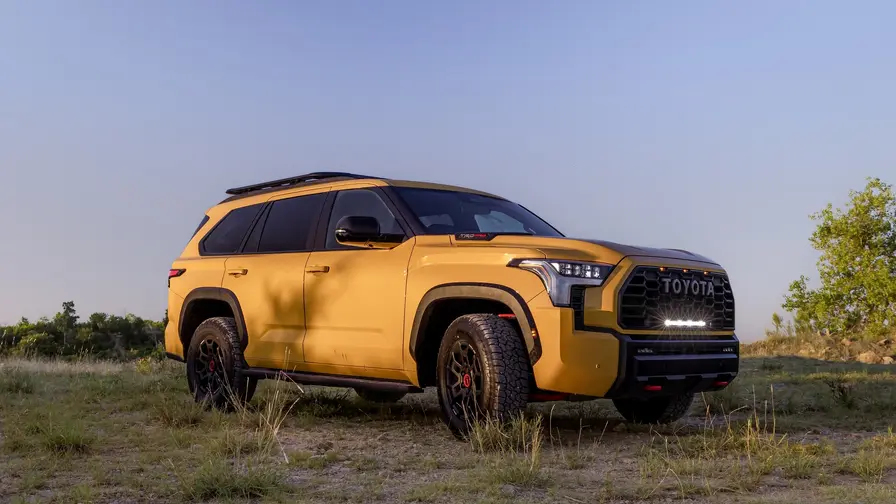
This level of demand suggests more than a temporary fad. Dealers have struggled to keep 4Runners in stock, and Toyota executives were reportedly surprised by how quickly inventory turned. The broader takeaway is that the definition of an 'off‑road SUV' has changed: it's no longer solely an enthusiast toy but a practical, lower‑risk purchase for a wider audience.

How Toyota balances ruggedness and modern expectations
Toyota hasn't abandoned the mechanical philosophy that made the 4Runner a legend. The vehicle retains a body‑on‑frame construction, a robust suspension tuned for rough terrain, and features designed for real off‑pavement capability. But Toyota has also modernized the package:
- Hybrid powertrain option (i‑Force Max) for stronger torque and better low‑end performance
- Advanced driver conveniences and infotainment systems
- Specialized trims for overlanding and trail use
This careful mix of heritage and modernization is why many buyers see the 4Runner as both an honest off‑roader and a credible daily driver.

Trim range and pricing: an SUV for different buyers
Toyota offers a wide spectrum of 4Runner trims for 2026, starting at $42,270 for the SR5 and climbing to $68,600 for the TRD Pro. That range matters: it positions the 4Runner as accessible to new buyers while providing high‑end, trail‑ready options for those who want more capability.
Key trims and highlights include:
- SR5 ($42,270): 8.0" infotainment, wireless Apple CarPlay/Android Auto, 7.0" digital instrument cluster, fabric seats; the SR5 is the only trim offering an optional third row for seven seats.
- TRD Sport ($48,750): sport suspension, 20" wheels, distinctive hood scoop.
- TRD Sport Premium ($54,110): SofTex front seats with heating/cooling, 14" touchscreen, heated steering wheel, JBL sound system with 14 speakers and a portable Bluetooth speaker on the dash.
- TRD Off‑Road ($50,690): locking rear differential, multi‑terrain select, crawl control.
- TRD Off‑Road Premium ($56,470): 14" display, 360° panoramic camera, optional articulation enhancement via a stabilizer disconnect.
- TRD Pro ($68,600): Fox QS3 adjustable shocks, performance exhaust, special SofTex interior options with red or black trim and tactical camo accents.
- Limited ($61,700): leather seats, sunroof, dual‑zone climate control.
- Platinum ($64,160): heated second‑row seats, head‑up display, rain‑sensing wipers, digital rearview mirror.
- Trailhunter ($68,200): factory‑fitted ARB roof rack, onboard air compressor, Old Man Emu forged shocks, bronze accents, and a raised air intake.
This tiered approach lets Toyota serve buyers seeking a basic, value‑oriented off‑roader up to customers who want a factory‑equipped expedition vehicle.

Powertrains: turbocharged and hybrid torque
The 2026 4Runner offers two versions of Toyota's 2.4‑liter turbocharged four‑cylinder paired to an 8‑speed automatic. The standard i‑Force engine produces 278 hp and 430 Nm of torque (about 317 lb‑ft). The i‑Force Max hybrid integrates a compact electric motor into the drivetrain and raises combined output to 326 hp and a substantial 630 Nm of torque at 1,700 rpm.
.webp "Toyota Rolls Out Honeycomb and Hot Honey for TRD Pro 2027")
Technical notes:
- Engine architecture: T24A‑FTS uses a single twin‑scroll turbocharger to reduce lag and improve airflow.
- Hybrid integration: the electric assist is built into the 8‑speed gearbox, improving low‑end response and towing performance.
- Drive layouts: Toyota offers rear‑wheel drive with an automatic limited slip, a part‑time four‑wheel drive with an electronic two‑speed transfer case, and full‑time AWD for higher trims.
- Towing: reinforced TNGA‑F chassis delivers a maximum towing capacity around 2,720 kg for most configurations.
- Speed limiter: top speed is electronically capped at roughly 180 km/h.
These powertrain choices reflect a broader reality: today's off‑road buyers expect strong on‑road manners, brisk acceleration, and towing competence in addition to trail capability.
Fuel economy: the trade‑off of toughness
Body‑on‑frame construction and heavier trail‑ready components still come with efficiency costs. EPA‑equivalent estimates for the standard rear‑drive 4Runner show figures near 11.76/9.04/10.69 L/100 km (city/highway/combined). Four‑wheel‑drive variants improve slightly to around 10.22/9.80/10.22 L/100 km. Trailhunter and certain Off‑Road trims show higher consumption, roughly 12.38/9.41/11.20 L/100 km.
The hybrid i‑Force Max narrows the gap, returning combined figures near 10.22/9.80/10.22 L/100 km. With a 71‑liter tank, range per fill averages between about 673 and 703 km depending on drivetrain and trim. Toyota estimates annual fuel costs for a 2026 4Runner at roughly $2,280 to $2,500.
In short: buyers prioritize capability and long‑term value over best‑in‑class fuel economy, but the hybrid option does improve the ownership equation.

Resale and ownership: where the 4Runner shines
One area where the 4Runner keeps pulling ahead is long‑term value. iSeeCars assigns the model an overall score of 8/10, with sub‑scores such as 8.1 for reliability, 8.9 for resale retention, and 7.0 for safety. Their analysis suggests an average service life of around 14 years or 320,000 km, with a nearly 48% chance of reaching that mileage milestone.
Depreciation estimates are favorable compared with many rivals. Over five years iSeeCars projects a loss of about $10,543 — roughly 25.4% of initial value — which is well below the declines seen by many competitors. CarEdge offers similar assessments: a five‑year depreciation near $13,442, annual maintenance roughly $2,097, and fuel costs around $10,045 for the same period.
Owner impressions back up the numbers. Edmunds reports an average owner rating of 4.1 out of 5 from 28 reviews. Common praises include the 4Runner's looks, powertrain variety, and ergonomic cabin layout. Criticisms tend to focus on a firmer ride, rising prices, and fuel consumption.
Competition and market positioning
.avif "Nearly New 2025 Toyota 4Runner TRD Off-Road Premium Fails to Sell at Auction — Should You Buy It?")
The off‑road SUV arena is more crowded than ever. Longstanding players — Jeep, Ford, Land Rover, and Toyota — remain influential. But newer or once‑unexpected entrants like Kia, Hyundai, and Subaru are also bringing fuel‑efficient hybrids and well‑equipped packages to market.
Toyota's competitive edge is straightforward: it sells capability while keeping ownership risk low. Reliability, strong resale value, and a broad trim array that ranges from pragmatic to purpose‑built help the 4Runner sit between pure trail tools and family SUVs.
What this means for prospective buyers
If you're shopping for an off‑road capable SUV with proven durability and solid resale prospects, the 4Runner deserves serious consideration. Key decision drivers:
- You want a vehicle that will hold its value and last many years.
- You need genuine trail capability but still want a comfortable, tech‑friendly daily driver.
- You value a wide choice of factory trims, from basic SR5 to expedition‑ready Trailhunter or TRD Pro.
Quote to remember:
'The 4Runner has become a rare blend of old‑school toughness and modern convenience — a vehicle that promises adventure without sacrificing everyday usability.'
Final take
Toyota's 4Runner resurgence reflects broad market shifts: buyers want capability, confidence, and long‑term value. Toyota responded by keeping the mechanical fundamentals intact while modernizing engines, adding a credible hybrid, and expanding trim choices. The result is a 4Runner that appeals to both dedicated off‑roaders and mainstream buyers seeking a durable, versatile SUV. With strong sales, healthy used‑car values, and a clear product ladder, Toyota has turned the 4Runner into one of the standout off‑road SUVs on the planet.
Key highlights:
- Strong year‑to‑date sales and hybrid growth in 2026
- Wide trim and price range for different buyer needs
- Hybrid option improves torque and urban drivability
- Body‑on‑frame durability at the cost of fuel economy
- Exceptional resale value and long‑term ownership potential
Whether you plan to camp, tow, commute, or simply want a vehicle that can handle unpredictable roads, the 4Runner now represents a compelling, lower‑risk route into genuine off‑road capability.
Discussion
Leave a Comment
Comments
No comments yet. Be the first.