
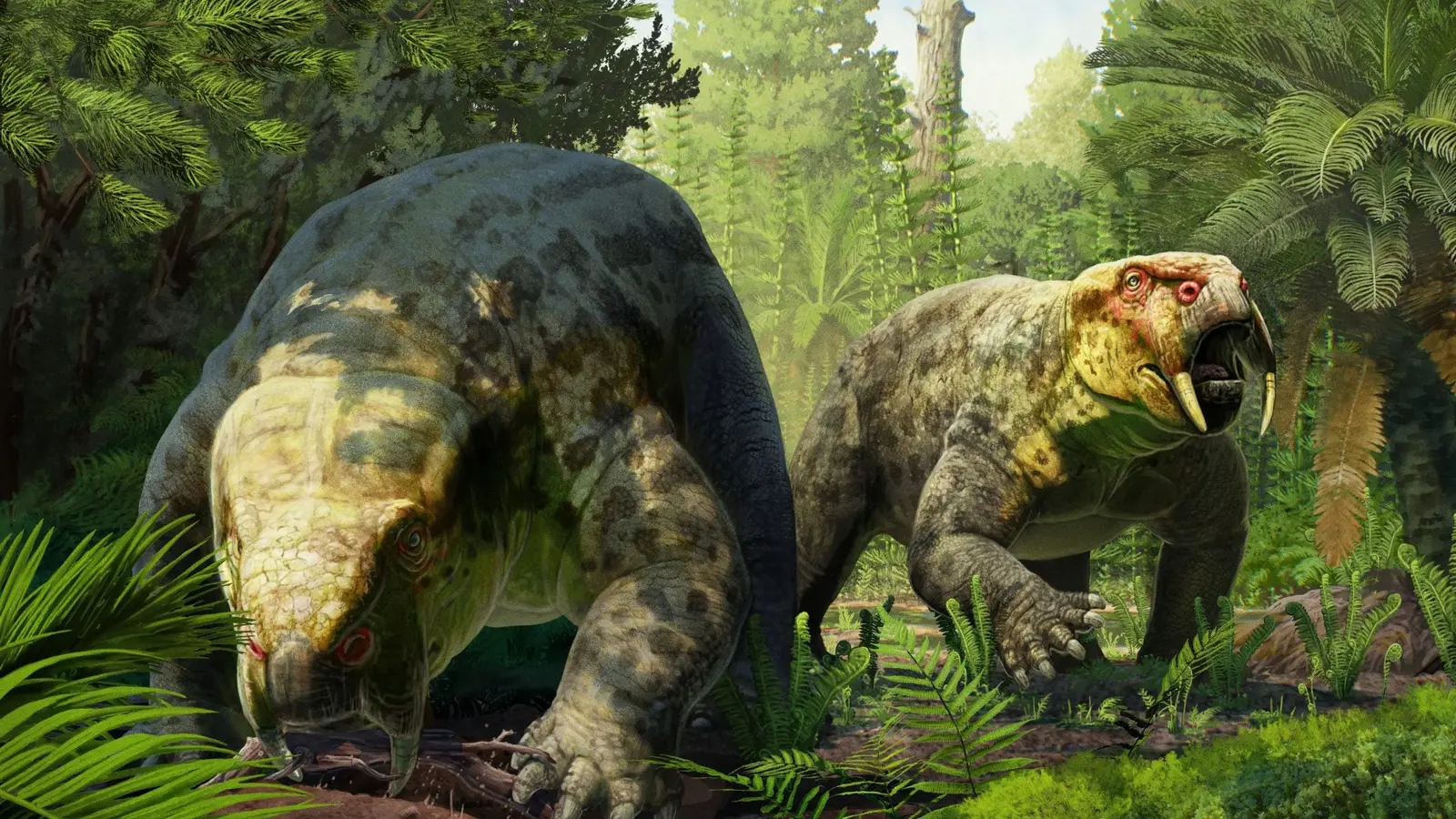
A skeleton sat in a London museum for more than six decades, its true identity quietly waiting to be told. Then researchers opened the drawer, scanned the bones, and realized this was not just another fossil—it was a species no one had recognized before.
They named it Dinodontosaurus isiyavamanda, honoring the Wamanda people whose land yielded the bones. Short name. Big implication. This tiny change rewrites a chapter of deep time: evidence that the same dicynodont lineage once stalked both what are now eastern Africa and South America roughly 240 million years ago.
Mike Day, curator of non-mammalian tetrapods at the Natural History Museum in London, calls the find a reminder that museums are active research sites, not storage units. The specimen had been in the collection for over 60 years, he notes, but only now has its place in the family tree been clarified. Museum drawers, he says, can be as revealing as fresh digs.
One of the authors, Nigel Larkin, first examined the skeleton while working on his MSc in 1994 and suspected it was new to science. He waited nearly three decades to publish. Why the delay? Part patience, part progress. Modern tools changed the game. Micro-CT scanning and digital reconstruction let scientists peer inside bone without cutting it open. Collaboration across continents, faster and easier than in the 1990s, brought specialists together to interpret subtle anatomical details.
Front of cranium and the lower jaw.
There is more work to do. Much of the Tanzanian material—especially the postcranial skeleton, the bones below the skull—remains unstudied. The research team plans to compare that anatomy directly with South American specimens to test how closely related they really are. They also want to model biomechanics: how did Dinodontosaurus and other large herbivores move, feed, and share resources in the Triassic world?
Why care about a name and a few bones? Because these fossils are strands in a much larger tapestry. Finding the same genus on separate continents supports the idea that continental positions and ecosystems allowed wide dispersal during the Triassic. It sheds light on how multiple big plant-eaters could coexist—each occupying slightly different niches—long before mammals dominated terrestrial food webs.
And there is a human element. Naming the species is a nod to the people whose landscapes hold these ancient stories. It is also a testament to patient scholarship: a discovery that began in a graduate thesis and, with new techniques and global teamwork, grew into a fuller, richer tale of life on Earth 240 million years ago.
Keep looking in the museum cabinets. There are more secrets waiting—silent witnesses to eras we are only starting to understand.

Leave a Comment
Comments
No comments yet. Be the first.