
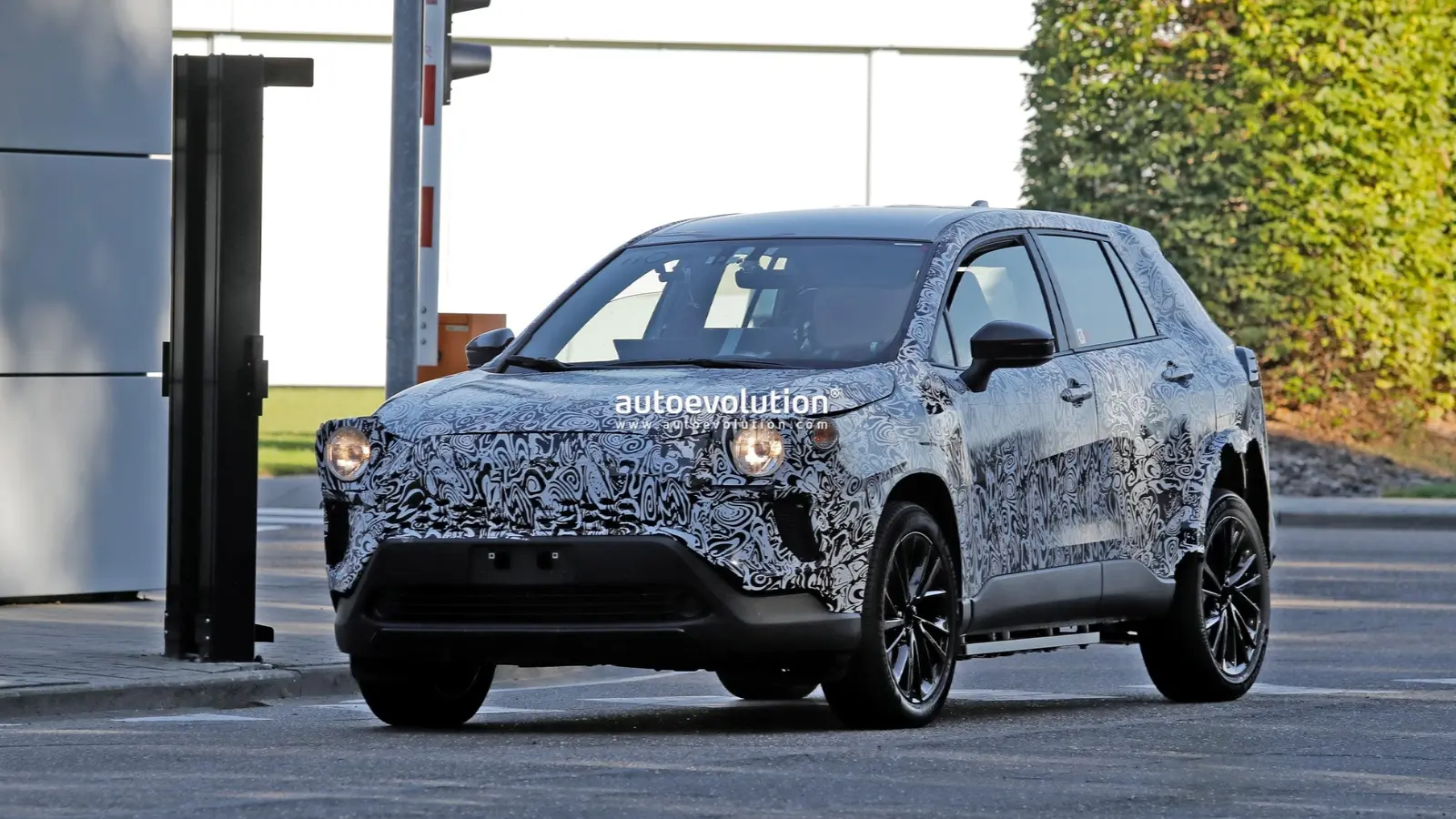
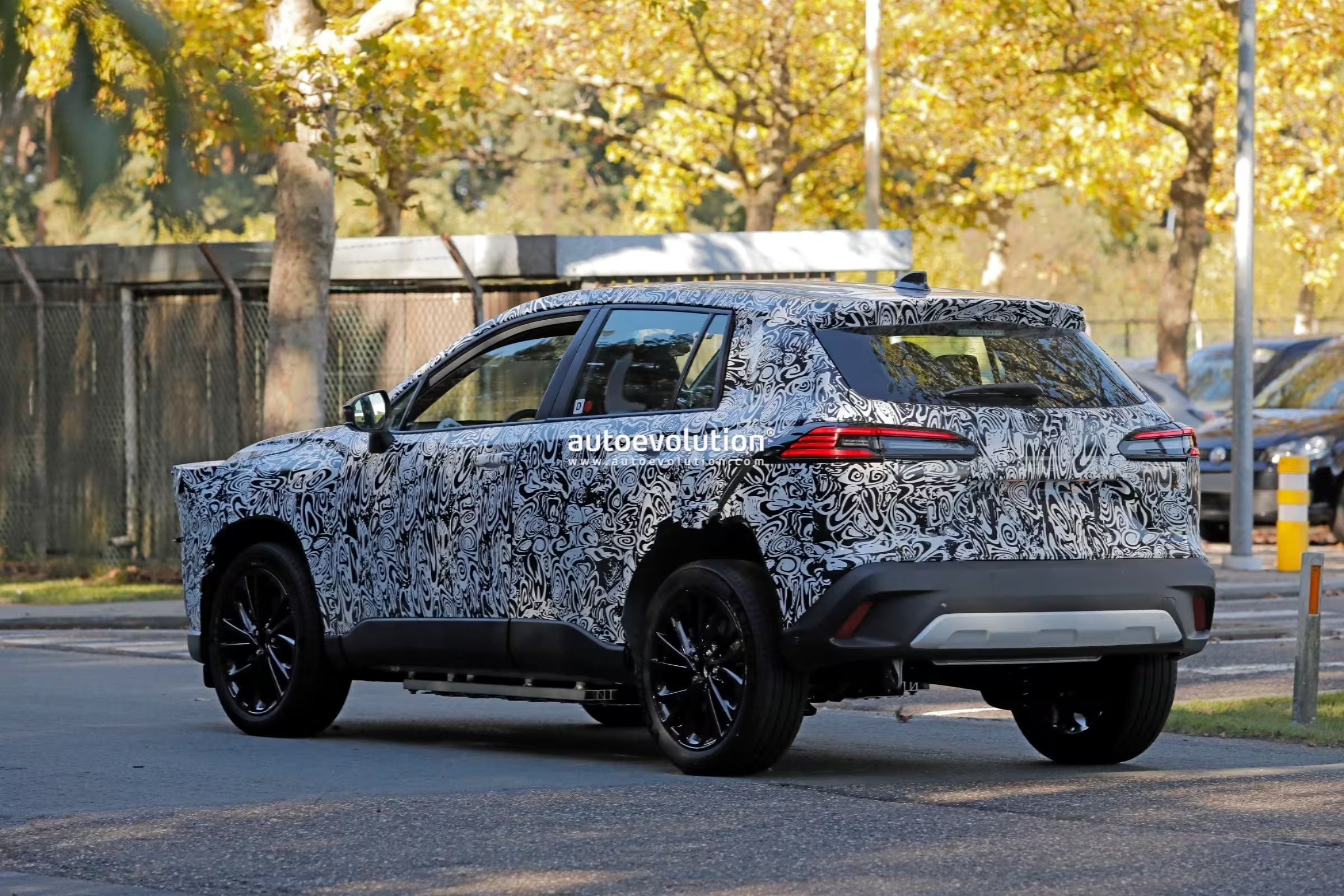
Toyota is developing a single, flexible vehicle architecture intended to carry electric, plug-in hybrid, and conventional hybrid powertrains without compromising interior packaging. A Corolla Cross-shaped test mule photographed in late 2026 offers the first public glimpse of that multi-pathway vehicle platform and how Toyota’s engineers are prioritizing packaging and modularity.
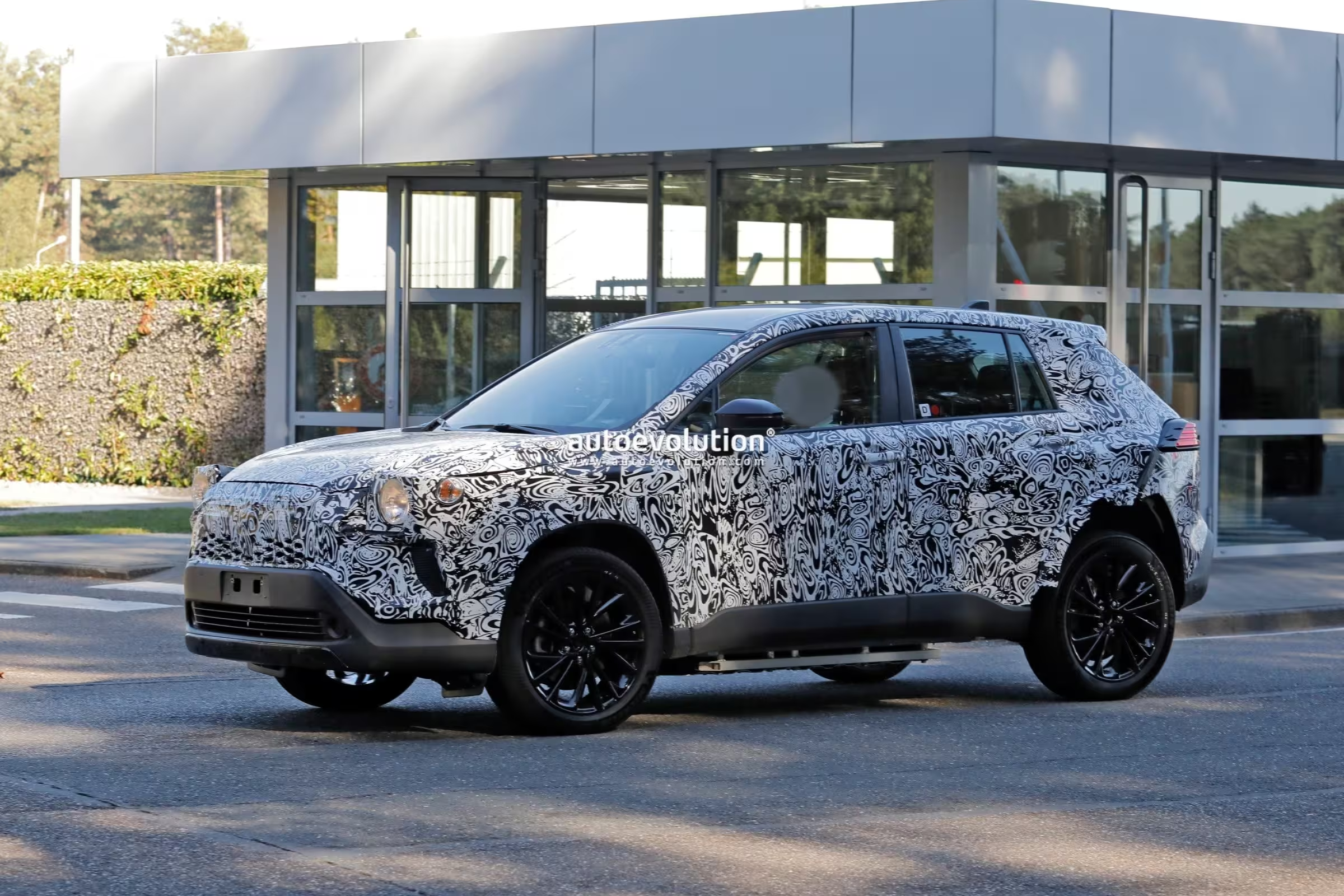
Platform aims and the visible clues on the mule
The prototype wears a shortened donor body, unusually high ride height, and a high-voltage battery that protrudes beneath the floor, all clear signs this is a test mule rather than a production shell. The absence of exhaust outlets on the pictured example eliminates a plug-in hybrid powertrain for this particular vehicle and points to an EV-focused test program. Visually the mule sits between the Yaris Cross and the Corolla Cross in size, though the round headlights and extensive underbody changes underline that the bodywork is largely a disguise over significant structural modifications.
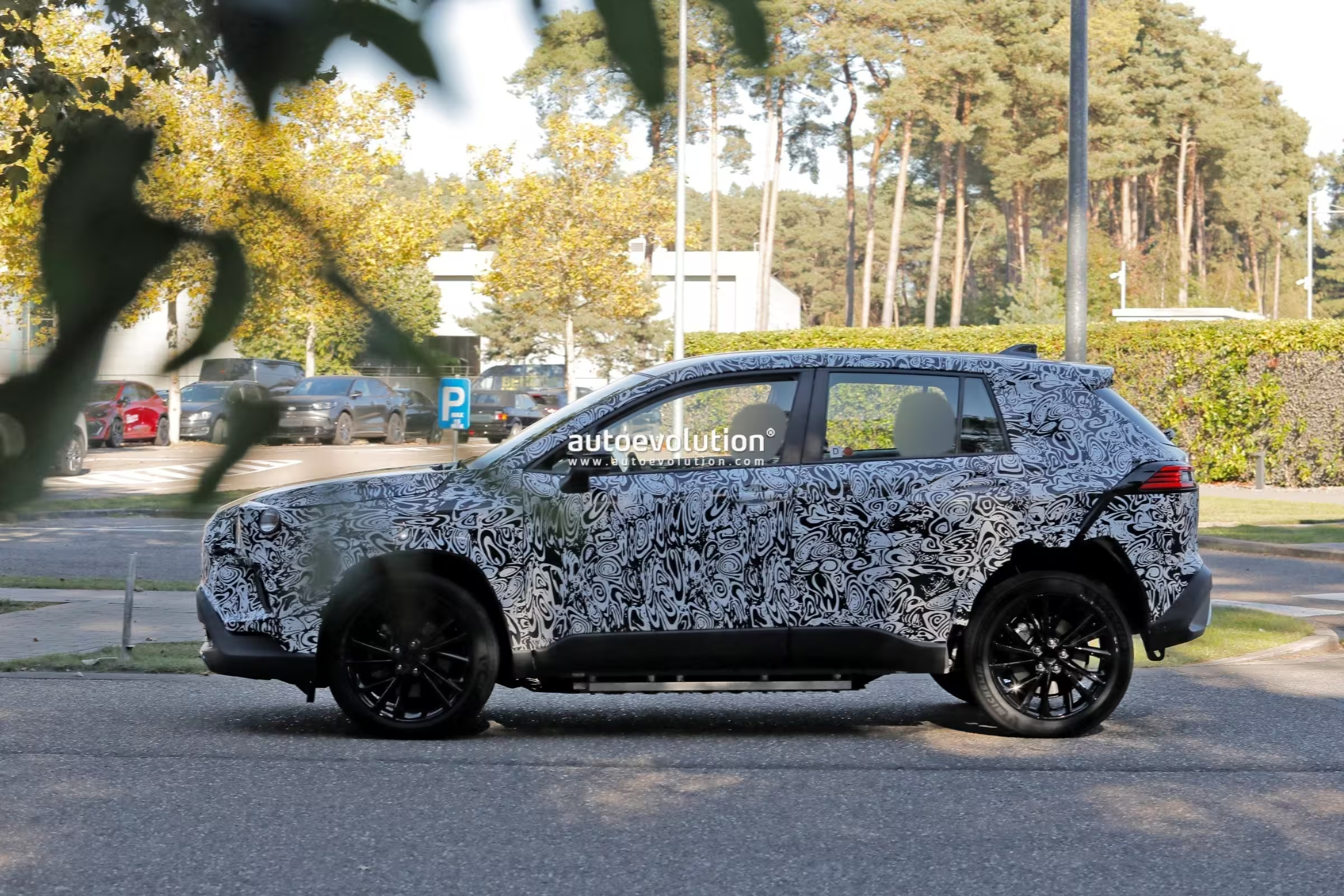
Toyota confirmed in October 2026 that it is developing a multi-pathway platform intended to accept full-electric, plug-in hybrid, and conventional hybrid drivetrains without reducing interior space or capability. The company has argued that a lower-profile engine and hybrid package will allow more dynamic proportions and help reduce aerodynamic drag, one of several levers it expects to use to improve efficiency.
Powertrain details Toyota has disclosed
Among the confirmed mechanical items is a new 1.5-liter inline-four engine offered in both naturally aspirated and turbocharged variants. Toyota has set a target of 15 percent improved fuel economy for the hybrid application of this package; the automaker attributes that gain to lower aerodynamic drag due to the lower-profile layout, reduced electrical losses, improved thermal management, and lower mechanical friction.
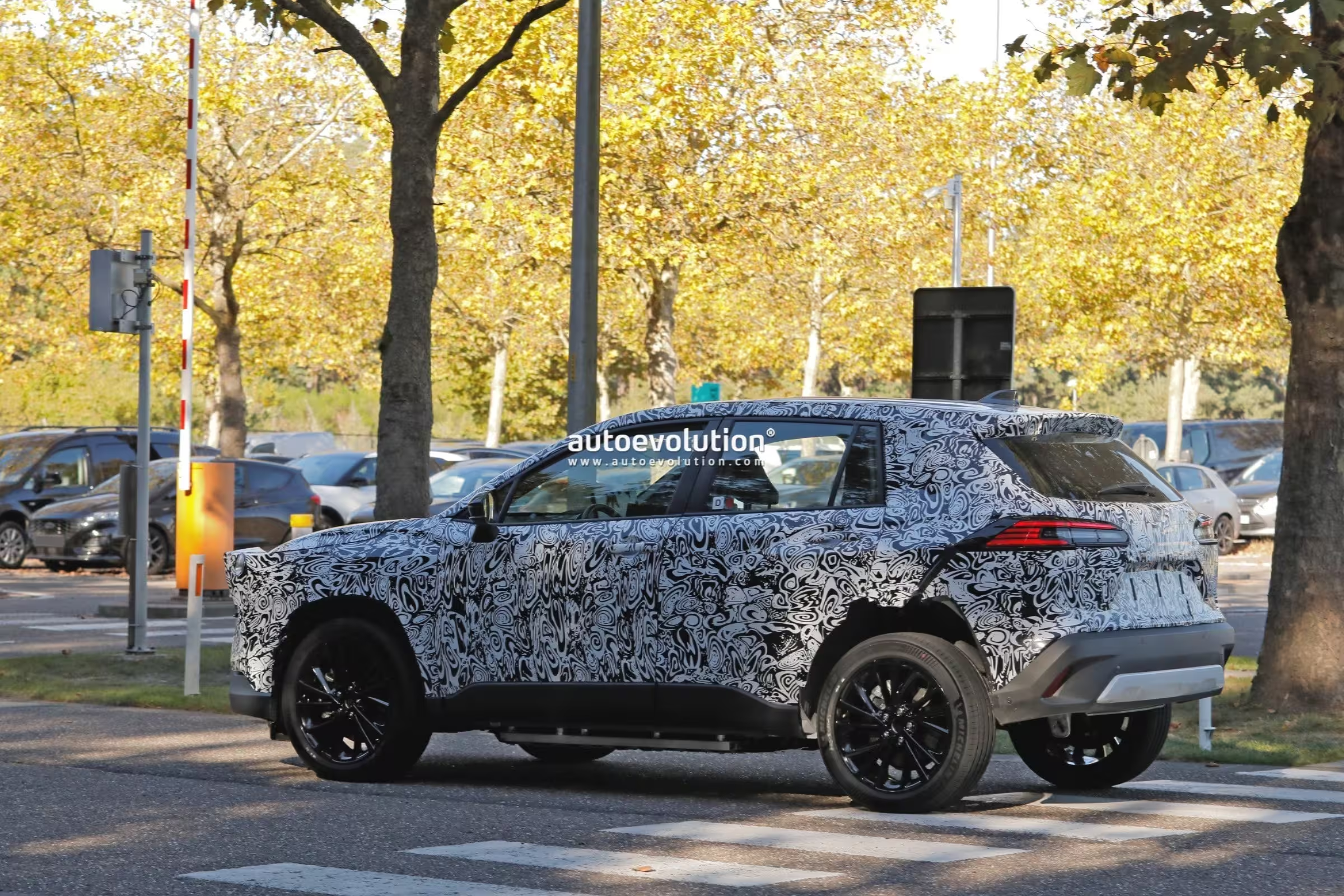
On the hybrid system itself, Toyota says the components are smaller and more compact across the board, including electric drive units, inverters, and power control units. The multi-pathway strategy is also intended to spread development and production investment over larger combined volumes, which helps explain why a small crossover is a sensible target for markets such as Europe and Japan.
Toyota’s recent battery-electric family, known as e-TNGA, has used 400-volt electrical systems. The company is developing 800-volt hardware and says 800 volts could be adopted for the new platform, though Toyota has not confirmed a final system voltage for production models. Separately, Toyota says hybrids and plug-in hybrids under the multi-pathway approach are being developed with renewable and carbon-neutral fuels in mind.
The company and industry observers note that regional energy circumstances and customer preferences vary widely. While some northern European countries favor battery-electric vehicles, other markets continue to rely heavily on internal combustion powertrains. Toyota also notes demand for range-extended electric vehicles in some regions; range-extended EVs use an internal combustion engine to generate electricity for the battery and electric motors rather than driving the wheels directly.
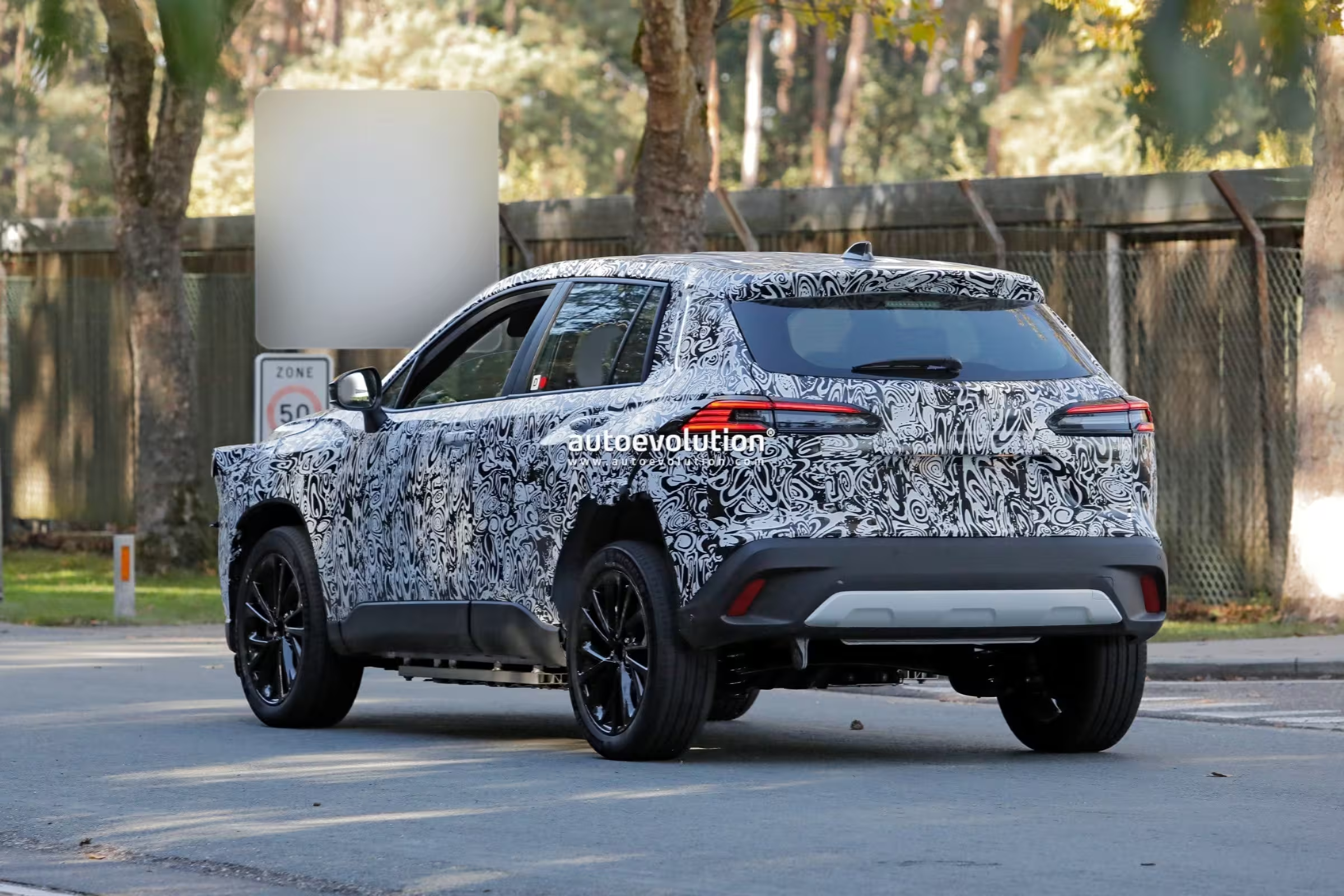
At this stage the photographed Corolla Cross test mule is more a window into Toyota’s immediate engineering priorities than a preview of final exterior design. It is conceivable the architecture could allow a single model to sit between or replace the Yaris Cross and the Corolla Cross in some markets, but Toyota has provided no production commitments tied to this specific mule and it remains too early to say how the line-up will evolve.
.avif "Toyota Highlander Goes All-Electric as Toyota Accelerates EV Transformation by 2028")

Leave a Comment
Comments
No comments yet. Be the first.