

Imagine a doctor pointing at an image of a narrowed coronary artery and saying: we can open that. Quick fix. Immediate relief. The promise of a stent is simple and persuasive—restore flow, ease chest pain, get patients back to living. But a new, unusually long follow-up of the COURAGE trial throws cold water on the idea that fixing the plumbing necessarily prevents future heart attacks or early death.
Researchers led by Neel Butala at the University of Colorado tracked 959 people from the original COURAGE study using linked health records, watching outcomes for a median of 15 years and, for some patients, as long as 25. Participants had been randomized years earlier to either optimal medical therapy alone or to medical therapy plus percutaneous coronary intervention (PCI), the balloon angioplasty often reinforced with a metal stent.
The headline result is stark in its clarity: the estimated 25-year cumulative incidence of death or heart attack was 93.3% in the initial PCI group versus 91.0% in those treated with medical therapy only. Statistically, that gap did not hold. In plain terms, starting treatment with an artery-opening procedure did not lower the long-term combined risk of heart attack or death in this cohort.
Does that mean stents are useless? Not at all. PCI can rapidly relieve angina and, in the right emergency setting—such as a large, acute heart attack—can be lifesaving. What this extended follow-up clarifies is the distinction between symptomatic benefit and durable reduction in major cardiovascular events when PCI is used as an initial strategy for stable coronary artery disease. Symptom control and event prevention are related, but they are not the same target.
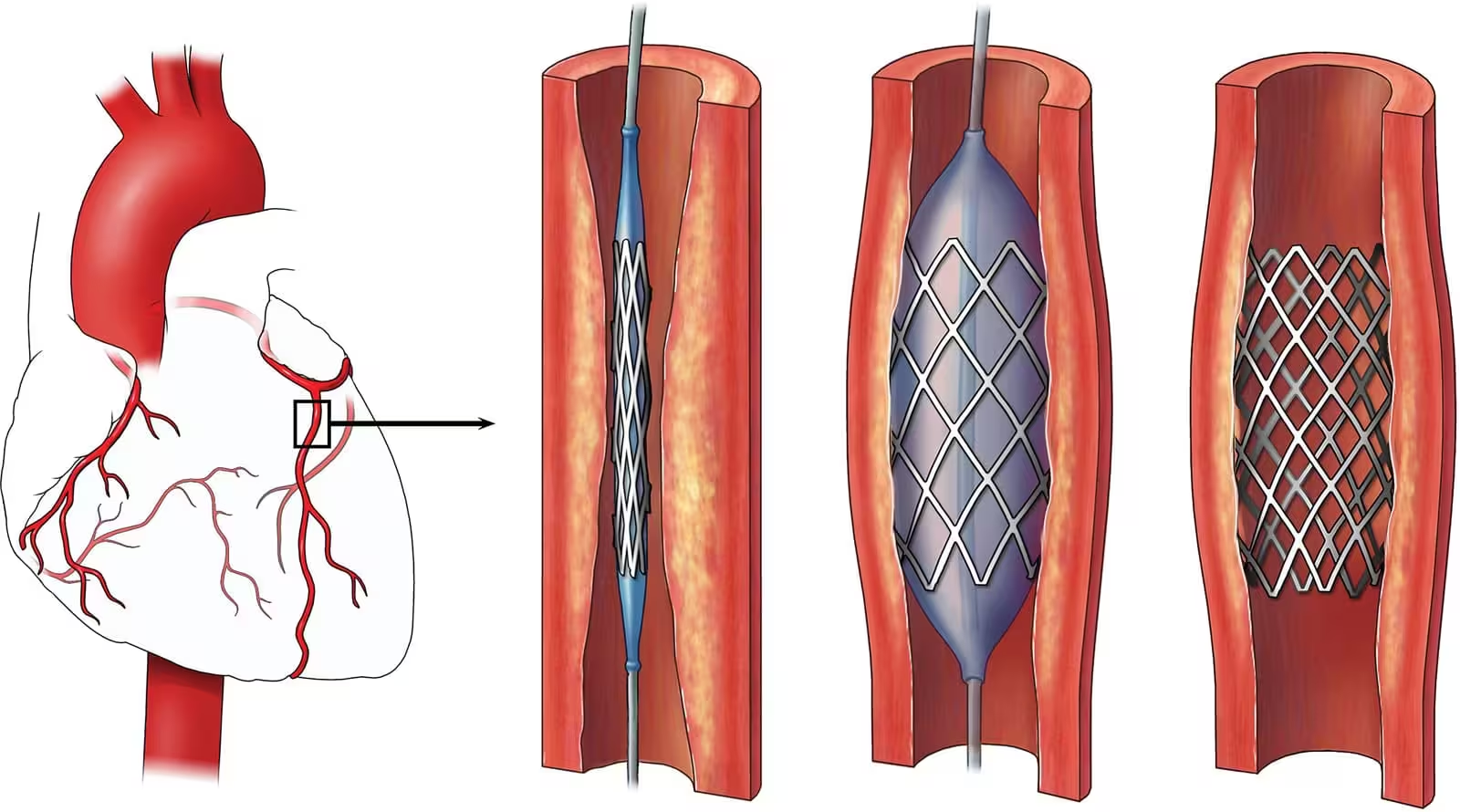
Opening a narrowed artery eases symptoms, but in this long-term analysis it did not translate into a measurable reduction in heart attacks or death compared with medical therapy alone.
The study has strengths worth noting. Few trials offer quarter-century windows into patient outcomes. This analysis adds heart attacks to previously reported long-term survival data, giving clinicians and patients a broader view of what an initial PCI strategy accomplishes over decades rather than months.
Still, important caveats shape how the findings should be used in practice. This follow-up was observational and post hoc, relying on routine health records to identify events. The linked cohort included many veterans—patients with higher baseline risks than the broader COURAGE population—which could skew absolute rates. The investigators also acknowledged limits in how reliably heart attacks can be captured by administrative records, though results aligned with event data validated during the original randomized trial.
Practically speaking, the study nudges shared decision-making toward nuance. For a patient with stable coronary disease whose primary concern is chest pain or exertional limitation, PCI may remain an attractive option for symptom relief. For someone whose main objective is to reduce the long-term risk of heart attack or early death, this long-term analysis suggests that optimal medical therapy alone is not inferior in that specific outcome set.
The findings were published in JAMA and presented at the 2026 American Heart Association Scientific Sessions, and they will almost certainly shape conversations in cardiology clinics. When a narrowed artery is found, the question should not be only whether it can be opened, but whether opening it will change the hard outcomes that matter most years down the line.
In the end, medicine is about trade-offs: immediate relief versus long-term benefit, procedural risk versus conservative management, individual symptoms versus population-level outcomes. This study doesn’t close the book on stents. Instead, it asks a pointed, timely question—what do we hope to gain decades from today when we choose one path over another?


Leave a Comment
Comments
No comments yet. Be the first.