
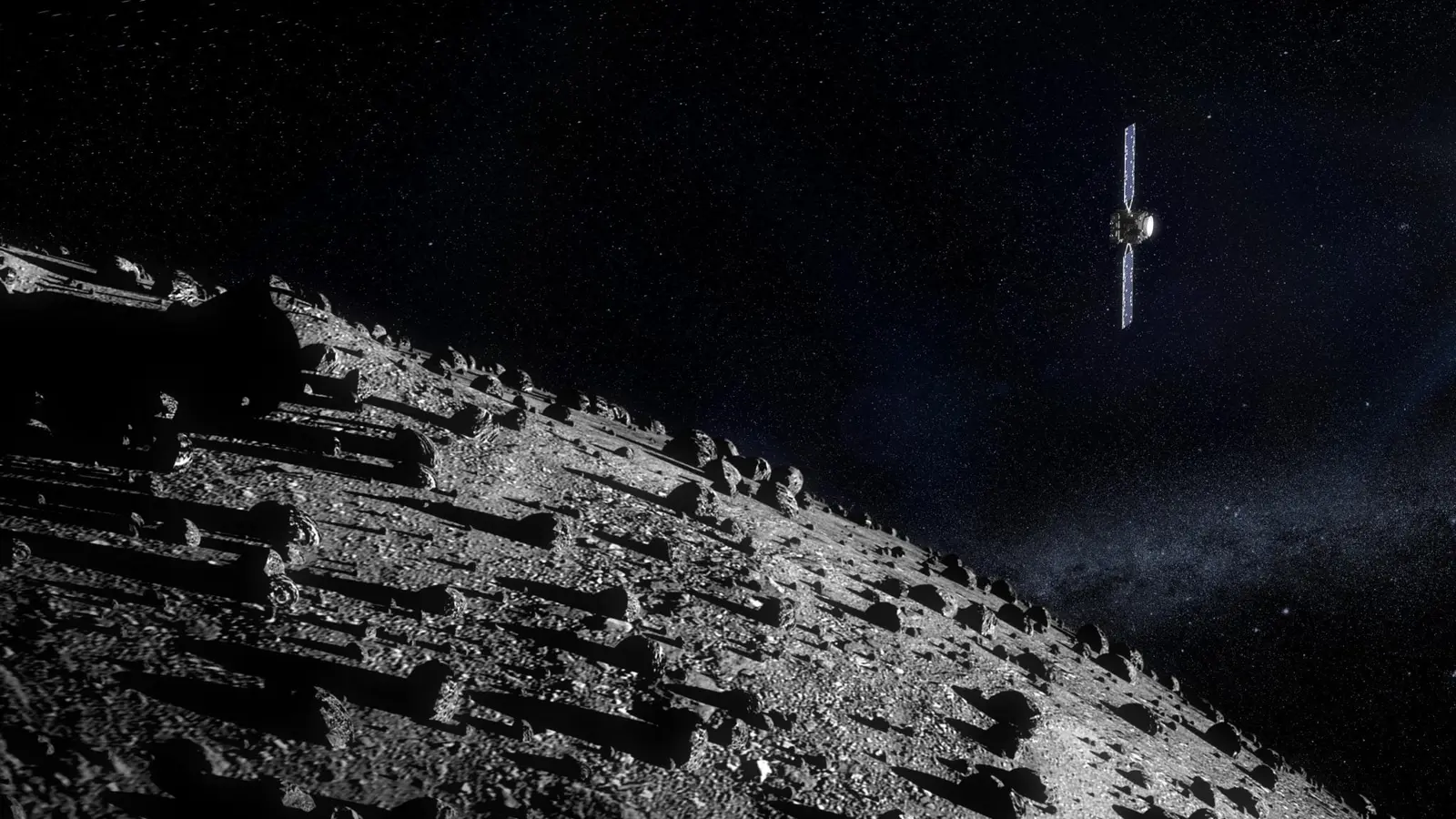
It looks like a moonscape with attitude: jagged boulders, strange ridges and a face we’ve never seen before. Hera’s first close-up of the Didymos system doesn’t just fill a photograph — it raises questions about how violent collisions reshape small worlds.
The European Space Agency’s Hera spacecraft has returned its initial detailed view of Didymos and its tiny companion, Dimorphos. Taken from roughly 60 km away by Hera’s monochrome framing camera, the image shows Dimorphos mostly in shadow while the much larger Didymos — about 780 meters across — is revealed in surprising texture and complexity. Previously, DART offered a look at the side of Didymos that faced the impending impact. This is the other side, and it feels like a new world.
Scientists were instantly struck. “Wow,” said Patrick Michel, Hera’s principal investigator. Short words. Big reaction. The image confirms a central equatorial ridge seen before, but that’s where familiarity ends: the surface is peppered with boulders, craters of varying sizes and what appear to be grooves or raised ridges slicing across the terrain. The scene is messy. In a good way.
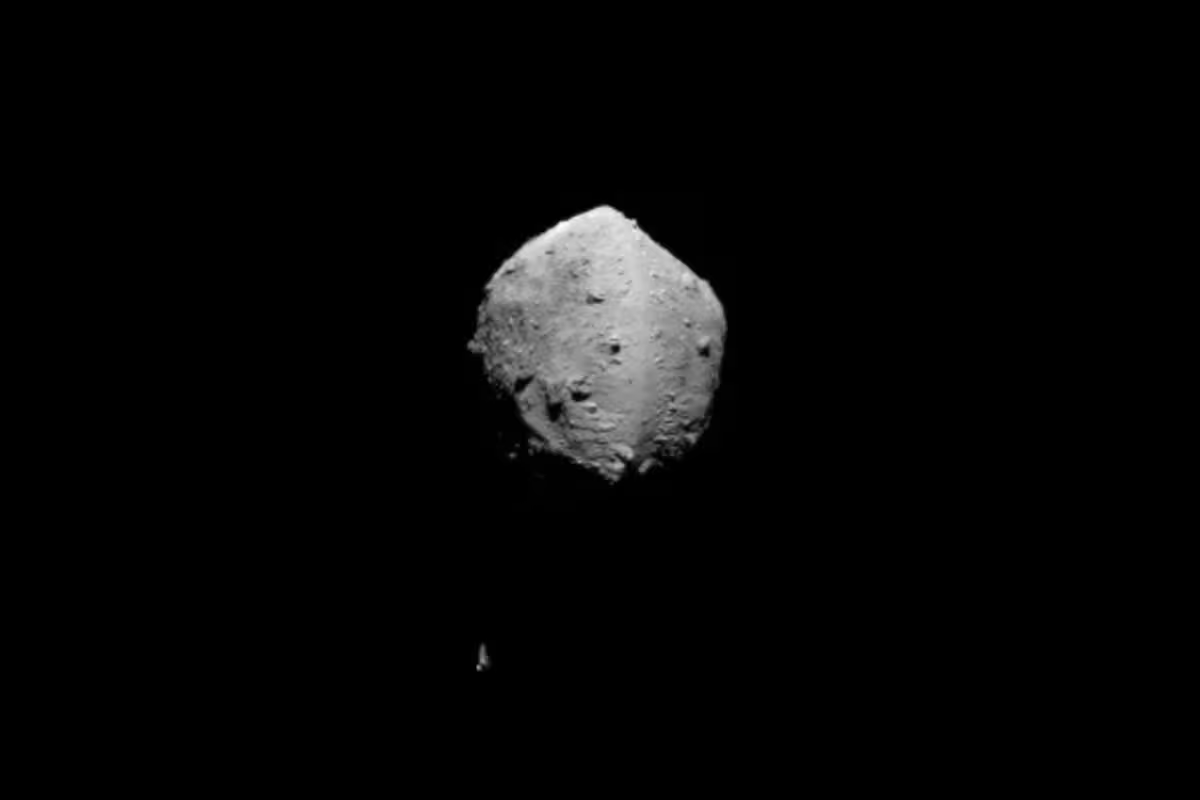
Hera’s first close-up view of the Didymos binary asteroid system, acquired by its monochrome Asteroid Framing Camera from 600 km away, giving a novel view of the larger Didymos asteroid. The smaller Dimorphos asteroid is largely hidden in shadow. This smaller body was impacted by NASA’s DART spacecraft on September 26, 2022, shifting its orbit around Didymos.
Messy, because that mess could be a record of the September 26, 2022 DART collision that intentionally struck Dimorphos. NASA’s 580 kg DART spacecraft slammed into the 151-meter moonlet at about 6.1 km/s and shortened its orbital period around Didymos by roughly 33 minutes — a clear demonstration that humans can nudge celestial traffic. But collisions don’t only change orbits; they fling material. Could ejecta from Dimorphos have crossed the roughly one-kilometer gap and peppered Didymos with new regolith and rocks?
Hera’s team thinks it’s possible. Mission scientist Michael Küppers notes that a substantial amount of debris was likely lofted from Dimorphos during the impact and some of that material may have come to rest on Didymos’ surface. Untangling which features are primordial and which were delivered by ejecta is now a central puzzle for scientists poring over Hera’s imagery.
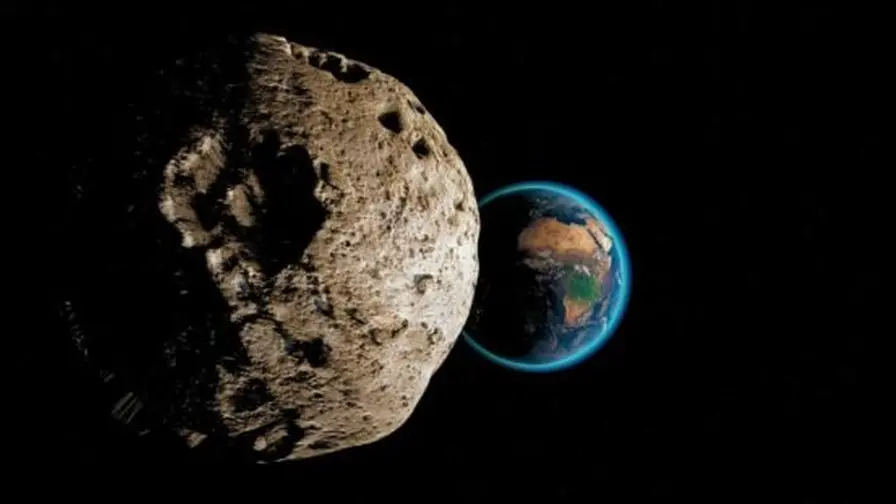
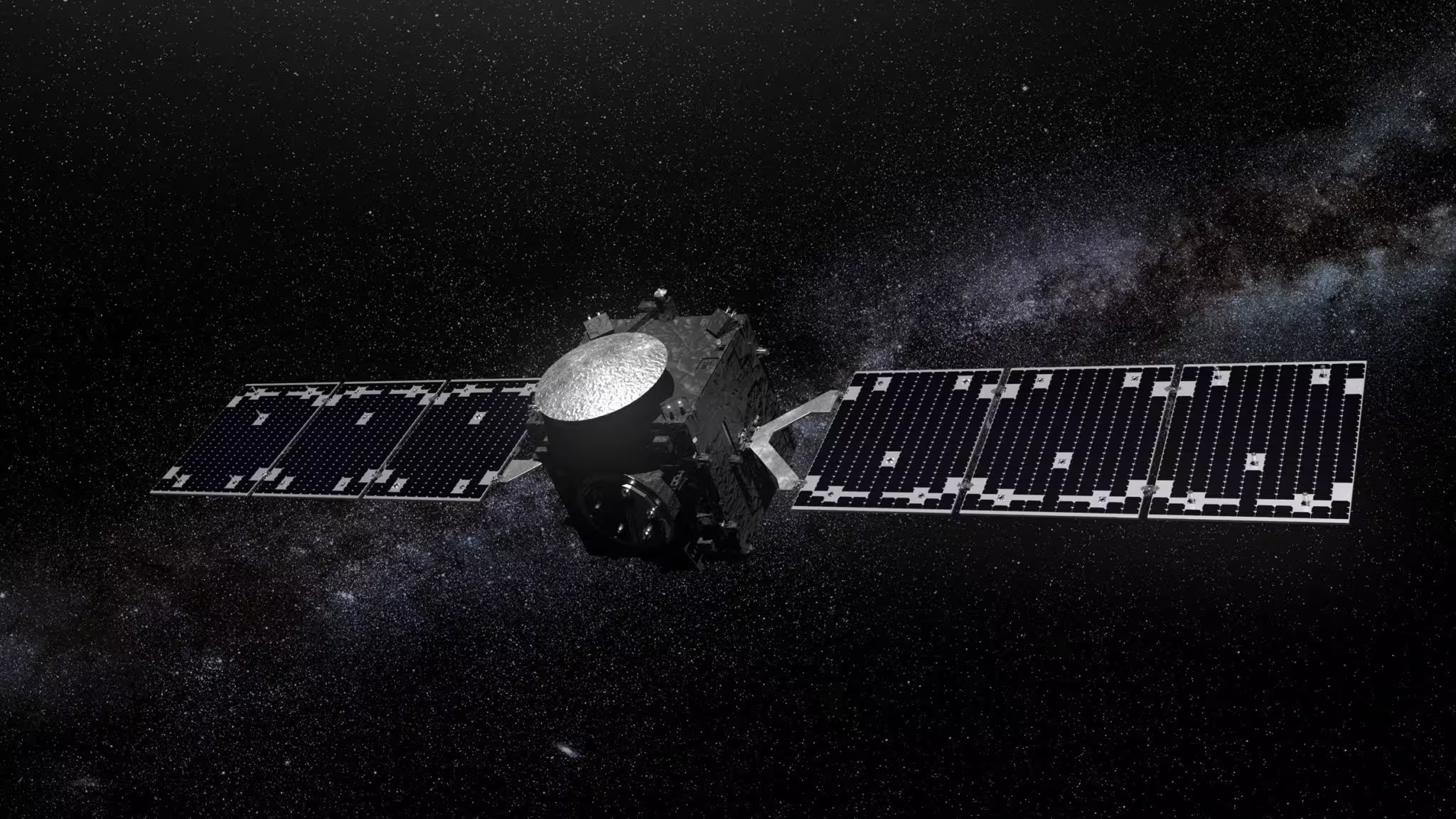
ESA’s Hera mission is humankind’s first mission to explore a binary asteroid system.
The stakes are real. Beyond planetary curiosity, Hera is part of a broader effort to turn DART’s dramatic experiment into a dependable defense technique. DART proved the kinetic impact method can alter an asteroid’s path. Hera will map crater chains, measure boulder fields, and use its laser altimeter to build 3D topography that tells the story of how momentum and fragments redistributed mass across the system. That knowledge is the difference between a one-off demonstration and a calibrated tool for protecting Earth.
Hera’s close-ups will help convert DART’s single-success story into a predictable and tested strategy for planetary defense.
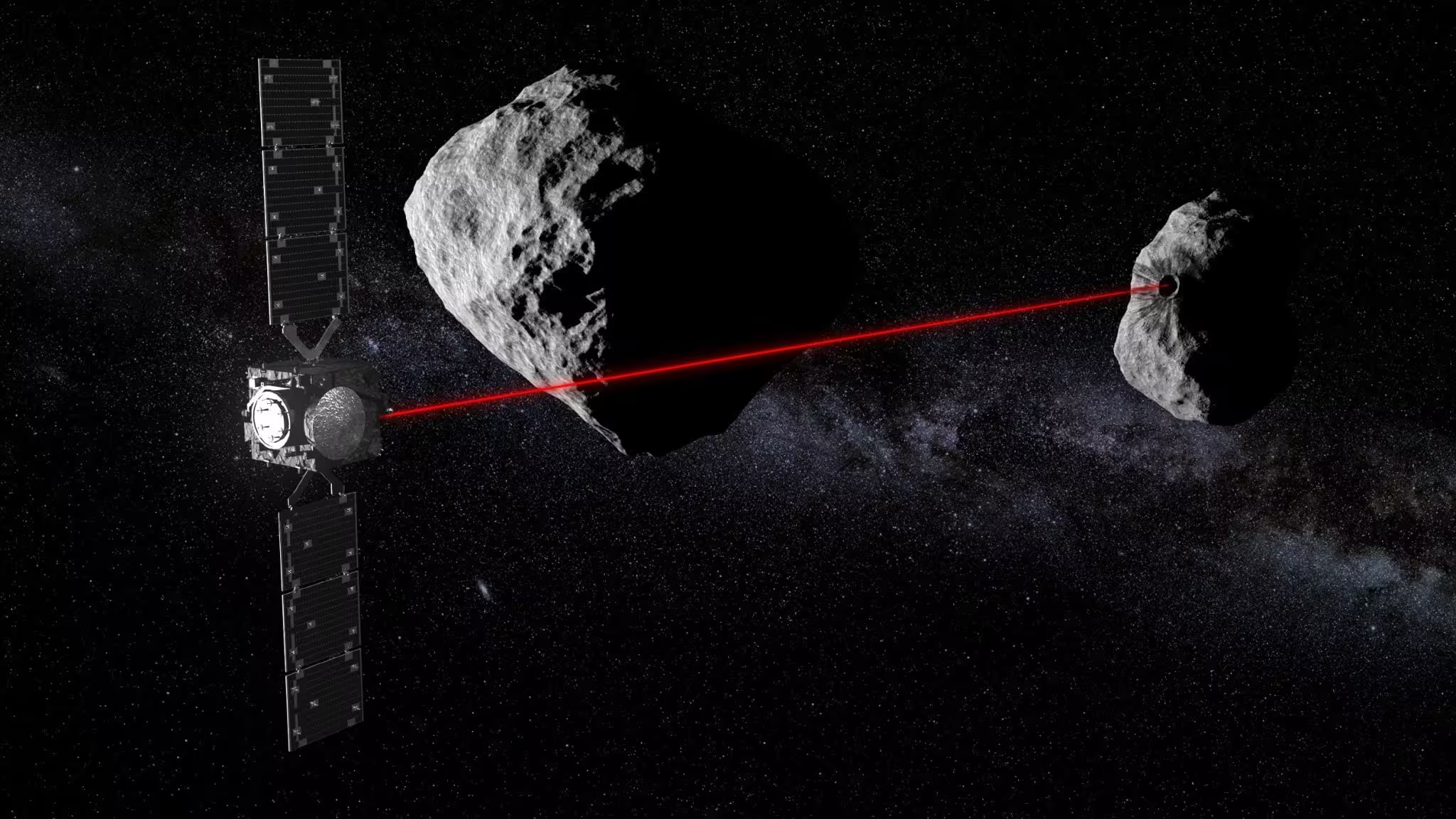
Using its laser altimeter, Hera scans Dimorphos’s surface.
There is more to come. Hera arrived after a two-year cruise to a system roughly 197 million kilometers from Earth and now prepares for systematic surveys and a focused look at the DART impact site. New, higher-resolution images are scheduled for release soon — on November 25 — promising still finer detail of both bodies and the debris field between them.
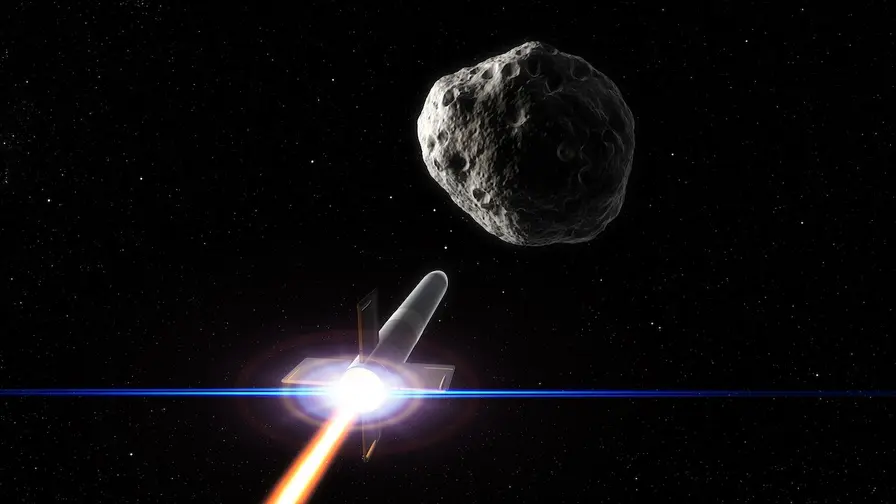
For now, the image stands as a provocative first chapter: an asteroid that looks both familiar and oddly altered, a companion hidden in shadow, and a scientific mission that must read the surface as if it were an archive of a recent, dramatic event. What stories do those grooves tell? How much of Didymos’ character was written by its partner’s violent encounter? We’re about to find out.

Leave a Comment
Comments
No comments yet. Be the first.