

3 Minutes
BTC slips as geopolitical risk spikes
Bitcoin fell back under $112,000 after a fresh spike in U.S.–China tensions triggered a swift risk-off move across global markets. BTC traded near $111,925 at press time, down roughly 1.3% in 24 hours as headlines about a threatened ban on cooking oil imports from China rattled investors and prompted deleveraging across crypto markets.
Market reaction and trading volumes
The pullback came alongside a marked rise in trading activity. Spot volumes for Bitcoin climbed about 35% to roughly $90 billion over 24 hours, while derivatives turnover jumped nearly 40% to about $144 billion, according to CoinGlass figures. Those increases show traders are actively repositioning, even as overall open interest fell by about 2% to $72.5 billion — a sign many leveraged participants are closing rather than adding exposure.
Derivatives, liquidations and leverage
The market remains sensitive to liquidations. Last week’s flash crash wiped out more than $19 billion in long positions within 24 hours, one of the largest mass liquidations in crypto history. In the most recent 24-hour window, roughly $600 million in leveraged positions were also liquidated as traders pared risk. Rising liquidations and reduced open interest can mute short-term volatility but also leave the market exposed to abrupt directional moves if sentiment shifts.
Geopolitical pressure and macro drivers
President Trump’s Oct. 14 threat to ban certain cooking oil imports from China — retaliation over China’s reported boycott of U.S. soybeans — intensified fears of a widening trade conflict. Equity markets reacted sharply, with the Nasdaq dropping and safe-haven flows into gold and U.S. Treasuries increasing. Bitcoin, which often behaves as a risk-on asset during risk appetite cycles, slid in tandem with equities.

Macro conditions add another layer of pressure. Traders are pricing in an 89% chance of a 25-basis-point Federal Reserve rate cut at the Oct. 29–30 meeting, but recent Fed minutes noting sticky inflation have reduced confidence in a looser stance. A firmer U.S. dollar and higher Treasury yields typically weigh on crypto assets by tightening liquidity and raising the opportunity cost of holding risk assets.
Technical outlook: key levels and indicators
Bitcoin shows short-term weakness after slipping below key moving averages. The 10-, 20- and 30-day EMAs are currently above the spot price, signaling near-term selling pressure. The 200-day moving average remains a crucial longer-term support band around $108,000–$107,000.
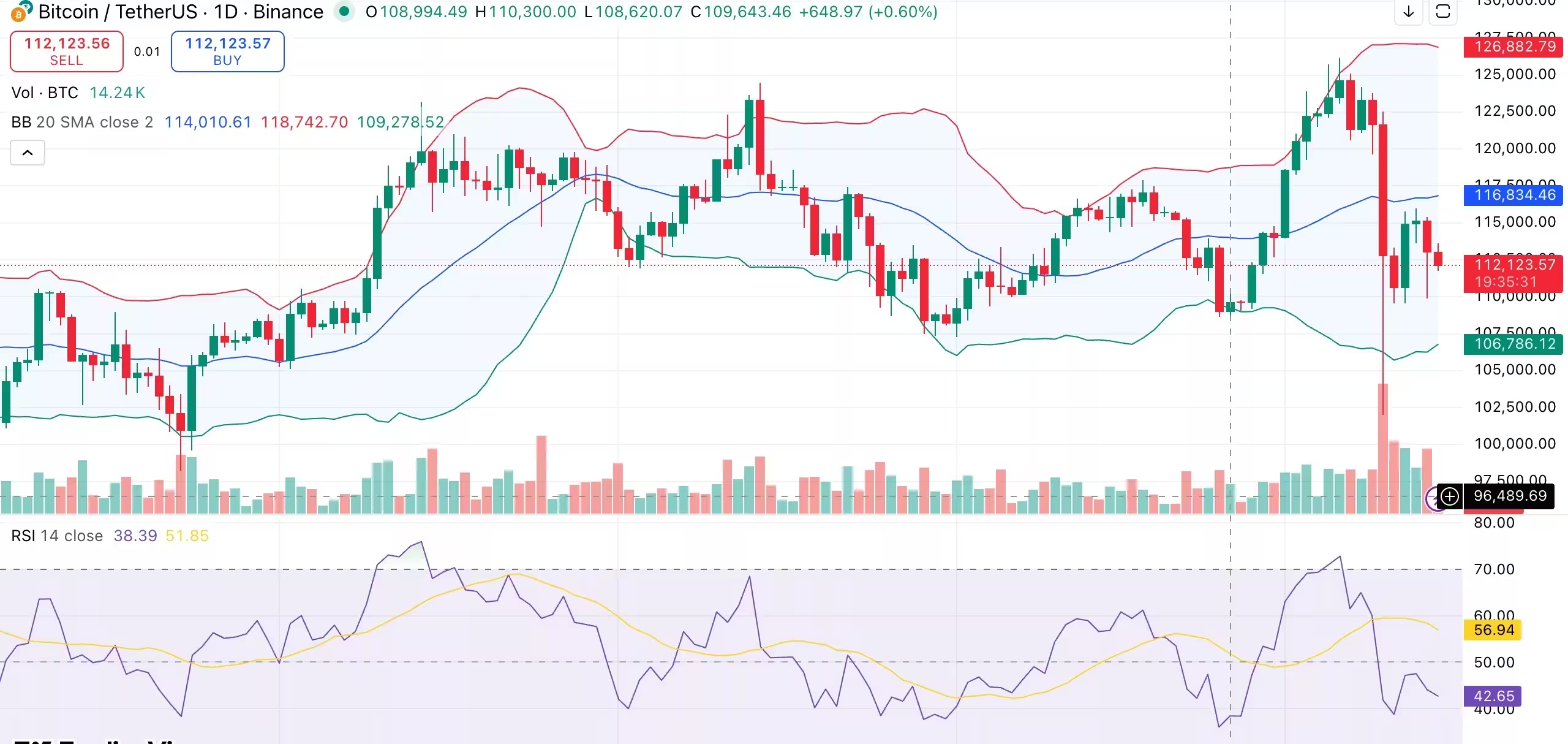
Bitcoin daily chart
Momentum reads as cautious-to-bearish: the RSI sits near 43, indicating weakening momentum but not an oversold condition, while the MACD and other momentum indicators are negative. The average directional index (ADX) is about 25, suggesting a move with room to deepen. Bollinger Bands still reflect elevated, albeit cooling, volatility.
Support, resistance and scenarios
If buyers can reclaim the $115,000–$116,000 zone with conviction and volume, the path toward $123,000 would reopen. On the downside, failure to hold the $108,000–$107,000 200-day band would leave BTC vulnerable to a slide toward $104,000 and potentially $100,000. Bulls will need stronger rebound volume to validate any recovery; bears will watch for another liquidity flush toward the 200-day band to extend downside pressure.
Outlook for traders and investors
In the near term, geopolitical headlines and macro data are likely to dictate price action. Traders should monitor derivatives volume, open interest trends, and liquidation events for signs of stress or capitulation. Long-term investors may prefer to watch the $108,000–$107,000 support area for buying opportunities if the broader macro backdrop stabilizes. As always, prudent risk management and attention to leverage remain essential in volatile crypto markets.














Leave a Comment
Comments
No comments yet. Be the first.