

3 Minutes
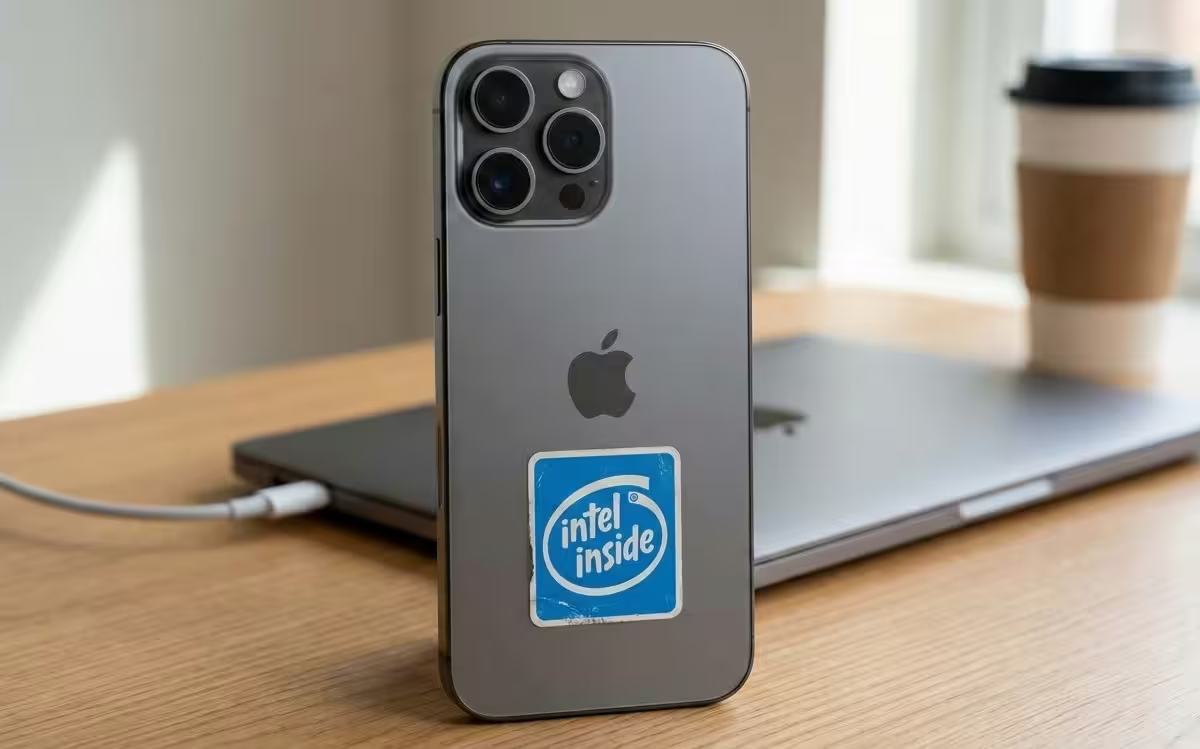
Apple and Intel could be heading back into each other’s orbit. New reports suggest Intel may soon manufacture some Apple chips—including lower-tier iPhone A-series parts—as Apple looks to reduce its reliance on a single foundry.
Why Apple wants a second foundry partner
Apple currently designs its own silicon but relies heavily on TSMC to fabricate the A- and M-series chips that power iPhones, iPads and Macs. That close partnership has paid off in performance and efficiency, but it also concentrates production risk. Imagine a factory outage or geopolitical squeeze affecting supply; Apple wants alternatives. Contracting Intel to manufacture chips (not design them) would diversify Apple’s supply chain while keeping chip architecture firmly in Cupertino’s hands.
What Intel would actually do — and the timeline
Analyst Jeff Pu of GF Securities and other industry watchers now expect a deal that would see Intel begin producing some non-Pro iPhone A-series chips as early as 2028. According to these reports, Intel would handle fabrication only—Apple would continue to design the chips internally.
- Start date: Intel-made non-Pro A-series chips possibly entering production in 2028.
- Initial scale: Intel would supply a relatively small percentage of Apple’s overall chip volume at first, with TSMC remaining the primary partner.
- Macs and iPads: Separately, analyst Ming-Chi Kuo has suggested Intel could begin producing Apple’s lower-end M-series chips as soon as mid-2027, using Intel’s 18A process node.
Why Intel’s 18A process matters
Intel’s 18A has been billed as an advanced sub-2nm-class node available in North America, which would give Apple a fabrication option closer to home. That matters not only for logistics and national supply-chain resilience but also for Apple’s long-term manufacturing strategy if yields and performance meet expectations.
Impacts and open questions
Switching or adding a foundry partner is never trivial. Fabrication differences, packaging, yields and production cost all affect final product timing and margins. Apple will need to validate Intel-fabricated chips rigorously to ensure parity with TSMC-produced parts.
- Performance parity: Can Intel match TSMC’s yields and power efficiency for Apple’s designs?
- Scale-up timeline: Intel would likely start with low-volume runs and limited models before scaling.
- Geopolitics and resilience: Sourcing some chips in North America could reduce exposure to regional disruptions.
Why this matters to consumers
For most users, the shift would be invisible if Apple maintains design standards and quality control. Over time, the move could stabilize supply, reduce the chance of device shortages, and give Apple more leverage in negotiating manufacturing terms.
What to watch next
Keep an eye on confirmations from Apple, Intel and TSMC, plus earnings commentary and supply-chain signals in 2026–27. Early trials, validation runs and packaging partnerships will reveal whether Intel can stand up to TSMC for Apple’s exacting requirements.
In short: this isn’t a design partnership like the old Intel-era Macs. It’s manufacturing diversification, and if the rumors hold, it could reshape where the silicon inside your next iPhone or iPad was physically made.


.webp "Redmi 17C 5G: 6.9-inch Screen and 6,000mAh Power Lands")







Leave a Comment
Comments
No comments yet. Be the first.