
3 Minutes
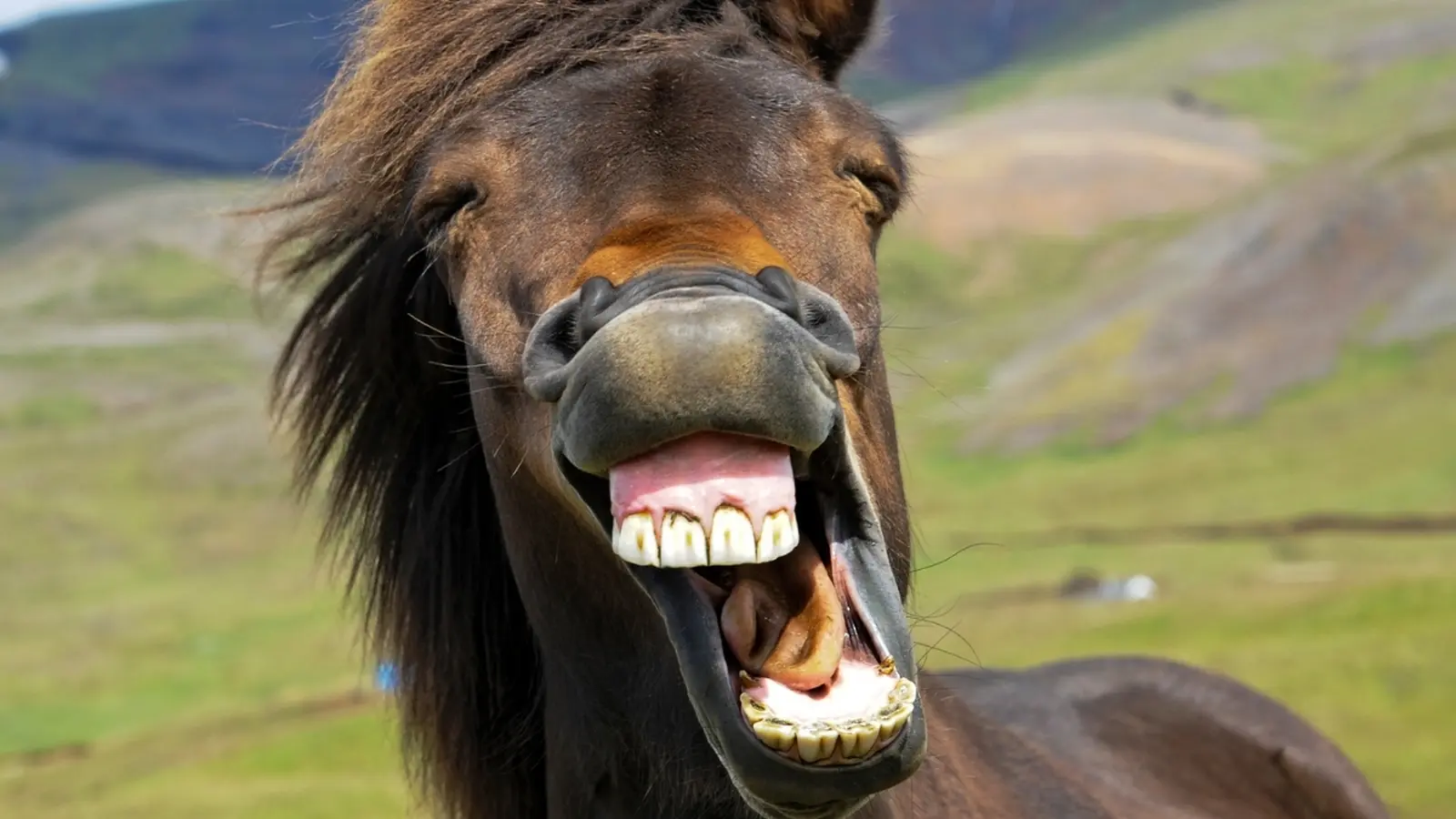
Listen closely to a horse's call and you are hearing two voices at once: a low, vocalized hum and a surprisingly high whistle. The latter was a mystery until researchers used cameras, scans and airflow experiments to peer directly into the horse's vocal anatomy and into the mechanics of the whinny.
How the sound is produced
Large mammals generally produce low-frequency sounds because their vocal tracts and laryngeal tissues are bigger. So why does the horse's whinny carry a piercing, high-pitched component alongside the deep part? The new study published in Current Biology shows the answer: a laryngeal whistle. Scientists threaded a miniature endoscopic camera through horses' nasal passages to record the larynx in action while the animals whinnied and nickered. They complemented live observations with detailed imaging and laboratory tests in which excised larynges were ventilated to recreate airflow.
The low tones arise as expected: air passing over vibrating bands of tissue in the larynx, analogous to human vocal folds, produces a sustained, lower-frequency signal. The surprise was the source of the high tones. During the whinny, an area above the vibrating tissues narrows to form a small aperture. Air forced through that opening creates a whistle that escapes alongside the vibratory sound. In effect, horses combine two distinct acoustic mechanisms—the classic tissue vibration and a whistle formed by an aerodynamic jet—into a single, dual-toned call. This is not human mouth whistling; the whistle originates inside the voice box.
"I had not expected a whistling component in the whinny," said Jenifer Nadeau of the University of Connecticut, who was not involved in the study. "Once you know to listen for it, the structure becomes clear."
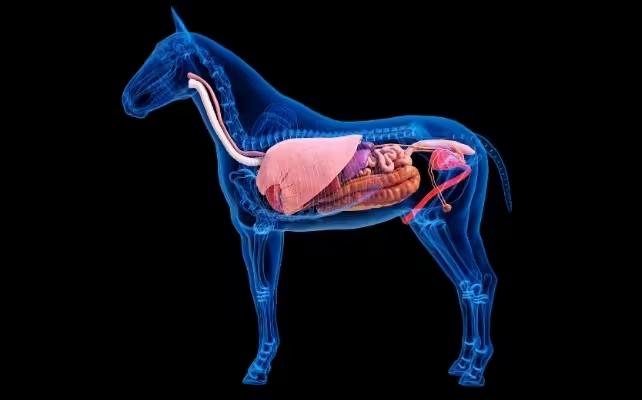
Large animals have large vocal systems, which should make deeper sounds.
Why it matters for animal communication
The dual-mechanism whinny appears to be rare in the mammal world. Small rodents such as rats and mice use whistle-like calls, but horses are the first large mammals documented to produce a whistle inside the larynx while simultaneously producing voiced sound. That combination may give horses a richer acoustic palette for social signaling: the low component can carry distance and identity cues, while the high whistle may add urgency or emotional nuance.
Przewalski's horses and some cervids can generate similar multi-part vocalizations, yet closer relatives such as donkeys and zebras lack the high component. Why this trait evolved in some equids and not others remains an open question. One hypothesis is that two-toned calls enable horses to broadcast different messages at once—to locate companions and signal emotional state simultaneously—which would be advantageous in complex social groups.
Alisa Herbst of Rutgers University's Equine Science Center highlighted the finding's behavioral importance: knowing that a whinny contains two distinct frequencies produced by different mechanisms changes how researchers should analyze these calls and interpret their communicative content.
Researchers now plan to map when and how horses use the whistle in natural settings and to test whether receivers—other horses—respond differently to the separate components. If they do, the laryngeal whistle could be a subtle but powerful tool for social animals that need to say more than one thing at a time.
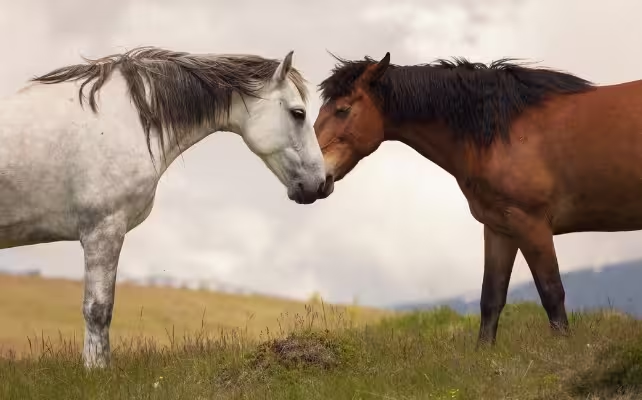
Horses whinny to greet one another.
Understanding the physics of such vocal tricks deepens our picture of animal communication and raises fresh questions about the evolution of voice. The horse's two-toned whinny is a reminder that familiar sounds can hide surprising complexity, waiting for the right lens to reveal it.


Leave a Comment
Comments
No comments yet. Be the first.