
3 Minutes
They were not random casualties. New forensic work on bones pulled from the Troisième caverne of Goyet in Belgium paints a stark scene: bodies treated like game, processed in ways indistinguishable from butchered animals, and—crucially—individuals who appear to have been outsiders to the local group.
A decade-long reappraisal of the Goyet collection used DNA, radiocarbon dating, isotopic fingerprints and digital reconstructions to read marks that had lain silent for more than 40,000 years. The result: evidence of selective cannibalism dated between roughly 45,000 and 41,000 years ago, with adult females and children disproportionately represented among the victims. The pattern suggests more than subsistence; it hints at social rupture, perhaps violent encounters between neighboring Neanderthal bands during a volatile chapter of the late Middle Paleolithic.
A decade-long investigation using DNA, radiocarbon dating, and isotopic analysis has uncovered evidence of selective cannibalism among Neanderthals in Belgium.
Cut marks, percussion notches and the fracture geometry of fresh bone indicate deliberate disarticulation and marrow extraction—techniques archaeologists recognize from animal processing at the same site. DNA profiles reconstructed from the fragments show at least six individuals (labelled GNx for “Goyet Neandertal x”), and genetic indicators suggest some came from a different population than the regular occupants of the cave. In other words: these were not simply members of the group who died and were eaten in times of famine. They look like outsiders.
Scientific context and methods
The team behind the study pooled methods across disciplines. Ancient DNA sequenced from tiny cortical fragments established biological sex and kinship markers. Radiocarbon dating pinned the remains to a narrow window when Neanderthal populations in northern Europe were under increasing ecological pressure and cultural fragmentation. Isotopic analysis—measuring ratios of elements such as carbon and nitrogen—helped chart where individuals had likely been living and what they had been eating in life, allowing researchers to distinguish locals from nonlocals.
Digital reconstruction was the quiet hero here. Highly fragmented bones were virtually refitted and modeled so that microscopic cut marks and percussion signatures could be read with confidence. That precision made the difference between ambiguous damage and clear evidence of intentional processing for consumption.
What do these findings mean for how we understand late Neanderthal life? For a start, they complicate the old image of small, isolated bands always living in kin-based harmony. Competition for territory, resources or mating networks could produce lethal encounters. Cannibalism, in this light, becomes not merely an act of survival but a potential expression of intergroup hostility.
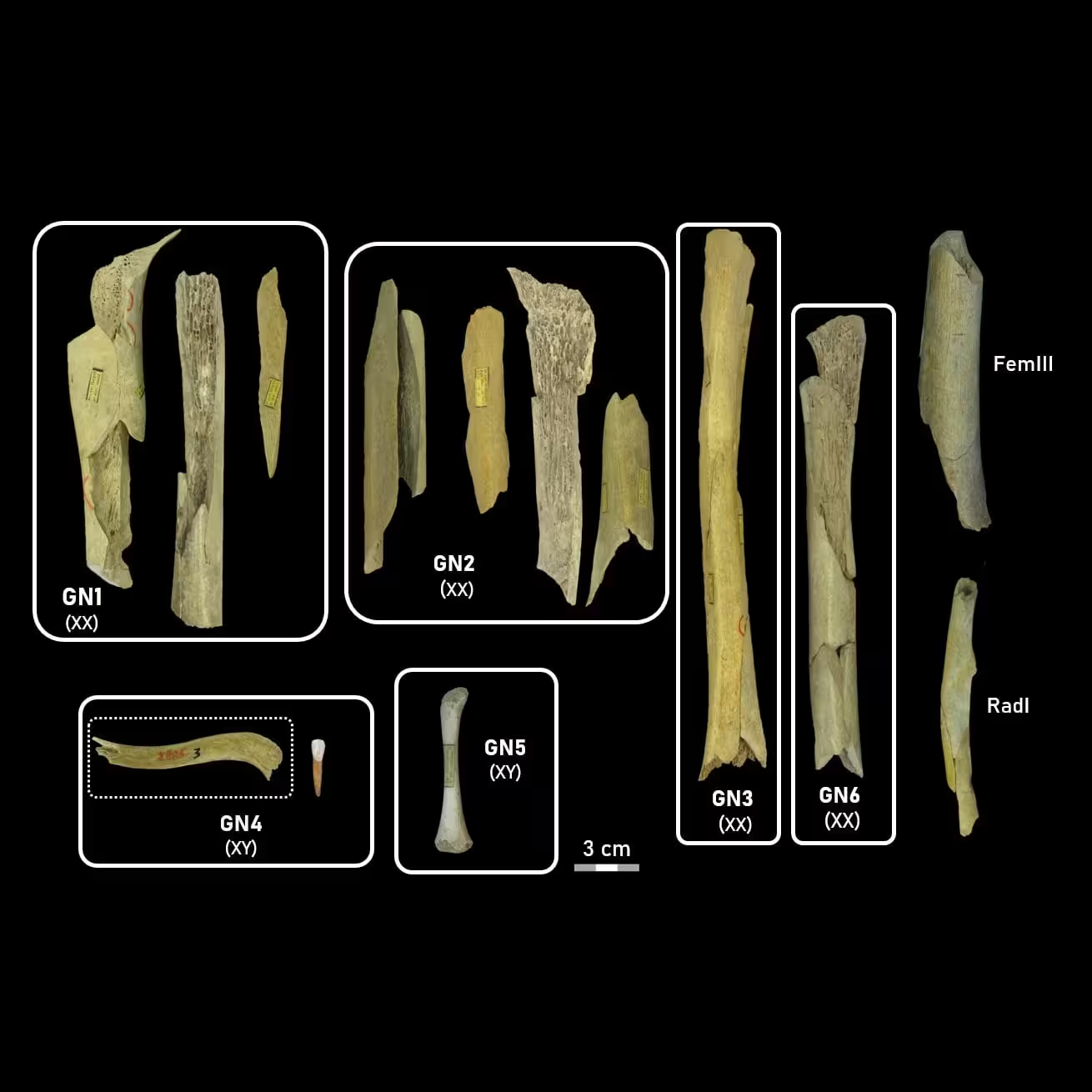
Neandertal human remains from the Troisième caverne of Goyet (Belgium). Highly fragmented bones bear traces characteristic of fresh bone fracturing and percussion, demonstrating intentional treatment of the bodies. The individuals (GNx, for “Goyet Neandertal” x), numbering six at minimum, were identified by genetic analyses: XX indicates female gender, and XY male gender.
There are still questions. Were these acts episodic or part of a longer pattern? Did contact with incoming Homo sapiens affect the social landscape in ways that drove such conflicts? Each new method applied to ancient remains can answer one part of the story—and open three more chapters to investigate.

Leave a Comment
Comments
No comments yet. Be the first.