
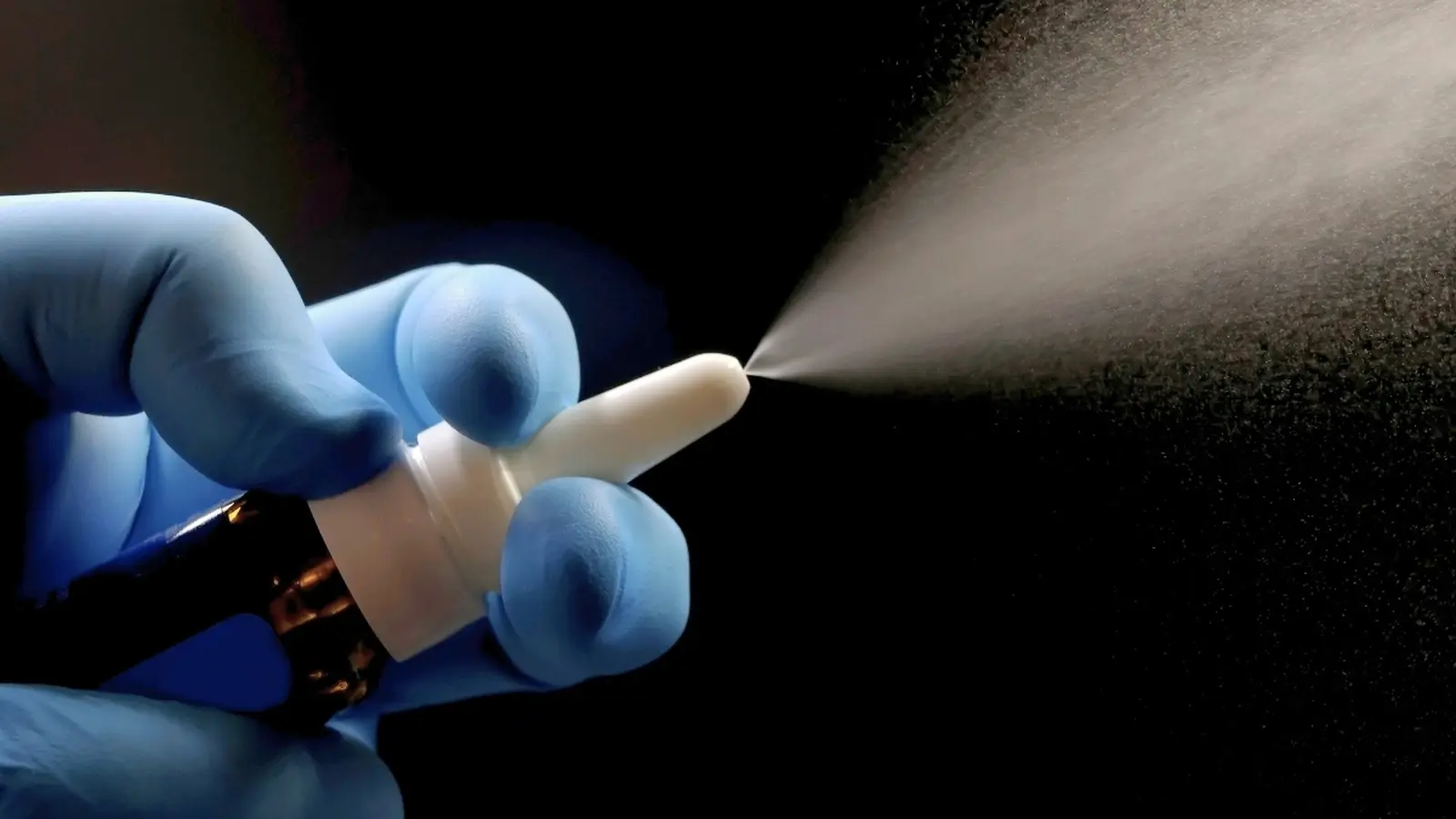
Imagine a single nasal mist that primes the body against not only COVID-19 but a raft of other respiratory dangers — viruses, hospital-acquired bacteria, even seasonal allergens. It sounds like science fiction. Yet recent experiments in mice suggest that a new vaccine formula can bridge the gap between targeted vaccines and broad, short-term immune readiness.
How this vaccine differs
Traditional vaccines teach the adaptive immune system to recognize a specific invader by showing it a harmless piece of that pathogen. The result is precise, long-lived protection. But precision has a price: when the pathogen changes, so can vaccine effectiveness. Flu shots are updated every year for that reason. What the new candidate pursues instead is a hybrid approach — it ties the adaptive response to a prolonged, enhanced innate state.
Researchers working across several U.S. institutions developed a formulation named GLA-3M-052-LS+OVA, delivered as a nasal spray. The idea: stimulate T cells in a way that they, in turn, sustain innate immune cells for months rather than days. In essence, the vaccine does not only hand the immune system a wanted poster; it rewires communications so first responders stay on duty longer.
Key findings from the mouse studies
In trial animals, three nasal doses produced striking results. Mice challenged with SARS-CoV-2 and related coronaviruses showed a 700-fold drop in lung viral load compared to unvaccinated controls. Protection persisted for approximately three months. Immune timing changed too: where an adaptive lung response normally takes up to two weeks to mobilize, vaccinated animals could mount an effective counterattack in as little as three days. Fast. Decisive.
The protective effect extended beyond viruses. Subsequent tests exposed mice to Staphylococcus aureus and Acinetobacter baumannii — two bacteria commonly implicated in hospital-acquired pneumonia and notorious for growing resistance to antibiotics. Vaccinated animals resisted these infections more effectively than unvaccinated peers. Even allergic inflammation responded: dust-mite exposure elicited far weaker asthmatic signatures in treated mice, with less mucus production and fewer inflammatory immune cells in the lungs for months after vaccination.
Why does this matter? Because respiratory illness seldom comes from a single source. People face seasonal viruses, opportunistic bacteria, and airborne allergens in overlapping waves. A vaccine that broadens the immune toolkit without relying solely on pathogen-specific antibodies could change how clinicians think about prophylaxis for vulnerable populations.
Mechanism in plain terms

Two arms of the immune system are central here. Adaptive immunity is slow but specific. Innate immunity is fast but short-lived. The novel vaccine appears to enlist adaptive cells — especially certain T cells — to keep innate defenders activated for months. Think of it as turning a short-lived alarm into a standing watch. Prior work on the tuberculosis vaccine hinted at this possibility when T-cell signals were seen sustaining innate responses. Building on those molecular cues, researchers synthesized signals that mimic the T-cell rallying cry and packaged them with a carrier antigen for nasal delivery.
This is not the same as giving the immune system a continuous stimulant indefinitely. The aim is controlled augmentation: enhance early, broadly reactive defenses while still allowing adaptive processes to generate specific, durable protection.
Safety, translation, and the road ahead
Mouse models are powerful. But human biology is more complex. The team projects human trials in the coming years, with an optimistic timeline of five to seven years before broad availability — if safety and efficacy benchmarks are met. The principal questions are straightforward: will the vaccine work as effectively in humans, and will prolonging innate activation produce unintended inflammation or autoimmunity?
Some vaccines already show so-called off-target benefits in people, reducing incidence of unrelated infections. That provides encouraging precedent. Still, keeping the immune system on higher alert has theoretical risks: friendly tissues could become collateral damage if regulation fails. Careful dose finding and long-term monitoring will be essential.
Expert Insight
"This approach reframes prevention," says Dr. Mira Santos, an immunologist who advised on translational design. "Instead of depending solely on a lock-and-key match for each microbe, you strengthen the gatekeepers so they respond faster and smarter. The challenge will be balancing breadth with restraint — you want vigilance, not chronic inflammation."
If human trials confirm the mouse data, a fall nasal spray that reduces the risk of influenza, COVID-19, RSV, bacterial pneumonia and even dampens seasonal allergy responses could become part of routine public-health arsenals. It would not replace pathogen-specific vaccines where those are needed. Rather, it could act as a complementary layer of defense — a rush capability for the respiratory tract.
Science often advances not by a single leap but by linking ideas that were previously siloed. Here, merging the concept of trained or sustained innate responsiveness with established adaptive vaccination could be one such link. The next chapters will depend on clinical trials, regulatory scrutiny, and a sober assessment of benefit versus risk. Until then, the possibility of a broadly protective nasal spray remains one of the most compelling developments in respiratory immunology in years.

Leave a Comment
Comments (2)
is this even true? mice showed big drops, ok but humans are different. timeline 5-7 yrs sounds optimistic. worried about long term inflammation, tbh
Wait a nasal spray that primes innate immunity for months? wild... if it works in humans, game changer. but hope they watch for inflammation, autoimmunity etc