
4 Minutes
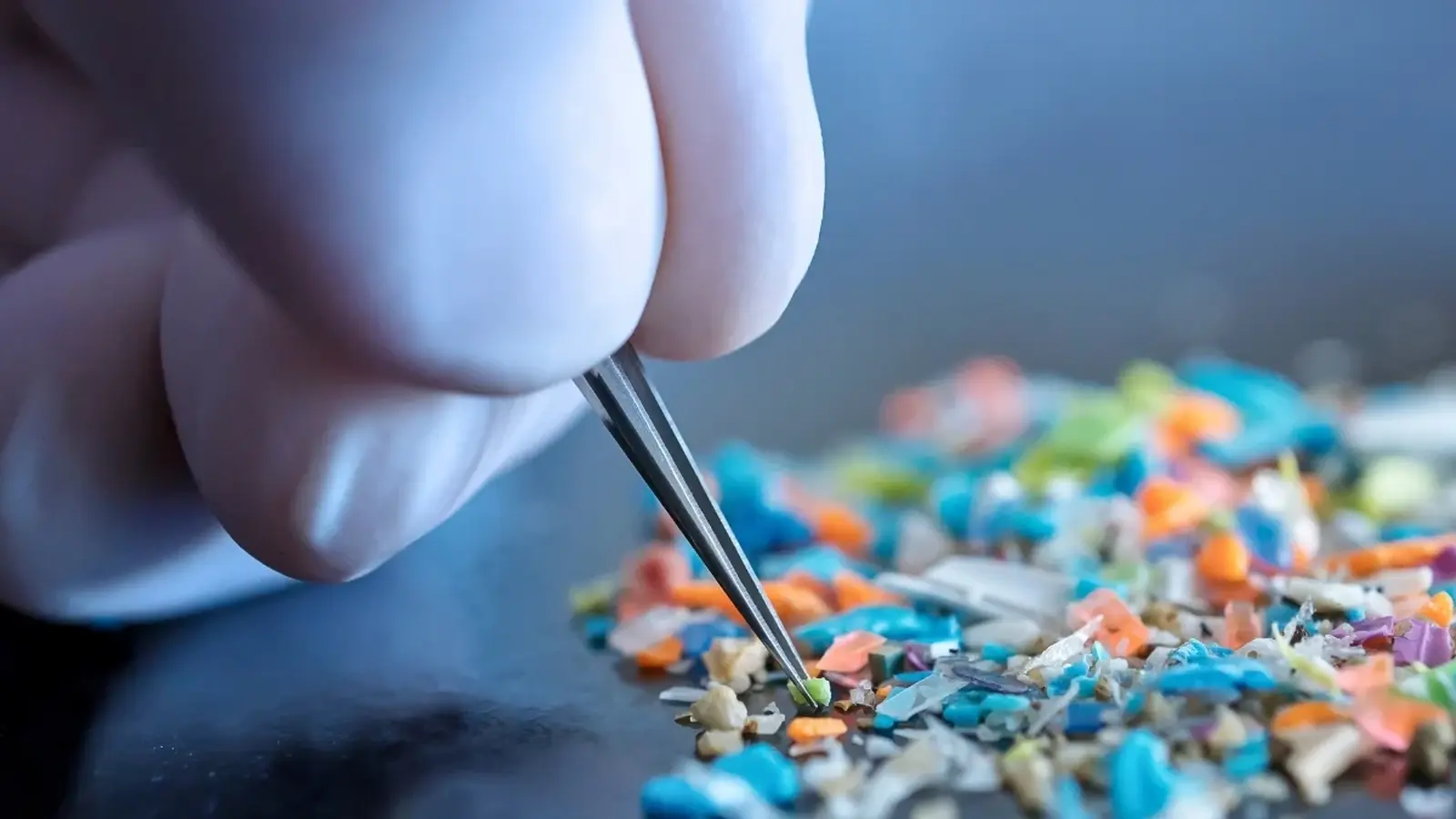
A single pair of laboratory gloves can quietly rewrite an experiment. It sounds dramatic, but that is exactly what a University of Michigan team discovered when they set out to measure how many microscopic plastic particles people inhale outdoors.
How a routine tool became the suspect
The research began like many environmental monitoring projects: carefully planned, cautious protocols, and a checklist of contamination safeguards. The team avoided plastics in the lab, wore nonplastic clothing, and sampled air on metal collectors inside a clean chamber designed to reduce background interference. Yet initial results flagged something impossible—airborne plastic counts orders of magnitude higher than prior studies, sometimes more than a thousand times greater.
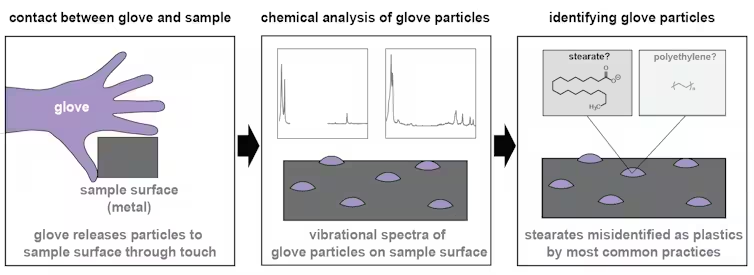
Alarmed, the scientists went back to basics. They repeated handling steps, swapped materials, and simulated touch interactions between gloves and sampling plates. The pattern became clear. Particles were transferring from gloves onto the metal sheets and then being read as environmental microplastics.
Glove residues can outnumber environmental microplastics in some lab samples.
Why some residues fool instruments
The particles that contaminated the samples are not plastic in the traditional sense. They are stearate salts—manufacturing additives used to help disposable gloves release cleanly from their molds. Chemically, these compounds behave a bit like soap. They are not fragments of polyethylene bottles or fibers from packaging, but their molecular structure imitates certain plastics closely enough to confound common analytical tools.
Most laboratories identify microplastics using vibrational spectroscopy, a method that measures how a particle scatters or absorbs light to produce a spectral fingerprint. Polyethylene—the plastic most frequently recorded in environmental surveys—has a spectral signature that overlaps with the signal produced by stearate salts. When researchers rely on automated matching algorithms to speed up large datasets, residues from gloves can be misclassified as microplastic particles.
The Michigan team quantified the scale of the problem. By mimicking touch between seven glove types and lab equipment, they showed that some gloves can deposit more than 7,000 particles per square millimeter that appear, under common protocols, to be microplastics. Even worse: many of these particles were smaller than 5 micrometers, a size range with outsized biological relevance because such tiny particles can cross cellular barriers more readily than larger fragments.
Implications for past and future studies

If glove-derived particles have crept into datasets, then reported microplastic abundances—especially at the smallest end of the size spectrum—may be inflated. That does not mean every study is invalid. But it does call for a careful reassessment of methodologies, and in some cases, reanalysis of archived data.
To address this, the researchers developed spectral discrimination methods to help separate stearate salt signals from true polyethylene fingerprints. They also recommend practical shifts in lab practice: avoid unnecessary glove use during microplastic handling where safety permits; when gloves are required, choose stearate-free options such as those manufactured for electronics assembly; and incorporate contamination controls tailored to the specific analytical workflow.
Beyond procedures, there is a larger scientific consequence. Policy and health decisions increasingly rely on measurements of particle concentration and size distribution. Overestimating the abundance of sub-5-micrometer particles could skew risk assessments, influence regulatory thresholds, and misdirect resources. Accurate counts matter.
Expert Insight
"We were surprised at first, and then a little embarrassed," said the study's lead chemist. "But that discomfort is part of how science corrects itself. Identifying this contamination pathway helps everyone improve detection and interpretation of atmospheric microplastics."
Dr. Elena Morales, an environmental chemist with two decades of experience in trace analysis, offered context: "Instruments tell us what they see, not what we expect. When background chemistry overlaps with analytes of interest, you need orthogonal checks—different methods that confirm or refute the initial identification. This study is a good wake-up call to invest in method validation before drawing big conclusions about exposure and risk."
Practical steps and next experiments
The Michigan group plans to continue measuring atmospheric microplastics across urban and suburban settings in the state—this time without the problematic gloves. Their recommended checklist for researchers includes implementing blank controls that mimic every handling step, using stearate-free gloves when protection is mandatory, and applying spectral deconvolution techniques to existing datasets to flag likely glove-derived signals.
For laboratories and institutions, the takeaway is straightforward: a small procedural choice can cascade into large interpretive errors. As environmental microplastics research matures, so must the rigor of contamination control and the transparency of methods.
Even if counts fall after these corrections, the presence of microplastics—however reduced—remains a concern for human health and ecosystems. The new finding does not lessen the urgency of understanding sources, transport, and biological impacts. It simply sharpens the tools we must use to study them.













Leave a Comment
Comments (2)
is this even true? so stearate salts mimic polyethylene to the spectrometers... huge blindspot. how many studies/policies rely on inflated tiny particle counts? needs rechecks, fast
wow, crazy that a glove could wreck years of data. kinda maddening but also honest... science fixing itself. if labs dont change protocols fast, we'll keep overcounting tiny plastics, ugh