
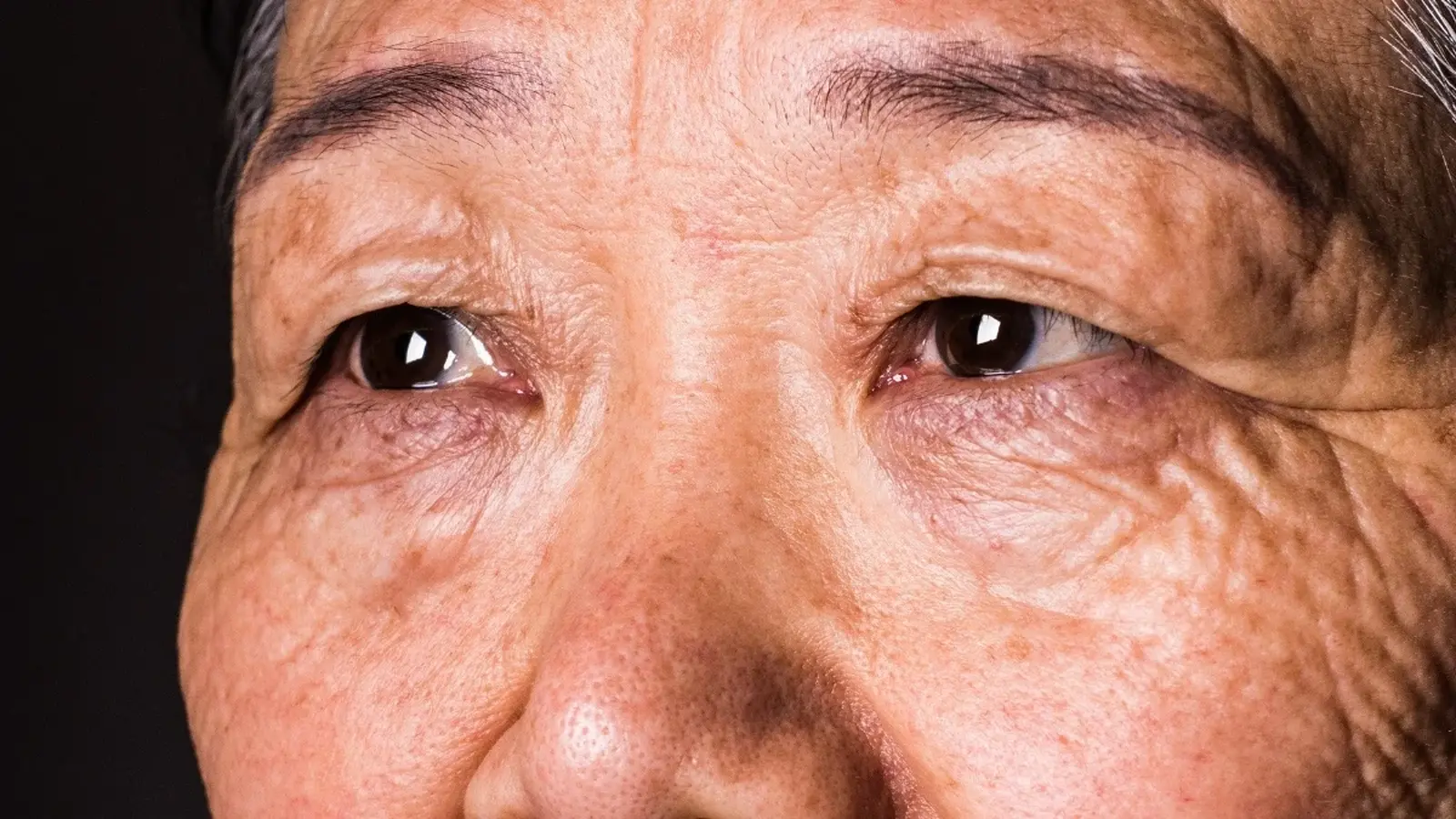
A routine eye test might be telling a far bigger story than most people realize. Long before memory problems become obvious, subtle changes in vision may hint that the brain is already under strain. That is the striking message emerging from two major studies, one from the United Kingdom and another from Australia, both pointing to the same unsettling possibility: your eyesight could flag dementia risk more than a decade before diagnosis.
The idea is not as strange as it sounds. The eyes are closely tied to the brain, often described as an outward extension of the central nervous system. When the brain begins to change with age or disease, vision can shift too. Sometimes the signs are quiet—slower visual processing, reduced sharpness, difficulty reacting to what appears in front of you. Easy to dismiss. Harder to ignore when those patterns show up years before cognitive decline becomes clear.
In the UK study, published in 2024, researchers tracked more than 8,000 people who completed a simple visual processing test. Participants were asked to press a button as soon as a triangle appeared on a screen. Straightforward. Yet over the following 12 years, those with slower response times were significantly more likely to develop dementia. The test was not precise enough to predict which individual would go on to receive a diagnosis, but it did reveal something important at the population level: visual processing speed may be an early marker of declining brain health.
The Australian research reached a similar conclusion from a different angle. Scientists followed 2,281 participants and found that worsening visual acuity was linked to poorer scores in memory, attention, and problem-solving over roughly the same 12-year window. In other words, as eyesight declined, cognitive performance often slipped with it. That does not prove that vision loss causes dementia by itself. Dementia is far more complicated than that. But the association is becoming too consistent to brush aside.
There is another layer here, and it feels deeply human. The Australian team also found that social engagement partly influenced the relationship between vision decline and cognitive health. People with worsening eyesight may start pulling back from gatherings, conversations, and public life, sometimes because of anxiety or practical difficulty. That retreat matters. Social isolation is already recognized as a dementia risk factor, so poor vision may not only reflect brain changes, but also quietly reshape daily habits in ways that increase vulnerability.

Nikki-Anne Wilson, lead author of the Australian study and a neuroscientist at Neuroscience Research Australia, noted that vision decline can stem from several causes, including treatable ones such as cataracts or uncorrected refractive errors. That makes the findings especially important. If some forms of vision loss can be identified early and managed with proper care, glasses, or surgery, there may be an opportunity to reduce at least part of the broader risk linked to cognitive decline.
That possibility is now being taken seriously. In its 2024 report, The Lancet Commission on dementia added late-life vision loss to its list of modifiable risk factors, estimating it may contribute to up to 2.2 percent of dementia cases. That figure is lower than the estimated impact of untreated hearing loss in midlife, which stands at around 7 percent, but it is still significant—especially because vision care is often accessible, practical, and overlooked.
None of this means that blurry eyesight is a sentence or that every older adult with vision problems is on the path to dementia. Far from it. Sensory changes can arise from many different health conditions, and vision tests alone are not reliable diagnostic tools for predicting dementia in individuals. Still, public health is not built only on certainties. It is often shaped by patterns, and the pattern here is getting harder to miss.
Researchers are now asking whether eye exams and visual processing tasks should become part of wider dementia screening efforts, alongside cognitive assessments and other health measures. That approach would not replace diagnosis, but it could help identify people who need closer monitoring, earlier support, or interventions that improve both quality of life and long-term brain health.
The broader science backs up the intuition that the eyes deserve more attention. Aging leaves traces across the body, and the retina appears especially sensitive to those effects. Previous research has shown that retinal changes can predict wider health outcomes, including mortality risk. With dementia now the leading cause of death in the UK, the argument for making vision screening and treatment widely available is no longer just about seeing better. It may also be about thinking clearly for longer.

Sometimes prevention does not begin with a breakthrough drug or a high-tech brain scan. Sometimes it starts with something far simpler: noticing what the eyes have been trying to say all along.

Leave a Comment
Comments (2)
is this real science or just correlation hype? Vision probs common, but causation is a big claim... need more solid proof.
wow, honestly didn't expect eyes to be such an early red flag. gonna book an eye test, weirdly nervous but hopeful. anyone else?