

4 Minutes
When a tiny bite becomes a hidden danger
It can start as an ordinary nuisance: a tick buried in the crease of a sock or behind the ear after a day in the bush. Most people brush it off. But for a growing number, that single bite sets the immune system on a slow fuse. Hours later, after a burger, a steak or even a gelatine-containing sweet, the body can erupt in hives, vomiting, or worse—a life-threatening anaphylactic attack.
Australian coronial findings confirmed a tragic endpoint for this chain of events when a teenager died in 2022 after eating beef sausages. The case is now reported as the nation’s first confirmed death linked to mammalian meat allergy (often called alpha-gal syndrome), and only the second fatality documented worldwide following a 2024 case in the United States. The mechanism is peculiar and delayed, which is why the condition is both baffling and dangerous.
What actually happens inside the body?
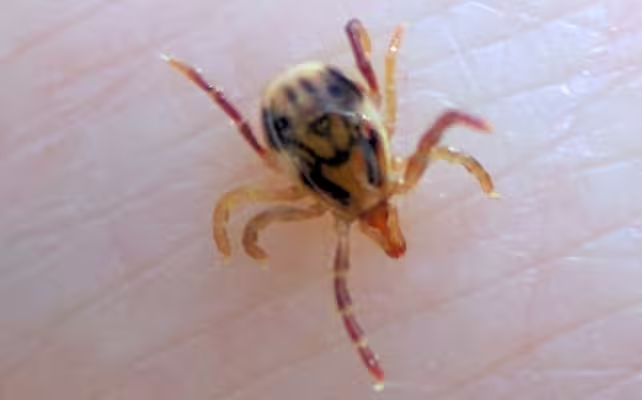
The culprit is a sugar molecule known as galactose-α-1,3-galactose—shortened to alpha-gal. It is present in the saliva of certain ticks, notably the eastern paralysis tick (Ixodes holocyclus) that is endemic along Australia’s east coast. When the tick feeds, alpha-gal can slip into a person’s bloodstream. For reasons researchers are still untangling, some immune systems react by producing IgE antibodies specific to alpha-gal.
IgE. A single small acronym. But it is the one our immune system uses to identify life-threatening allergens. Once alpha-gal-specific IgE is present, the body is primed. Eating mammalian meat—which naturally contains alpha-gal—can then trigger an allergic cascade. Unusually, the reaction is delayed: symptoms may appear three to six hours after eating. That delay complicates diagnosis; people don’t always connect the meal with the later collapse.
Who is affected and where cases are rising
Mammalian meat allergy is not evenly distributed across ages or geography. Recent Australian research indicates the condition most commonly shows up in people aged 45 to 75, and about 60% of cases occur in women. Yet younger people can be affected too—the fatal Australian case involved a teenager—so the risk is not exclusive to older adults.

From a geographic perspective the pattern is striking. Nearly all confirmed cases fall within the range of Ixodes holocyclus along the east coast. Within that belt, hotspots have emerged: south-east Queensland hinterlands, parts of northern New South Wales, the northern beaches area of Sydney and the NSW south coast show disproportionately high case counts. Testing numbers rose sharply after 2020. By 2024, 787 Australians tested positive for alpha-gal antibodies. Analysis suggests roughly 90% of the observed increase reflects greater awareness and diagnostic testing; about 10% likely represents a true rise in disease occurrence.
Broader health implications being investigated
Alpha-gal exposure might carry consequences beyond allergic reactions. A collaborative study involving Australian researchers and the Australian Red Cross Lifeblood is preparing to analyse blood from 5,000 donors, including participants from high-risk areas. The working hypothesis: repeated immune activation by alpha-gal could contribute to low-level inflammation of arterial plaques, potentially influencing coronary artery disease later in life. This is still exploratory. Samples are queued for analysis, and definitive links will require careful, long-term study.
Practical steps and prevention
There is no cure for mammalian meat allergy once it develops. That makes prevention the best defence. Simple, practical measures reduce tick exposure: wear long sleeves and trousers when entering bushland; tuck pant legs into socks; choose light-coloured clothing to spot ticks sooner; use DEET-based repellents and consider a wide-brimmed hat when vegetation is dense. For those who have already developed alpha-gal sensitivity, avoiding mammalian meat, foods containing gelatine derived from mammals, and certain medications that may include mammalian ingredients is essential.
Expert Insight
"The delayed nature of this allergy is what makes it so treacherous," says Dr. Emma Holloway, an immunologist who has studied tick-borne sensitisation. "Patients often describe a clean bill of health until they sit down to a meal and then feel fine for hours—only to wake into severe symptoms overnight. That disconnect between cause and effect means clinicians must take detailed exposure histories, and public health messaging needs to reach people before they are bitten."
As tick habitats shift with climate patterns and human land use changes, monitoring and public education will matter more. The science is evolving, but the advice remains immediate: avoid bites where possible, and if unusual delayed allergic symptoms appear after eating meat, seek medical advice promptly.












Leave a Comment
Comments (2)
hmm is the heart disease link actually proven or just a theory? sounds plausible but kinda speculative, need long term studies before panicking
wow never knew a tick bite could do that, truly terrifying. Sad about the teen, can't imagine waking up in anaphylaxis after dinner. stay safe, check for ticks ppl