
5 Minutes
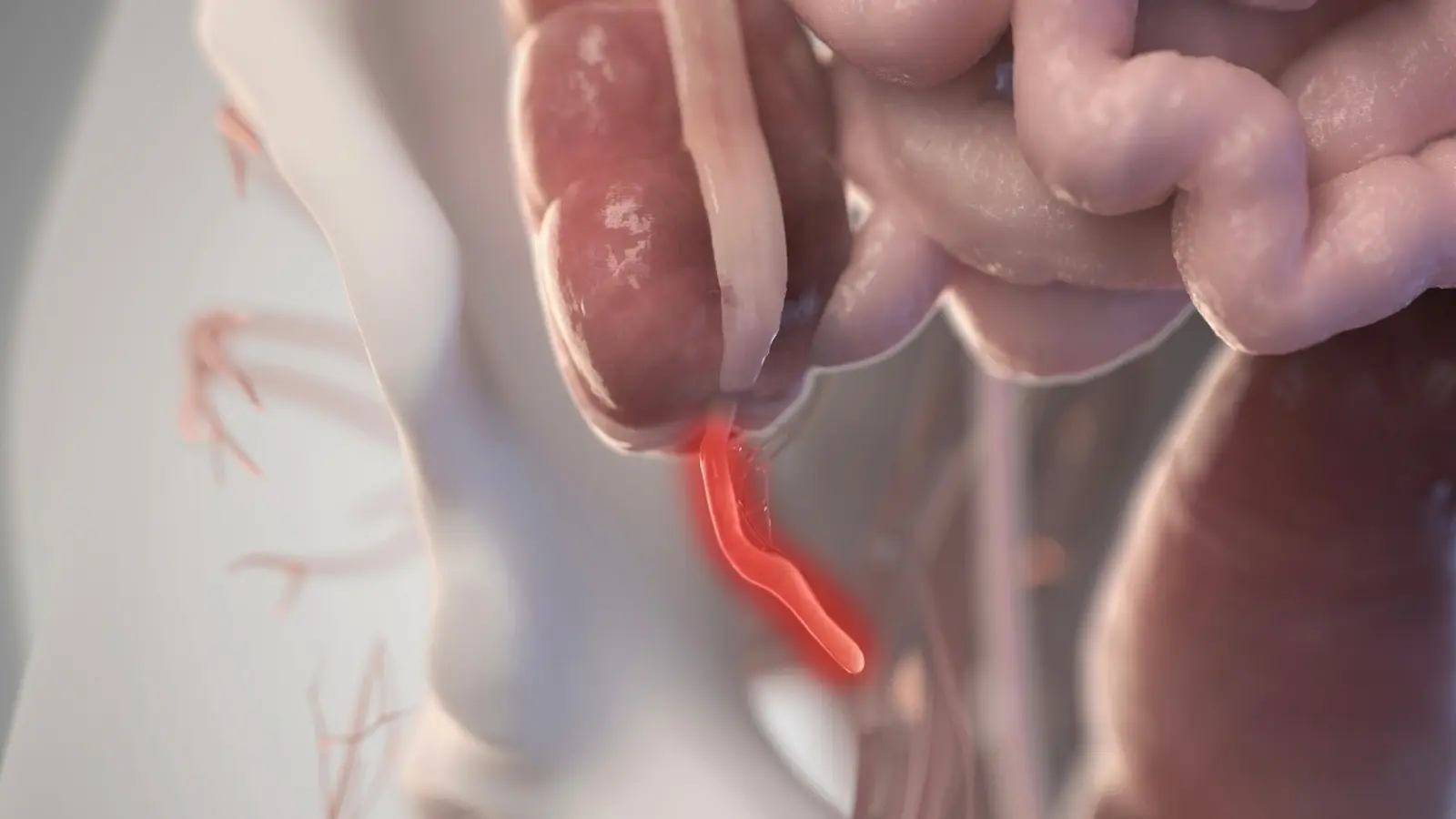
Most of us carry a small pouch that shows up in anatomy diagrams and medical dramas only when it turns dangerous. But the appendix is not merely a one-off biological hiccup. It is a recurring invention in mammal evolution — an organ that keeps reappearing where conditions favor it. Why would natural selection design the same solution multiple times? That question takes us into immune systems, microbial worlds, and the messy mismatch between ancestral lives and modern medicine.
Repeated invention: clues from comparative anatomy and evolution
Look inside different mammals and you find strikingly different versions of the appendix. In great apes and humans it often appears as a narrow tubular extension from the first part of the large intestine. In some marsupials, the structure is shorter or funnel-shaped. Rodents and rabbits show yet other varieties, sometimes branching or proportionally distinct. That diversity is more than cosmetic. It is the fingerprint of evolutionary repetition.
Comparative analyses suggest an appendix-like organ evolved independently in several mammal lineages — primates, marsupials and glires (the group containing rodents and rabbits) among them. Broader surveys have identified dozens of independent origins across hundreds of species. When a structure emerges repeatedly, scientists call that convergent evolution. Convergence doesn’t guarantee indispensability, but it does signal a recurring advantage under certain ecological pressures.
What pressures favor an appendix?
The common thread seems to be environments where intestinal infections and microbiome disruption are frequent. Early hominins lived with little sanitation, limited clean water and high pathogen exposure. In such settings, a pocket that could help preserve beneficial microbes or prime the immune system after diarrhea would confer a survival edge. Over generations, those benefits can translate into repeated selection for an appendix-like structure.
How the appendix contributes to immunity and microbial stability
The appendix is densely packed with gut-associated lymphoid tissue — immune cells that sample intestinal microbes and teach the young immune system what to tolerate and what to attack. During childhood and adolescence, lymphoid follicles in the appendix are particularly active, producing antibodies such as immunoglobulin A (IgA) that work along mucosal surfaces. Short sentence. Direct function.
Beyond immune education, researchers have proposed the appendix serves as a microbial refuge. The idea is simple: biofilms — thin communities of bacteria embedded in protective matrices — may line the appendix and shelter beneficial microbes when the colon is swept clean by severe infection or antibiotics. When conditions calm, those microbes could seed the rest of the gut, speeding recovery of a healthy microbiome. That in turn influences digestion, pathogen resistance and inflammation control.

These mechanisms are hypotheses supported by anatomical and microbiological evidence, but probing causality in living humans is hard. You cannot run controlled long-term evolution experiments on people. Instead, scientists combine comparative anatomy, population-level studies and laboratory work to build a coherent picture.
Does removing the appendix hurt fertility or other functions?
Historically, concerns circulated that appendicitis or surgical removal (appendectomy) could reduce female fertility by causing inflammation and scarring near the fallopian tubes. The evidence, however, does not support a meaningful fertility decline after appendectomy; some large studies report no reduction, and a few even note slight increases in pregnancy rates. The appendix appears multifunctional, but diminishing reproductive fitness does not look like one of its primary roles in humans.
Still, the organ carries risk. Appendicitis remains a common emergency. In modern healthcare systems, appendicitis is typically treated by removing the inflamed appendix, a procedure that is now routine and often lifesaving. That medical calculus — balancing evolutionary utility in past environments against acute risks now — is central to how evolutionary medicine frames many traits.
Expert Insight
"When we study the appendix, we're really studying interactions between host, microbes and environment," says Dr. Elena Park, an evolutionary immunologist at a major university. "It’s one of those organs that makes sense when you consider the microbial ecology of ancestral living conditions. Today’s sanitation and antibiotics have shifted the balance: an organ that once provided population-level benefits now carries individual-level risks."
Dr. Park’s point captures the mismatch at the heart of this story. Evolution optimizes for reproductive success across generations in the environments where a population evolved. It does not design for the conveniences of modern life — clean water, sewage systems, or emergency surgery. Medicine’s job is different. It focuses on immediate health and lifespan for individuals living in new environments, and that often means removing an organ that used to be useful.
Looking forward, there are practical implications. Understanding how the appendix shapes microbiome recovery could inform probiotic therapies or strategies for restoring gut communities after disturbance. It could also influence how we weigh conservative management versus surgery for certain cases of appendicitis. Finally, the appendix provides a clear case study in evolutionary medicine: traits that were adaptive once are not automatically essential now.
So what should a curious reader take away? The appendix is neither a pointless evolutionary leftover nor an irreplaceable organ whose loss devastates modern humans. It is a repeated evolutionary solution to recurrent ecological challenges — a small, immune-rich pocket that likely helped our ancestors recover from gut infections. The conditions that favored it are less common in many parts of the world today, but the organ’s story still teaches us about how evolution balances costs and benefits across time. Consider that the next time you see an anatomy chart: what looks vestigial often has a backstory tied to survival, microbes, and the long negotiation between bodies and environments.










Leave a Comment
Comments (2)
sounds plausible but is the biofilm refuge proven in humans? feels like comparative anatomy + lab work, but direct causal proof seems thin, no?
Wow, never thought the appendix is a microbial safe-house. Makes me rethink 'useless organ' jokes. If true, kinda cool but also risky!