
5 Minutes
Peanut shells are not trash. They are a carbon-rich opportunity waiting for the right spark.
From snack waste to high-tech carbon
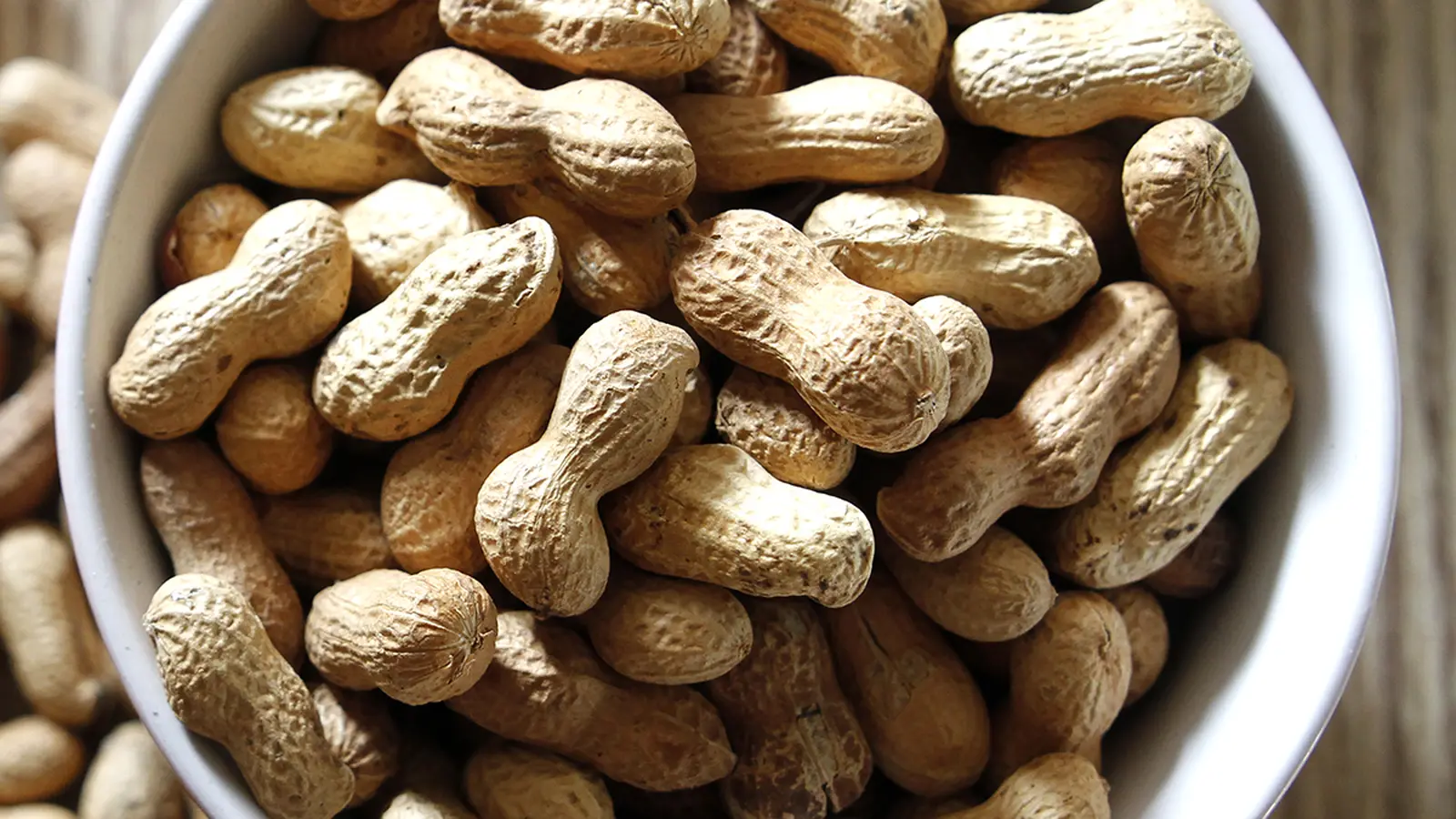
Every year the world buries more than 10 million tonnes of peanut shells in low-value applications or simply discards them. That adds up to an embarrassment of organic abundance: a botanical polymer rich in carbon, largely ignored. Researchers at the University of New South Wales have taken a different view. What if those brittle husks could be transformed into graphene-like material — the sort that electronics engineers covet for its conductivity and strength?
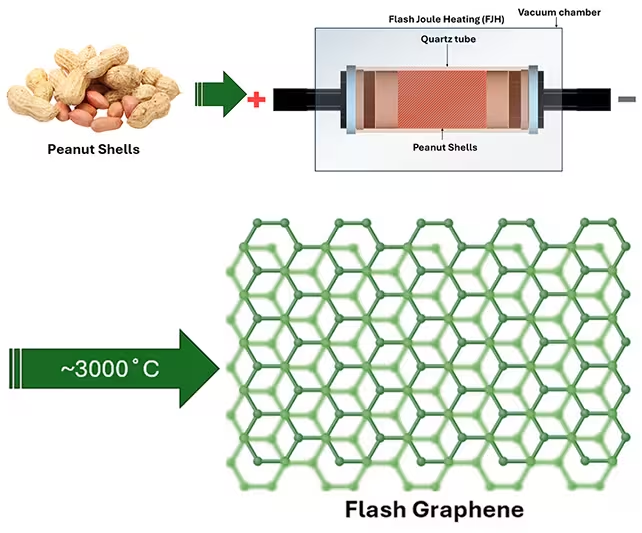
The trick rests on lignin, a natural polymer packed into the cell walls of plants. Lignin is essentially a lattice of carbon and hydrogen; with the right processing it can be coaxed to reorganize into graphitic structures. But there’s a catch: producing clean, defect-free graphene usually demands expensive equipment, harsh chemicals, or long processing times. The UNSW team tackled that barrier by combining careful pretreatment of the shells with a technique called flash joule heating.
Flash joule heating, or FJH, sounds dramatic because it is. A millisecond-long electric pulse drives temperatures above 3,000 °C in the sample. At that instant, the carbon atoms shuffle and reorganize, forming few-layer, turbostratic graphene — a form in which layers are stacked but rotated so they act more independently than in tightly aligned graphite. The result: material with much-improved electrical and thermal properties compared with raw biomass char.
But FJH alone was not enough. The researchers experimented with several pretreatments to remove impurities and concentrate carbon. The best sequence started with indirect Joule heating at roughly 500 °C for five minutes, followed by a short, higher-temperature step. That staged approach turns shells into a conductive char, strips volatile components, and reduces defects before the flash step.
"Most of the waste from the shell is either discarded or recycled into low-value applications that don't maximize their full potential," says UNSW mechanical engineer Guan Yeoh. "What we have shown in this work is that basic peanut shells can be turned into high-quality graphene, using much lower energy than is currently required and therefore at a lower cost. We also do not need to use any chemicals, so there is an added environmental benefit."
Quality, limits, and real-world prospects

Laboratory analyses show the processed material scores highly for graphitic character. Yet the graphene produced tends to be a few layers thick and turbostratic rather than perfectly monolayered. For many applications — electrodes, conductive coatings, thermal interfaces — that is not a fatal flaw. Turbostratic stacking can preserve desirable properties while easing manufacturing constraints.
Scaling remains the hard part. The team estimates three to four years of engineering development before a commercial pipeline could be realistic. What needs solving? Uniform throughput, consistent pretreatment at larger volume, and integration of the FJH step into continuous processing lines. Economists and engineers will also ask about energy balance: does the energy saved by avoiding chemical routes and lowering temperatures outweigh the electricity used in high-voltage flashes? The UNSW work already points in the right direction by minimizing chemical inputs and shortening processing time, but lifecycle assessments will be essential.
Beyond peanuts, the method is flexible. The researchers plan to try other waste streams — coffee grounds, banana peels, and similar biomass — anything that can be converted into a conductive char rich in lignin or aromatic carbon. Imagine a future where café waste and agricultural husks feed into a local plant that produces conductive inks and battery additives. The circularity is appealing: lower landfill, new materials, and less reliance on fossil-derived carbon sources.
Importantly, this approach aligns with a growing movement in materials science: convert low-value biomass into advanced carbon materials without toxic reagents or protracted synthesis. The combination of targeted pretreatment and millisecond heating addresses two priorities at once — energy efficiency and product quality.
Expert Insight
"Turning everyday organic waste into technologically useful carbon is an elegant example of resourcefulness," says Dr. Lila Martínez, a materials engineer who studies sustainable nanomaterials. "The key will be reproducibility. Lab demos are persuasive, but industry needs consistent feedstock handling and a predictable performance envelope. If UNSW can show stable yields and low defect density at scale, this could change how we think about waste streams as raw material."
The path from bench to market is rarely straight. Still, the UNSW study sketches a credible route: identify carbon-rich biomass, optimize a low-energy pretreatment to produce conductive char, then use a flash of heat to create graphene-like layers. The payoffs could touch many sectors — faster charging batteries, better heat spreaders for electronics, and cheaper conductive inks for printed electronics — all produced from materials once tossed into compost.
Is peanut-shell graphene the final answer? Doubtful. Is it a practical, near-term piece of the sustainability puzzle? That looks more likely. The question now is whether industry partners will take that spark and scale it into a steady flame.








Leave a Comment
Comments (2)
I've seen biomass upcycling demos, the pretreatment is always the headache. If they can nail consistent feedstock and throughput, this could actually work. fingers crossed
Is this even true? Sounds cool but can peanuts really make usable graphene at scale, and what about the energy for those 3000°C flashes?? hmm