

4 Minutes
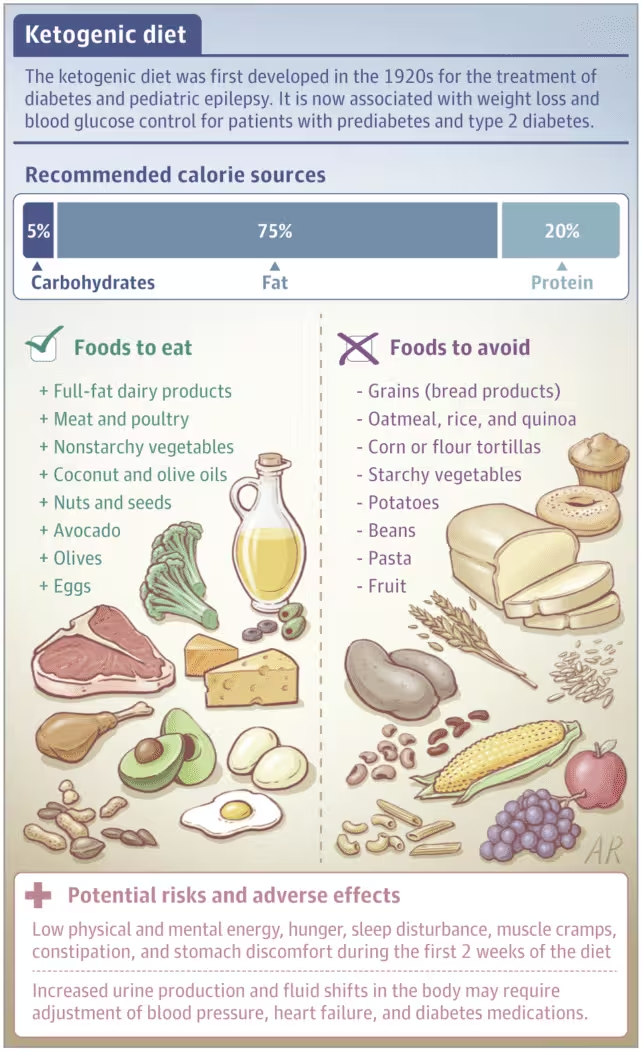
The finding came fast. Within a week, blood sugar that had been stubbornly high dropped back into normal range. Scientists watching the mice called it striking. The diet those animals were fed was an extreme version of ketogenic eating—very high in fat, virtually no carbohydrates—and the effect on glucose control was immediate.
Research teams across several U.S. institutions set out to test whether forcing the body into ketosis—the metabolic state where fats, not sugar, become the primary fuel—could undo the harmful effects of high blood sugar on muscles and aerobic fitness. Earlier experiments had shown that hyperglycemia blunts the normal muscular adaptations to exercise, limiting gains in VO2peak (the maximal rate of oxygen use during exercise). The new work asked: can a ketogenic switch restore those lost responses?
What the researchers did and what they saw
Mice with elevated blood glucose were placed on a strict ketogenic regimen. Over the following weeks the animals’ physiology changed in measurable ways. Not only did fasting glucose normalize quickly, but the animals’ muscles were remodeled: muscle tissue became more oxidative, richer in mitochondria, and better able to sustain aerobic activity. VO2peak—an objective index of how effectively an organism uses oxygen during exertion—improved in the hyperglycemic animals after eight weeks on the diet.
Exercise amplified many of these shifts. When the mice engaged in aerobic training after spending time on the ketogenic diet, their tissues responded more readily: fatigue resistance rose and oxygen delivery to muscles improved. The authors interpret these signals as evidence that ketosis is doing more than passively providing a new fuel. Metabolic signaling and blood-vessel responses appear to be actively altered under ketosis, shaping how muscle adapts to work.
But the picture is not uniformly rosy. The mice that saw VO2peak restored did not automatically run faster or longer in performance tests while remaining on the carbohydrate-depleted menu. The most plausible explanation: when intense performance relies on rapid carbohydrate metabolism, an absence of carbs can handicap output even if aerobic capacity metrics improve. When researchers reintroduced carbohydrates to the animals’ diets, exercise performance rose again.
“After one week on the ketogenic diet, their blood sugar was completely normal, as though they didn't have diabetes at all,” said Sarah Lessard, a physiologist at Virginia Tech Carilion, commenting on the rapid glycemic response. She and colleagues emphasize that diet and exercise interact in complex ways: neither acts in isolation when shaping metabolic and muscular health.
Implications, limits, and next steps

For people with high blood sugar or diabetes, these results point to a nuanced possibility: certain dietary patterns may restore some of the muscle-level adaptations that hyperglycemia blocks, and pairing diet with exercise could magnify benefits. High aerobic capacity in people with diabetes correlates with fewer complications, so any strategy that preserves or restores VO2peak has potential clinical value.
Still, caution is essential. Mouse physiology is informative but not decisive for human treatment. The ketogenic protocol used in the study was intentionally severe—hardly identical to the typical human keto plan some people follow. Adherence is another real-world barrier; ketogenic diets are notoriously difficult to maintain long term. The researchers also found that the aerobic improvements were specific to animals that started with high blood sugar—mice with normal glucose did not show the same boost.
Practical takeaways are modest but meaningful. Diet can change how muscle responds to exercise. And for those whose blood sugar is elevated, matching nutrition to training goals may require different strategies than for people with normal glucose: sometimes restoring carbohydrates improves performance even if ketosis helps recovery and metabolic health.
The study highlights that metabolic state matters: ketosis can reverse hyperglycemia and reshape muscle, but performance and health depend on matching fuel availability to activity.
Expert Insight
“This work shows diet is not merely fuel; it rewires signaling,” says Dr. Amanda Reyes, a metabolic physiologist and science communicator not involved in the study. “In practical terms, athletes and patients alike need to consider both the metabolic benefits and the trade-offs—especially for activities that demand quick carbohydrate use.”
Human trials are already being planned. Those studies will be critical to understand dose, duration, safety, and real-world effects. For now, the mouse data add a valuable piece to a complex puzzle: nutritional state can recover lost aerobic adaptations when blood sugar is elevated, but optimal health outcomes likely require individualized plans and clinical oversight.
Clinicians still recommend a variety of validated approaches to lower blood sugar—keto is one option, Mediterranean-style eating is another—and the best choice is often the one a person can maintain under medical guidance. The mice study opens a door. Walking through it will take careful human research and a realistic sense of trade-offs.













Leave a Comment
Comments (2)
Is this even true for humans? study used extreme keto, mice not people. Performance tradeoffs sound real, and adherence??
Whoa, mice normalized blood sugar in a week? That's wild. Keto reshaping muscle makes me curious... human trials please