
3 Minutes
They say you can judge a person by their handshake. It turns out your hands may be telling a deeper story about your health—and possibly how long you might live.
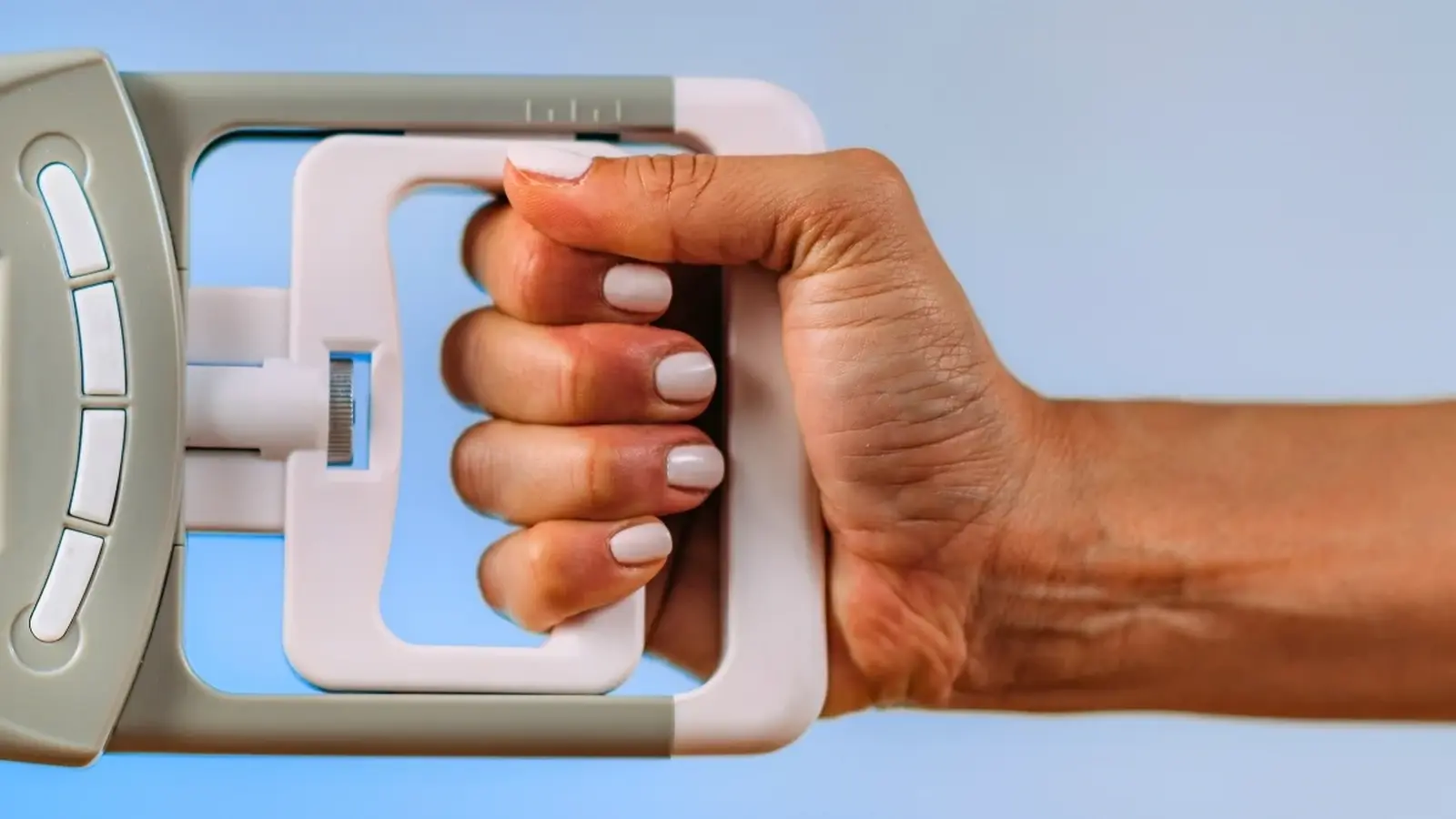
Social feeds love neat takeaways. A single number you can measure at home. A simple test that promises insight. Grip strength fits the bill: squeeze a device, read a number, and suddenly there’s a headline about longevity. The science behind that headline is real. But like most neat stories, the reality is more interesting and messier than the clickbait.
Researchers measure grip strength with a handheld dynamometer and then follow people for years, tracking diseases and deaths. One large UK study of roughly half a million adults aged 40–69 found that each 5 kg drop in grip strength correlated with about a 20% higher risk of death over the follow-up period. Studies have also flagged specific thresholds of muscle weakness—commonly cited as under ~26 kg for men and ~16 kg for women—as linked to higher risks of death from heart disease, respiratory illness, chronic obstructive pulmonary disease and several cancers.

Why does a squeeze of the hand carry so much meaning? Grip strength isn’t magic; it’s a proxy. Your hands reflect the condition of muscles, nerves and how well your body turns energy into movement. They hint at the resilience of blood vessels and the state of your cardiovascular system. In older adults, grip strength becomes an especially sharp signal because it mirrors age-related loss of muscle mass and power—what clinicians call sarcopenia—and that loss is tightly tied to falls, fractures and frailty.
Some scientists have gone further and suggested grip strength be treated like a fresh vital sign—alongside temperature, pulse, breathing rate and blood pressure. That proposal comes from the practical appeal of a quick, inexpensive measure that integrates signals from multiple body systems. It makes sense. But there’s a key caveat most headlines leave out.
Correlation is not causation. A weak grip doesn’t make you die sooner. It signals that something else—reduced muscle mass, chronic disease, poor circulation, long-term inactivity—may be undermining health. Strengthening your grip in isolation is unlikely to erase those underlying drivers.
So how did measurement turn into hype? Part of it is human nature: we want solutions, not signs. Influencers and some outlets translate a useful biomarker into a prescription—do a few grip exercises and you’ll live longer. At best, that’s an oversimplification. At worst, it misleads people into thinking a cosmetic fix replaces comprehensive care.

That doesn’t mean grip work is worthless. Improving hand and forearm strength can restore function, help with daily tasks and improve athletic performance. But if longevity is the goal, the evidence points back to broader, time-tested strategies: regular physical activity that includes resistance and balance work, adequate protein and a balanced diet, good sleep, social connection and stress management. These interventions change the physiological landscape that a dynamometer is reading.
Practical takeaway? Think of grip strength as a useful window into your overall condition—especially as you age—rather than a lever you can pull to change fate. If you’re curious, ask your clinician to measure it during a checkup. Then use that data to guide bigger, evidence-based steps: strengthen your body comprehensively, treat chronic conditions, and tend to lifestyle factors that truly move the needle.

Leave a Comment
Comments
No comments yet. Be the first.