
4 Minutes
Atlas gains efficiency as a mid-cycle refresh nears U.S. showrooms
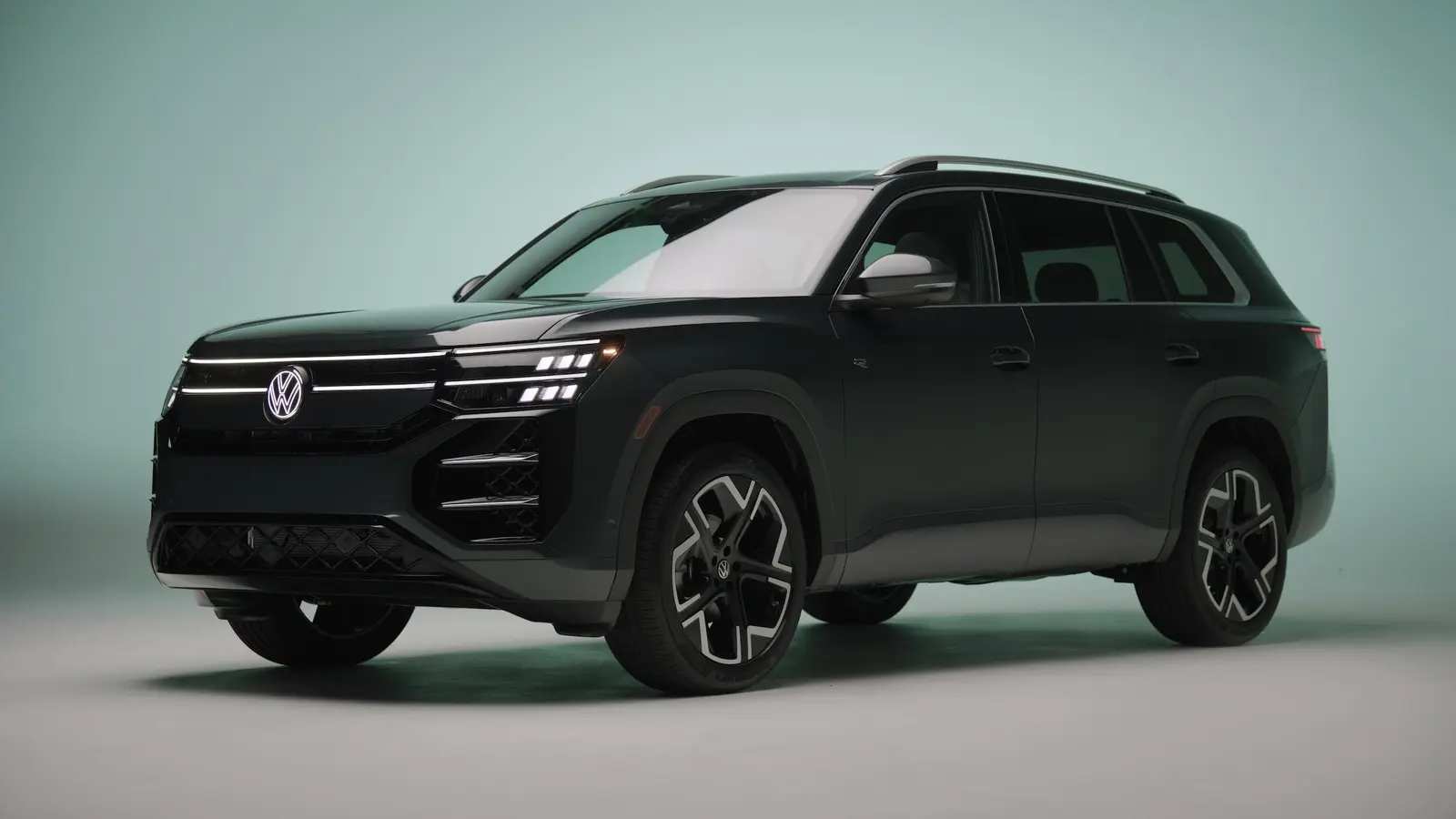
Volkswagen has unveiled fuel economy estimates for the redesigned 2027 Atlas, and the mid-size three-row SUV is sharper on fuel than its predecessor. Built on the MQB Evo architecture borrowed from the Teramont Pro in China, the all-new Atlas will begin reaching U.S. dealer lots this fall with modest but meaningful gains in efficiency.
Official economy figures
Volkswagen lists a combined rating of 25 mpg for the front-wheel-drive Atlas and 23 mpg with its 4MOTION all-wheel-drive system. Those figures translate to about 9.4 and 10.2 liters per 100 kilometers, respectively — respectable numbers for a large family hauler with three-row seating and substantial curb weight. Volkswagen also says a hybrid variant arriving with the mid-cycle refresh could top 30 mpg (roughly 7.8 L/100 km).

What’s under the skin
The current combustion flagship is the familiar 2.0-liter TSI four-cylinder. In pure petrol form it delivers 282 horsepower and 258 lb-ft (350 Nm) of torque, and the Atlas can tow up to 5,000 pounds (2,268 kg) when properly equipped. Power is routed through an eight-speed automatic; 4MOTION models use a Haldex-style coupling that normally decouples the rear axle to save fuel but can transmit up to 50% of available torque rearward almost instantly when conditions demand.
Hybrid plans and technical hints
Volkswagen has not published the Atlas-specific hybrid powertrain details, but clues come from the Europe-bound “1.5 Hybrid” package the company announced earlier in 2026. That system, intended for the Golf and T‑Roc from late 2026, pairs a 1.5-liter TSI with a 1.6‑kWh NMC battery, an electric A/C compressor and two electric machines — one of which functions as a generator. The setup supports both serial and parallel operation: the petrol engine can either charge the battery / feed the electric drive or work together with it.

For the Atlas, Volkswagen seems likely to scale that architecture up around a 2.0‑liter TSI to match the SUV’s weight and performance needs, while still improving real-world economy. The European 1.5 Hybrid is offered with two peak outputs — about 100 kW (134 hp) and 125 kW (168 hp) — indicating VW wants flexible hybrid options across the lineup.


How it stacks up against rivals
If the Atlas hybrid does exceed 30 mpg, it will enter a crowded battlefield. Key competitors include the Toyota Highlander (with a strong self-charging hybrid), the Kia Telluride, and the closely related Hyundai Palisade. Each brings its own balance of price, equipment and efficiency, so Volkswagen will position the Atlas to emphasize interior space, German-tuned driving dynamics and the latest connectivity and safety tech.
Trim lineup and market positioning
Volkswagen hasn’t formally announced the 2027 Atlas trims, but U.S. reporting suggests a four-grade range: SE, SE with Technology, SEL R-Line and SEL Premium R-Line. Expect the R-Line badging to add sportier styling cues and higher-end materials, while the SEL Premium will likely host the most advanced driver-assistance and infotainment features.

- Highlights: 25 mpg FWD / 23 mpg AWD combined
- Projected hybrid: over 30 mpg combined
- 2.0 TSI (gas) — 282 hp and 258 lb-ft torque
- Towing capacity up to 5,000 lbs
Volkswagen’s global strategy is already moving toward electrified options: the China lineup favors plug-in and extended-range electrics, while Europe receives several MQB Evo models with mild- and plug-in hybrids. The Atlas update looks like the brand bringing that same efficiency focus to a family-focused SUV in the U.S. market.
Volkswagen claims the updated 4MOTION system can engage the rear axle in milliseconds — in many cases before slip occurs — which helps both traction and fuel economy when the car is driven conservatively.
Bottom line: buyers who need three-row space but want better fuel economy should keep an eye on the 2027 Atlas, particularly once Volkswagen confirms hybrid specifications and EPA ratings later this year. The refreshed Atlas aims to blend familiar practicality with updated powertrain options that tighten the gap on class leaders.

Leave a Comment
Comments (2)
Wow 30mpg+ in a 3-row? that's wild. If they keep towing and space, this could be the only VW I'd consider. Pricing will make or break it tho
Is VW really getting better mpg with the Atlas? 25 vs 23 mpg sounds small, hybrid 30+ ok but where's the plug option and real world tests… suspicious