
3 Minutes
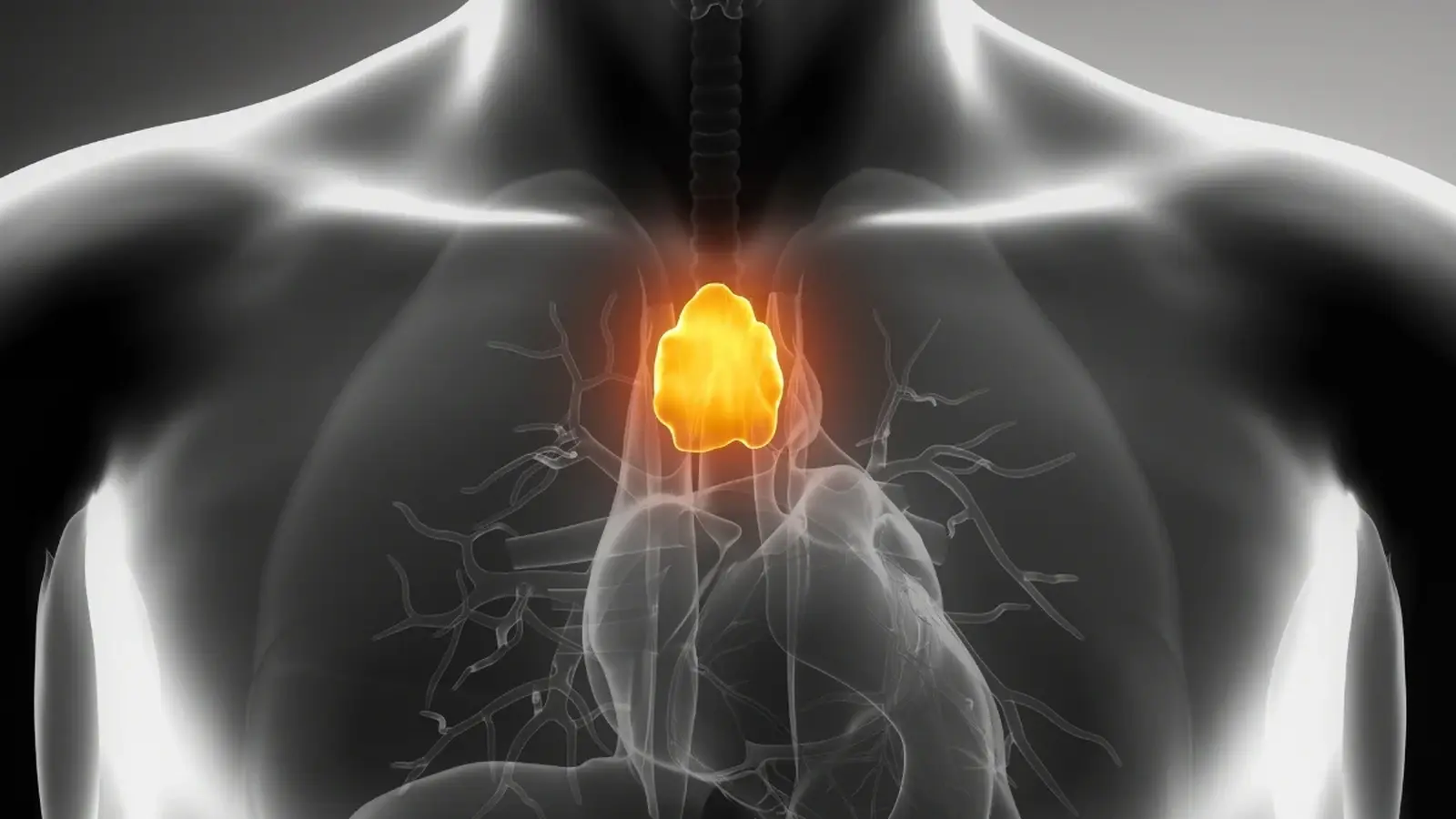
Surgeons often treat the thymus like museum dust — something harmless to remove and forget. Short sentence. But recent studies are forcing a rethink. Could this small gland behind the breastbone be doing quiet, lifelong work that protects us from cancer?
In childhood the thymus is unmistakably crucial. It trains T cells, the immune system's frontline soldiers, teaching them to tell friend from foe. Remove it early and a child can show long-term reductions in T cells and weaker responses to vaccines. Then puberty arrives and the gland shrinks. It becomes fatty and less active. That apparent dormancy is why cardiothoracic surgeons often excise it during open-heart procedures — it sits right in the way.
Not every thymus is dismissed. People with thymic tumors or autoimmune conditions like myasthenia gravis still need thymectomy. But a 2023 observational study from Boston raised alarms about routine removal in adults. The researchers compared outcomes for more than 1,100 patients who had their thymus removed with a control group of over 6,000 who did not. Even after adjusting for age, sex, race and excluding those with thymus cancer or myasthenia gravis, the thymectomy group faced nearly double the risk of dying within five years. They were also about twice as likely to develop cancer during that window — and the cancers were often more aggressive and prone to recur.

Harvard oncologist David Scadden put it bluntly when the paper appeared: "We discovered that the thymus is absolutely required for health. If it isn't there, people's risk of dying and risk of cancer is at least double." Those words cut through the conventional wisdom.
Important caveats follow. The Boston study is observational. Correlation is not causation. The researchers could not prove that removing the thymus directly caused the excess deaths or cancers. Still, they found biological hints — a subset of thymectomized patients showed reduced diversity in T-cell receptors, which might weaken immune surveillance and allow malignancies or autoimmune disorders to emerge.
Fast forward to 2025. A team at Yale combed through big national datasets — NCDB and SEER — covering patients from 2004 to 2022. Their analysis did not reproduce the Boston group's headline findings. In adults with small or localized thymomas, thymectomy was not associated with higher five-year mortality or cancer death. Their take: longer follow-up and more detailed immune measurements are needed before changing clinical practice across the board.

So where does this leave surgeons and patients? For now, the literature points to uncertainty rather than verdict. The thymus may be a silent sentinel for some adults, contributing modestly to new T-cell production and immune balance. Or the Boston results could reflect subtleties in patient selection, surgical technique, or other unmeasured factors that big database studies miss.
Surgical choices are rarely binary. When a thymectomy is clinically indicated, patients still need it. But when the thymus is an incidental obstacle during chest surgery, this growing body of research suggests a more cautious approach might be wise. Scientists will need randomized trials, better immune profiling, and longer follow-up to unravel cause and effect. Until then, the tiny gland we thought expendable has reclaimed a bit of mystery — and, possibly, importance.

Leave a Comment
Comments
No comments yet. Be the first.