
A 4.8‑meter dome mirror dangling from a 75‑meter tower might look like a movie prop. In reality it was the spine of a bold experiment that asks a simple, startling question: can sunlight harvested in orbit be beamed down to Earth as usable electricity?
Researchers at Xidian University have built a prototype called Zhuri that aims to do exactly that. The team hung a curved reflector from a tall mast to concentrate sunlight onto photovoltaic panels, converted the output into microwave radiation, and then received those microwaves with a ground antenna that turned the signal back into electrical power. The result: kilowatt‑level transfers and the surprising ability to steer energy to multiple, moving receivers at once.
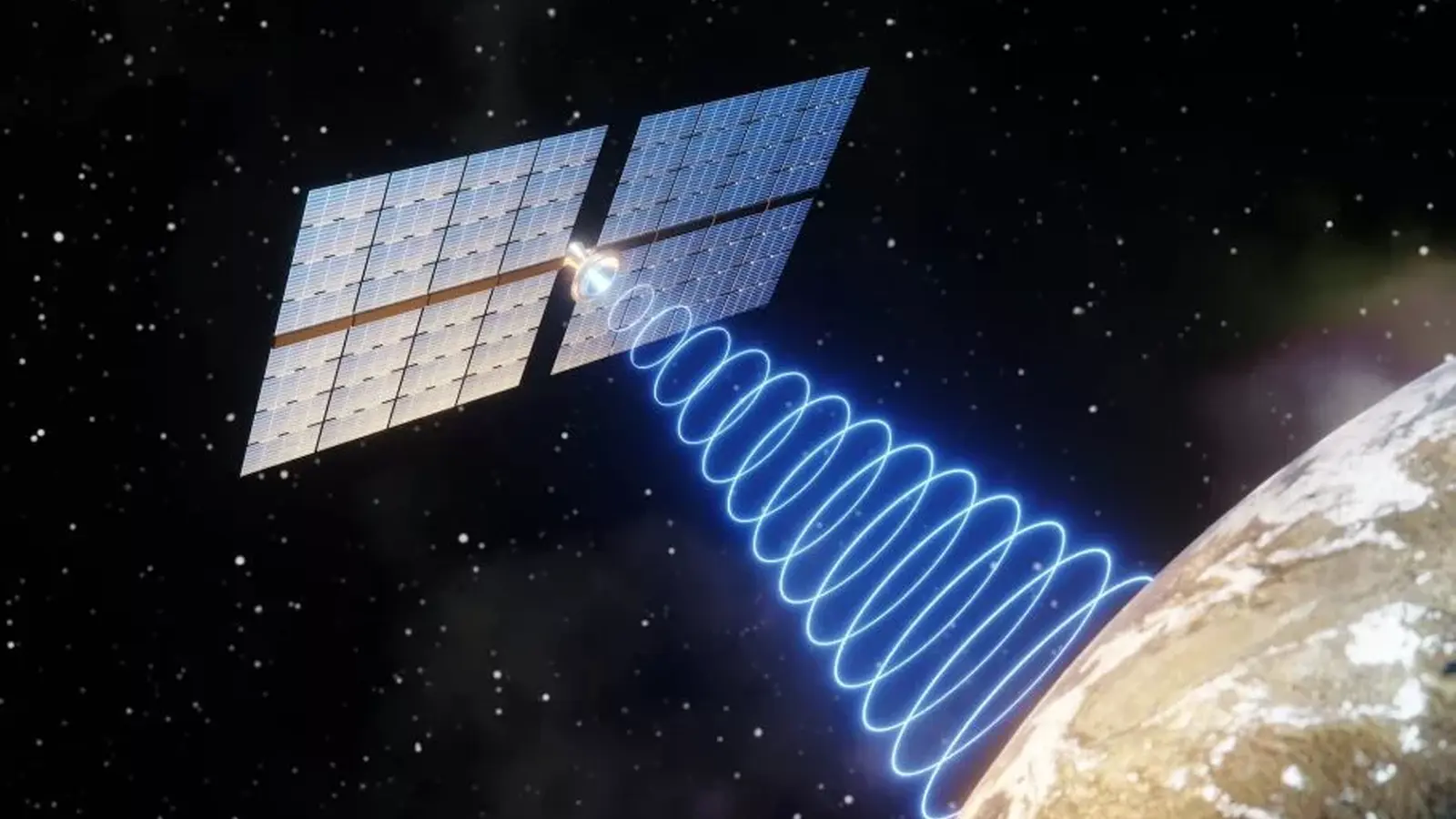
Why bother sending solar energy from space? The short answer: the numbers are persuasive. A solar installation above the atmosphere can collect up to roughly six times the energy available on the ground, free from the interruptions of night, clouds or weather. The Xidian tests were conducted during peak sunlight hours—between 10 a.m. and 3 p.m.—but a geostationary station, sitting some 36,000 kilometers out, would promise continuous generation.

Leading the effort is Duan Baoyan, former president of Xidian University, who traces the idea back to NASA's modular satellite array concept, SPS‑ALPHA. Duan envisions installations that dwarf today's hardware. A one‑gigawatt orbital plant—enough for a medium city—would demand reflector surfaces measured in the hundreds of meters. Ambition, then, is not the problem. The engineering is.
Deploying enormous, foldable structures into orbit is one hurdle. Hitting a tiny target from thousands of kilometers away with a microwave beam is another. Safety complicates the picture further: beams must be controlled precisely to avoid hazards to aircraft, wildlife and people. Regulatory, logistical and cost questions hang over the whole enterprise.
Still, the experiments show that the basic physics work and that control systems can aim energy to moving receivers—an important capability if orbital farms are to serve multiple sites on Earth or even mobile units. The team demonstrated that the pathway from sunlight to microwaves to grid‑ready electricity is more than theory; it’s becoming practice.
There is a long road ahead. Materials, launch economics, international rules and public acceptance will all shape whether Zhuri stays a lab curiosity or becomes part of our power mix. Yet the notion is intoxicating: steady, weather‑proof energy raining from above. It forces you to imagine cities lit not by coal or wind alone, but by sunlight gathered far beyond our atmosphere.
Whether we choose to turn that imagination into infrastructure is a question engineers and lawmakers will have to answer together.


Leave a Comment
Comments
No comments yet. Be the first.