

3 Minutes
Think collagen is a miracle in a jar? Think again. Headlines have loved to promise firmer skin, pain-free knees and faster muscle recovery, but the evidence is grittier than the ads. A sweeping review that pooled data from 113 clinical trials — distilled into 16 systematic reviews covering nearly 8,000 people up to March 2025 — paints a picture of modest gains and persistent unknowns.
Collagen isn’t a single thing. It’s a family of proteins that our bodies build into skin, bone, tendons and more. Production wanes with age. That’s why powdered mixes and capsules caught on: they offer hydrolyzed collagen, peptide fragments small enough, in theory, to slip into the bloodstream and find their way to tissues. Sounds plausible. But plumbing the human body is messy.
The biggest pattern in the data is subtle improvement. People taking collagen supplements saw some benefits for skin hydration and, to a lesser degree, elasticity. Muscle markers nudged in a positive direction. Pain from osteoarthritis fell for some participants. These were not Hollywood transformations. Think of improvements as steady rather than spectacular — the kind you notice after months, not after a week.
Not all studies marched to the same beat. Newer trials reported smaller boosts in skin elasticity but larger gains in hydration. Dose, duration and how outcomes were measured varied widely. One study measured wrinkles; another gauged skin bounce. Some trials lasted a few weeks, others several months. When you mix fish-derived collagen with bovine peptides and topical dressings together, comparisons get hazy fast.
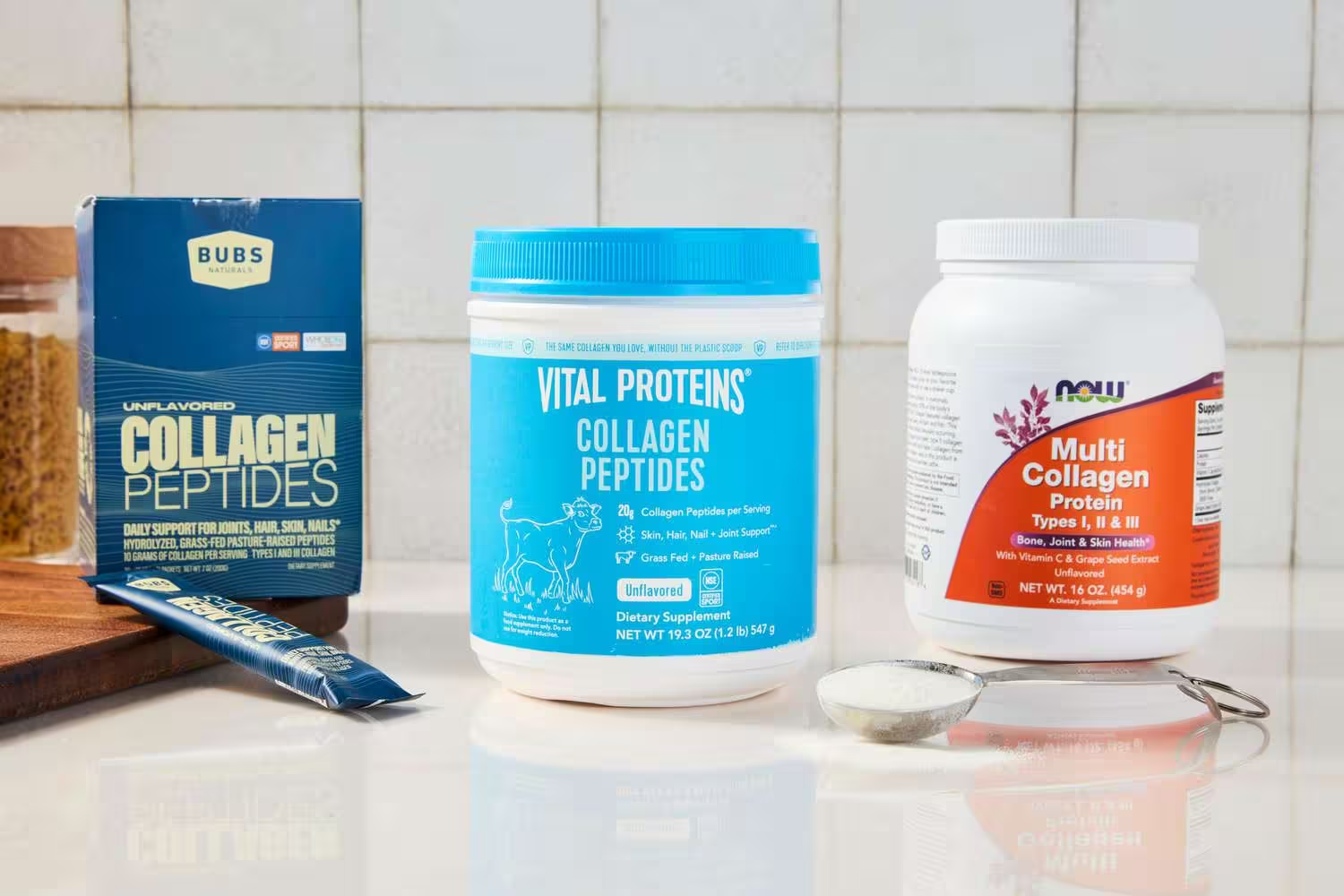
The takeaways are real but restrained: collagen supplements can help with hydration, joint pain and muscle health, yet the evidence is inconsistent and often low quality.
Why the mixed signals? For starters, methodological cracks run deep. Fifteen of the sixteen reviews included in the analysis were judged low or critically low quality. Common issues: small sample sizes, short follow-ups, unregistered trials and uneven reporting of bias. Put simply, many studies leave too many doors open for doubt.
Product variety compounds the problem. Collagen on a store shelf can come from cows, pigs, chickens, fish, shellfish — even lab-made or so-called vegan alternatives that aim to mimic the protein’s effects. Processing changes peptide size and composition, which likely affects absorption and action. Oral powders, pills and topical dressings are all lumped into the same conversations, but they behave differently in the body.
And then there are people. Skin and joint health respond to sun exposure, smoking, sleep, hormones and diet. Two study participants could take the same supplement and see different outcomes simply because one spends weekends on the beach while the other wears SPF religiously. Trials that don’t account for those lifestyle variables risk mistaking correlation for causation.
So what should a curious reader do? If you’re wondering whether to try collagen, temper expectations. Give it time. Consistent use over months, according to the strongest signals in the literature, matters more than a short trial. Pay attention to the type and dose advertised, and be cautious about extravagant claims. For those with osteoarthritis or muscle-wasting concerns, collagen might serve as an adjunct alongside proven treatments and physical therapy — not a replacement.
The research path forward is clear: larger, preregistered trials that standardize which collagen type is used, how it’s processed, the dose and how outcomes are measured. Only then will we separate true biochemical effects from placebo and marketing noise. Until that day, collagen remains a promising but imperfect tool in the wellness kit — useful for some, overhyped for others.














Leave a Comment
Comments
No comments yet. Be the first.