
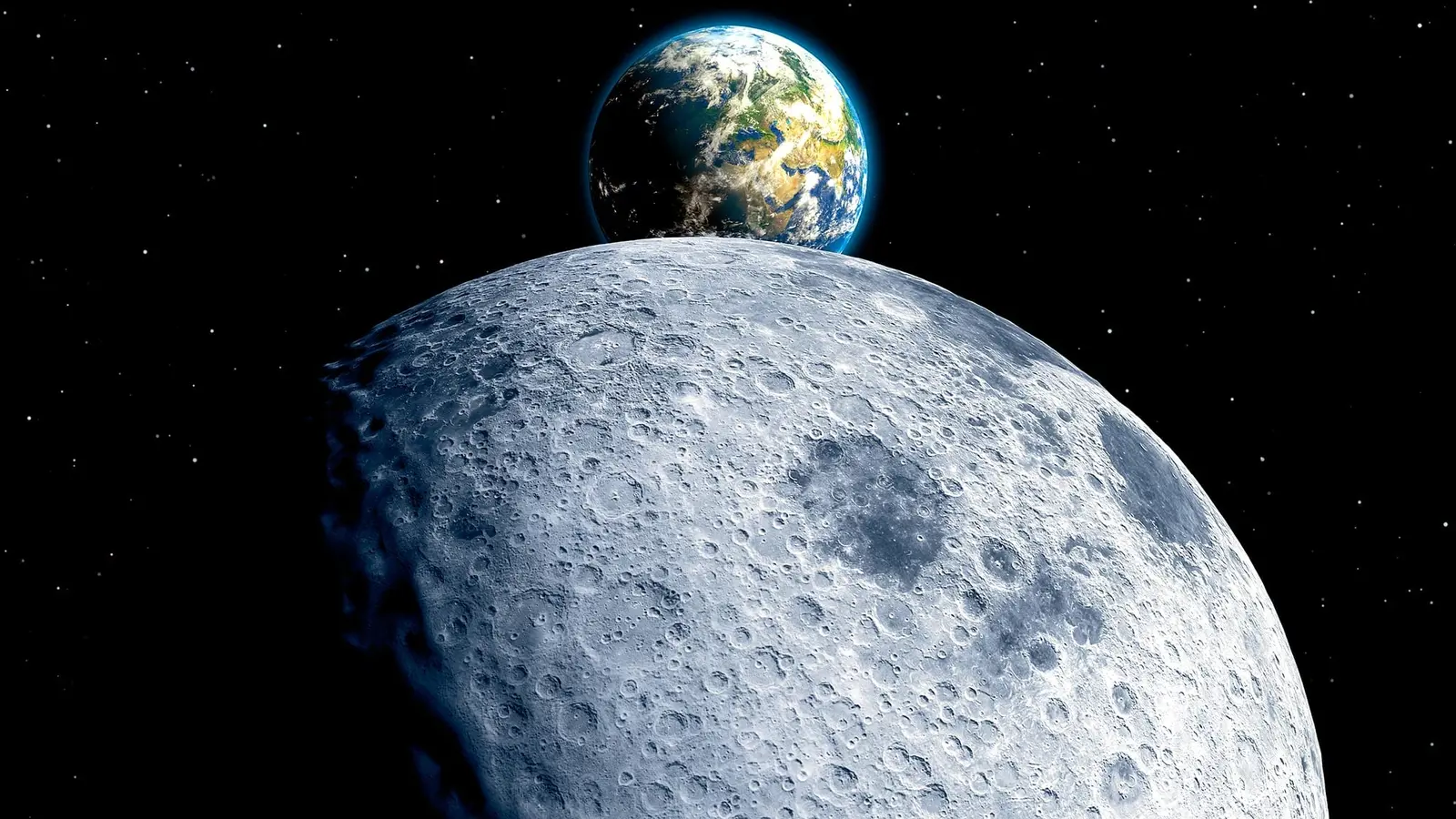
Imagine a quarantine lab tucked beneath lunar dust, not for astronauts but for rocks and dust that might carry life no one has seen before. It sounds like science fiction. Yet two researchers argue it could be the prudent bridge between discovery and safety.
Frederick I. Moxley and Anthony Ricciardi, writing in Ambio, propose that future sample-return missions stop at a lunar biocontainment facility before anything ever reaches Earth. The logic is straightforward: treat unknown extraterrestrial material with the same, if not greater, caution we use for the most dangerous pathogens on our planet. Handle it where an accidental leak would be far less catastrophic.
How would that work? The authors envision a sealed complex on the Moon where incoming samples are processed exclusively by advanced robots. Humans would watch from a distance. No handoffs to Earth-bound labs until exhaustive testing rules out biological hazards. Robotics reduce risk. Distance adds a buffer. Two layers of protection become one strong firewall.
That caution is rooted in hard lessons from Earth’s ecological history. Invasive species, once introduced, can spread in unpredictable and devastating ways. Ricciardi, an expert on biological invasions, warns that an unfamiliar organism introduced into Earth's tightly balanced biosphere could produce similarly irreversible consequences. The lesson is simple but unsettling: novelty is not neutral.

The proposal arrives at a tense moment. Space agencies and private companies are accelerating missions beyond low Earth orbit. Sample returns from the Moon, Mars or beyond are no longer hypothetical. With more players and more launches, the probability of accidents rises. A crashed capsule, a suit breach, a contamination event—these scenarios are all plausible. According to Moxley and Ricciardi, current terrestrial facilities cannot offer absolute guarantees against a truly unknown microorganism.
The Moon could serve as humanity’s first biological firewall.
Placing a quarantine hub on the lunar surface flips the paradigm of planetary protection. Instead of hauling everything home and hoping containment holds, we screen samples where the stakes are lower. It also buys time: exhaustive molecular analyses, culture attempts, and ecological assessments could proceed without putting Earth's biosphere at immediate risk.
There are practical and ethical questions. Building and operating a high-containment facility on the Moon is expensive, technically demanding, and politically complex. Who would run it? What standards would apply? How would international oversight work? Those are hard questions, but Moxley and Ricciardi urge that they be tackled now, not after a mishap forces rushed decisions.
Whether or not humanity finds microbes beyond Earth, the debate reshapes how we think about exploration. Do we race to retrieve samples and trophies, or do we couple curiosity with a stringent safety architecture that keeps both science and life on this planet intact? The Moon may be more than a stepping stone to Mars; it could be the shield that gives us confidence to explore further.


Leave a Comment
Comments
No comments yet. Be the first.