
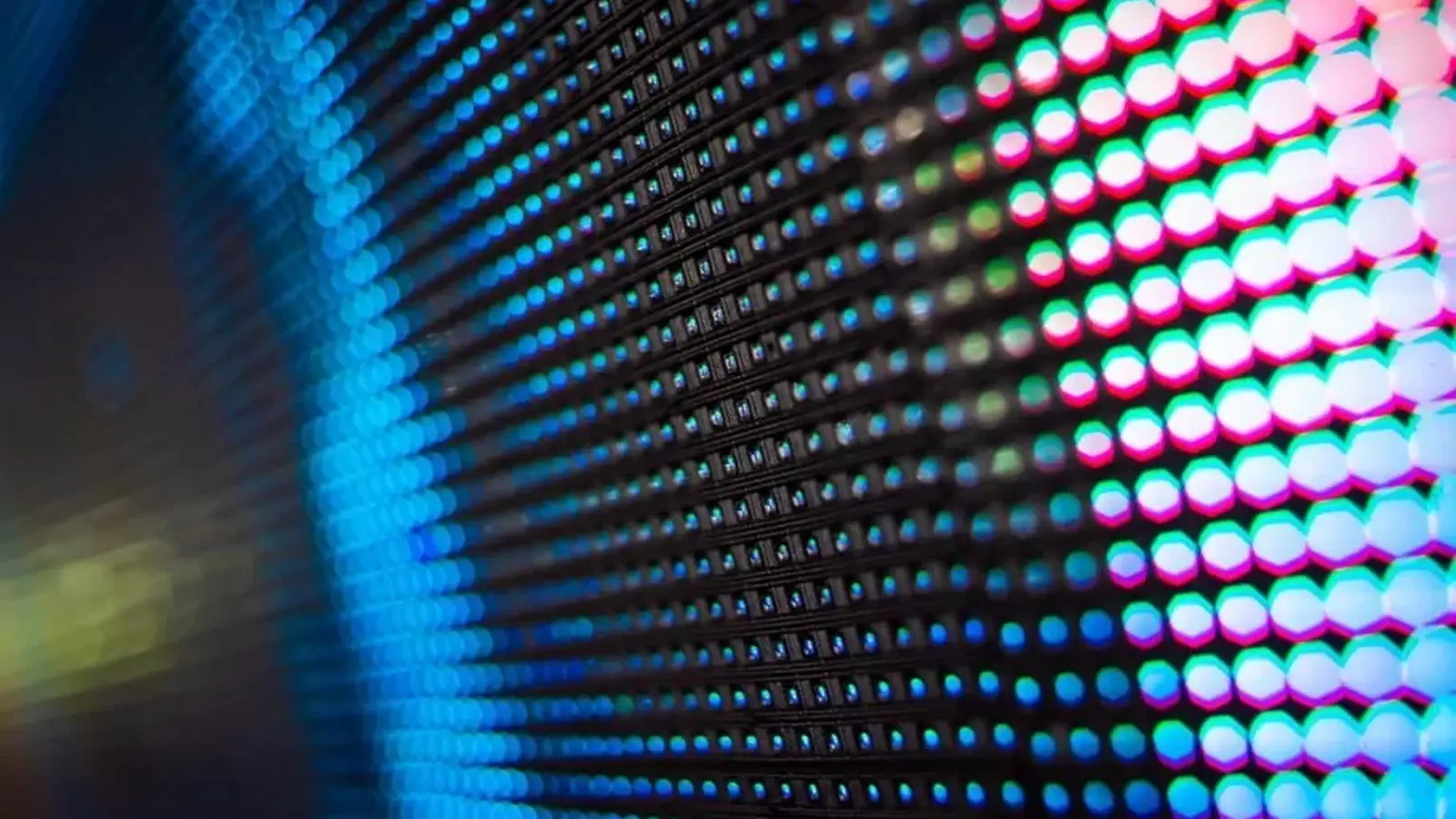
Nearly a century after the word "pixel" first appeared in a technical journal, researchers at ETH Zurich have redesigned that humble building block. Not as a better dot on a screen, but as a tiny device that can both form an image and capture one. Think of a single element doing the job of a camera and a display at the same time. Strange? Definitely. Useful? Potentially revolutionary.
The secret is not paint or pigment but waves. These new pixels operate on nanophotonic principles: incoming light arriving at the chip is converted into surface-bound waves that race across the device, interfere with each other, then re-emerge as controlled light at other points. By designing the microstructure of the surface, the team can predict and shape how those waves meet and what pattern of light will come out.

That ability to steer and read not just brightness but the phase and polarization of light makes these elements more like tiny wave engineers than simple color emitters. They can analyze the oscillation phase of incoming waves, measure polarization states, and reconstitute desired output. In effect, each pixel becomes a vectorial unit — sensitive to richer properties of light than standard red-green-blue intensity alone.
Why does that matter? Because it opens a path toward hardware that no longer separates sensing and showing. A single device could act as a holographic display while simultaneously sampling the light field in front of it. Applications already hinted at by the ETH team include adaptive optics, holographic imaging and displays, high-bandwidth optical communications, and even elements for quantum information processing where precise control of wavefronts is crucial.
For now the work is demonstrative rather than consumer-ready. Current prototypes rely on coherent laser illumination and programmed, static surface patterns to produce and detect images. That said, the researchers are assembling matrices of these pixels and exploring how to scale them into functional arrays. The invention has drawn enough excitement to trigger a patent application and a nomination for the Spark award this year. The full technical report appears in Nature.

Not everyone greets this quietly. On public forums some users voiced alarm: a screen that doubles as a camera could become a covert surveillance tool. The comparisons were stark — echoes of fictional telescreens that watched citizens in dystopian fiction — and some commenters vowed never to buy devices containing the technology. Those fears are not trivial; they raise design, policy, and ethical questions that developers will have to address as the hardware matures.
Technically, many hurdles remain. Making these pixels work under ambient, incoherent light; programming them for dynamic, real-time imaging without bulky lasers; integrating them into power- and cost-constrained consumer electronics — each is a steep challenge. Yet the founding idea is elegant: control light on the surface, and you control both what you see and what you sense.
The real provocation is this: what happens when our screens stop being passive windows and become active eyes? That question will drive scientists and policymakers alike as the line between display and camera grows thinner.

Leave a Comment
Comments
No comments yet. Be the first.