
7 Minutes
XPeng's L03 arrives with a clear mission: disrupt
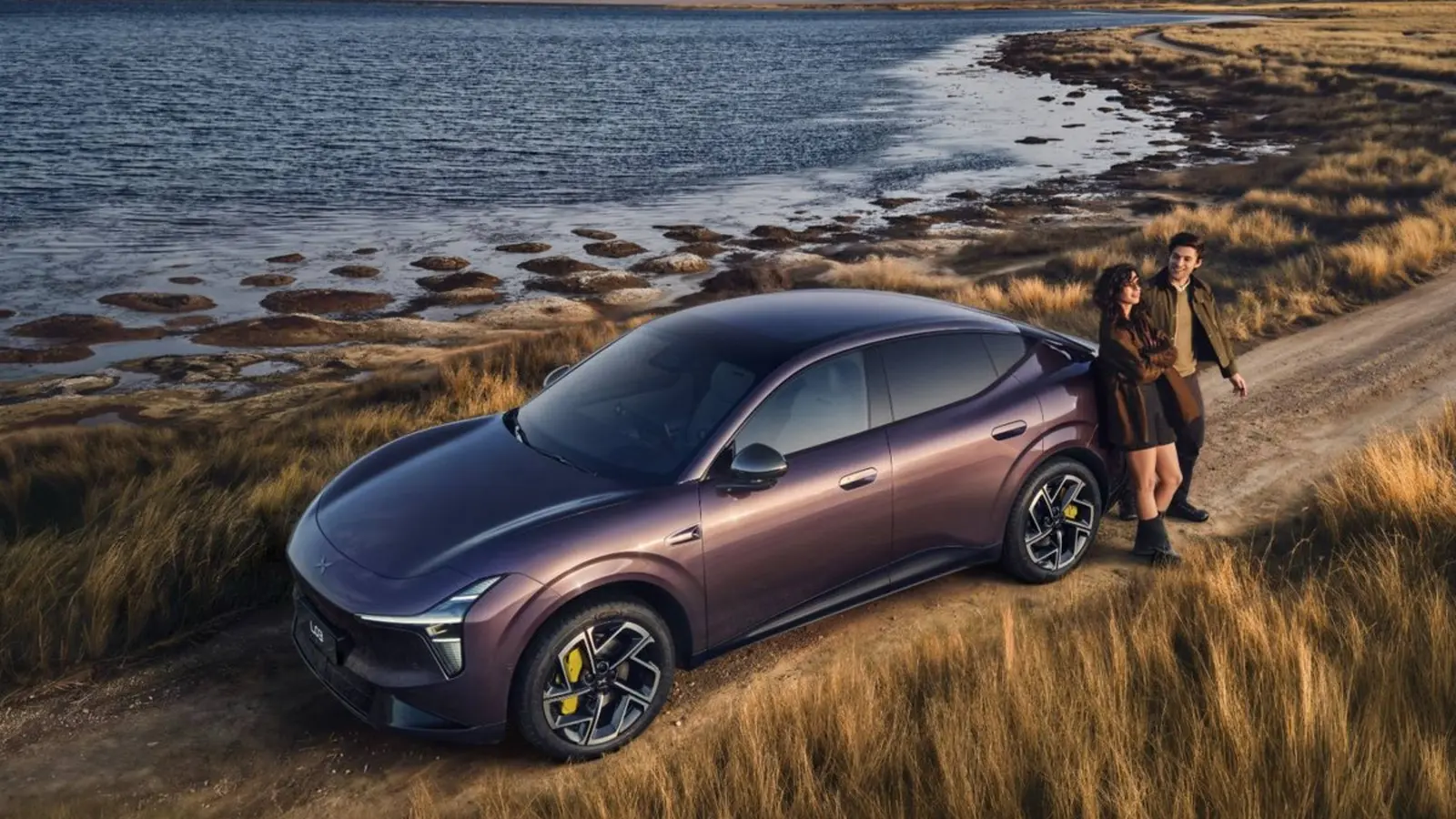
Chinese EV makers have left the concept phase and are now taking aim at global market share. XPeng's latest crossover — sold domestically as the Mona but marketed internationally as the XPeng L03 — is the company's most overt bid yet to challenge legacy brands across Europe and beyond. Pre-sales in China opened on July 2, 2026, and XPeng has confirmed a formal market launch on July 16, 2026. The big question: can an aggressively priced, tech-heavy coupe-SUV topple established players in the mainstream electric segment?

Design and proportions: coupe-SUV with European ambitions
Led by Juanma Lopez, a veteran who previously headed exterior design at Ferrari and worked at Audi, Lamborghini and Genesis, the L03 adopts a modern coupe-SUV silhouette. That fastback profile gives the car an athletic stance while retaining the higher ride height drivers expect from an SUV. XPeng trades some potential rear-headroom for the sleek look that buyers continue to favor.
Key exterior dimensions:
- Length: 4,650 mm
- Width: 1,920 mm
- Height: 1,600 mm
- Wheelbase: 2,850 mm
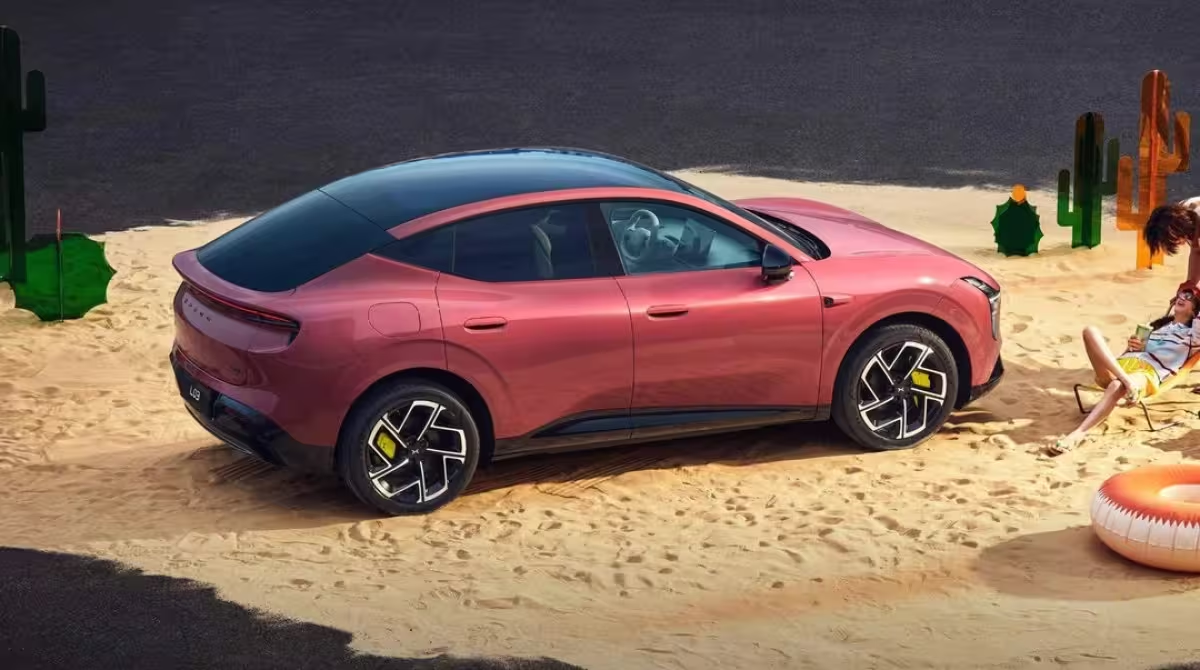
A long wheelbase and wheels pushed to the corners promise roomy rear legroom and confident on-road stance. Buyers can choose 18- or 20-inch wheels, and the palette includes four paint finishes highlighted by a distinctive verdant green that has already become a signature shade for the model.
Aerodynamics and efficiency: details that add range
XPeng engineers focused hard on aero, introducing 23 different exterior optimizations. The showpiece is an active front grille with shutters that open or close based on cooling needs and driving speed, reducing drag when aerodynamic efficiency is paramount.
The result is a claimed drag coefficient of 0.228 Cd — a competitive figure in the compact SUV class. XPeng says the aero improvements alone add roughly 60 km to driving range. Claimed energy consumption sits between 11.5 and 11.9 kWh/100 km, figures that, if validated in independent tests, would place the L03 among the most efficient in its segment.

Powertrains: BEV and range-extended options
XPeng offers two architectures to address range anxiety and market preferences: a pure battery-electric vehicle (BEV) and an extended-range electric vehicle (EREV) with a gasoline generator.
Battery-electric (BEV) version:
- Motor: single 183 kW (246 hp) electric motor
- Battery: LFP cells supplied by CALB
- Capacities: 56 kWh or 69 kWh
- Claimed CLTC ranges: 525 km (56 kWh) and 625 km (69 kWh)
- WLTP range: around 440 km (likely for the larger pack)
- 0–100 km/h: 6.6 seconds
- Charging: supports 3C fast charging up to 220 kW

Range-extended (EREV) version:
- Range extender: 1.5-liter gasoline engine used exclusively as a generator
- Pure electric driving: 315 km on a single charge
- Combined range (battery + tank): 1,330 km under CLTC (around 1,000 km under WLTP)
- Fuel consumption: 5.16 L/100 km (WLTP guideline)
Offering both BEV and EREV configurations widens the L03’s appeal across markets where charging infrastructure varies. The EREV's long combined range will be especially attractive to buyers in regions with limited fast-charging networks.
Performance and charging in everyday use
With 183 kW to the wheels and brisk 0–100 km/h acceleration, the L03 balances daily usability with surprising pace for a mainstream crossover. Fast charging up to 220 kW means downtime at public chargers will be competitive — a must for buyers comparing the L03 to compact rivals like the Tesla Model Y and other European compact crossovers.

Interior: clever storage, tech-first layout
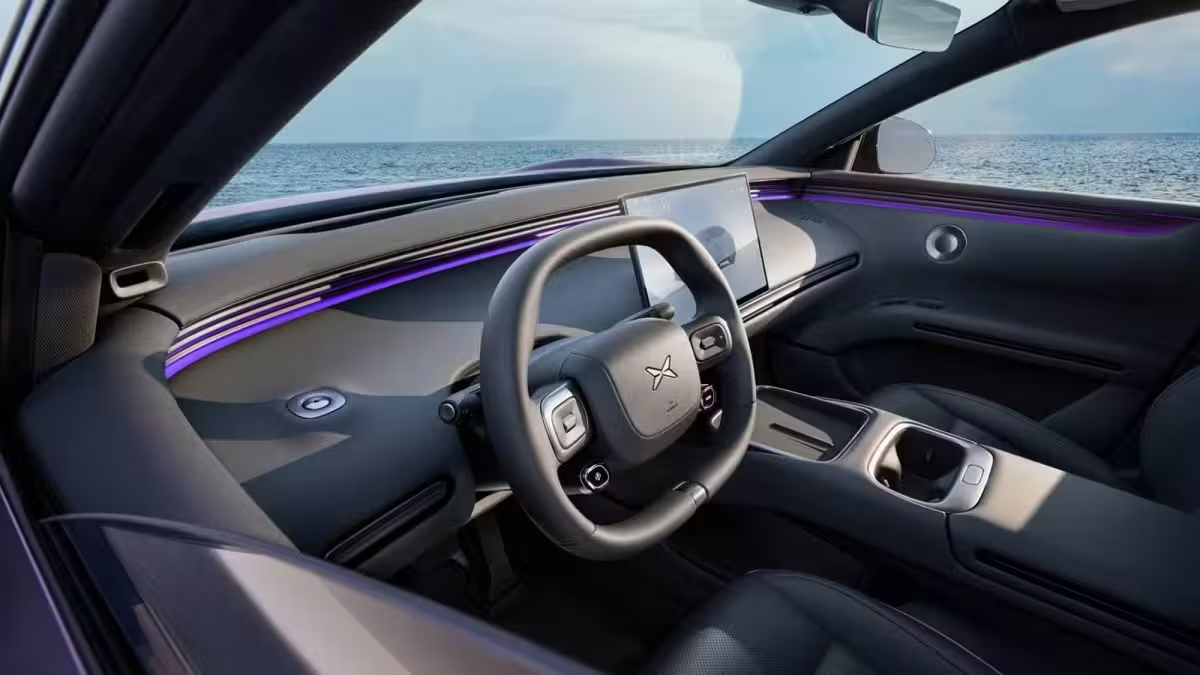
XPeng’s interior strategy departs from the bare, minimal cabins found in some EVs and delivers a mature, tech-forward environment. Practicality has been prioritized: there are 40 distinct storage compartments scattered throughout the cabin for small items and daily clutter.
Cargo and flexibility:
- Front trunk (frunk): 102 L (BEV) or 150 L (EREV), plastic-lined with a drainage plug — ideal for wet gear or coolers
- Rear luggage capacity: 539–600 L depending on configuration
- Rear seats folded: 1,000–1,640 L of cargo space
The drainable frunk is a thoughtful touch for outdoor lifestyles and weekenders, while the broad range of cargo volumes keeps the L03 competitive with other compact SUVs.
Infotainment, HUD and AI: a tech showcase
XPeng is pushing software and AI as core differentiators. The L03 does away with a conventional instrument cluster and instead projects key telemetry onto a wide windshield heads-up display (W-HUD), placing speed, range and navigation directly in the driver’s sightline.
Central controls center on a 15.6-inch 2.5K touchscreen running XPeng’s TNG 6.0 OS. Under the hood of its software stack sits XPeng's Turing AI chip, rated between 1,500 and 2,250 TOPS, powering second-generation Vision-Language-Action (VLA) algorithms and the Navigation Guided Pilot driver-assistance system.
For global launch markets, XPeng will swap out domestic Chinese apps for a fully translated English interface and add integrated Google Voice Assistant support, smoothing the car’s adoption in Europe.
Comfort, materials and audio
The cabin mixes soft synthetic leather and bright metallic trim for a premium feel without overreaching into costly natural leathers. Designers kept some tactile elements, like pull-up door handles, to preserve familiarity and reliability.

Comfort features include:
- Road Noise Cancellation (RNC) to suppress cabin noise via microphones and inverse sound
- 20-speaker premium audio system with over 1,000W peak output
- Large panoramic glass roof that blocks 99.9% of UV rays
Trim choices are straightforward: light and dark themes, plus a Rome Edition with red contrast stitching. The front passenger receives notable luxury touches — a 14-point massage, ventilated seating and a single-button zero-gravity reclining mode.
Chassis and active comfort systems
The L03's chassis includes DCC intelligent variable damping that adapts shock absorber stiffness in real time to road conditions. XPeng also developed an "Anti-Motion Sickness Mode 2.0" which moderates throttle mapping and regenerative braking to reduce sudden pitching — a thoughtful inclusion for passengers sensitive to the instantaneous torque delivery typical of EVs.
Autonomy testing and European validation
XPeng has been testing L03 prototypes on European roads, notably in Munich. Observers noted green indicator lights active on some test vehicles — a sign that the company is validating its autonomous VLA algorithms under local driving conditions ahead of the regional launch. Running software tests in-market is crucial if XPeng wants to position the L03 as a credible alternative to incumbent brands in advanced driver-assistance and navigation-guided autonomy.
Pricing and market positioning
In China, pre-sale configurations span six trims with prices from RMB 143,800 (€18,000) to RMB 165,800 (€20,800). Unconfirmed rumors suggest global pricing might stay under RMB 200,000 (roughly €21,300), but take that with caution. Even so, XPeng’s strategy appears clear: offer a feature-rich product at aggressive pricing to undercut European and U.S. rivals.
A competitive price point, combined with strong efficiency and advanced software, could force traditional automakers to respond on price, features, or both. The L03’s direct rivals in Europe will include compact electric crossovers and crossover-leaning hatchbacks, where buyers weigh range, value and in-car technology.
Spec highlights
- Body: Coupe-style compact SUV
- Drag coefficient: 0.228 Cd
- BEV motor: 183 kW (246 hp)
- Battery options: 56 kWh / 69 kWh (LFP, CALB)
- CLTC ranges: 525 km / 625 km
- WLTP range: ~440 km (claimed)
- EREV combined range: up to 1,330 km (CLTC)
- Charging: up to 220 kW
- Infotainment: 15.6-inch 2.5K screen, TNG 6.0 OS
- Compute: Turing AI chip (1,500–2,250 TOPS)
Will the L03 upend legacy brands?
XPeng has created a compelling package: striking design, excellent aerodynamic efficiency, practical interior solutions and a software stack that leans heavily on AI and autonomous capabilities. Where the L03 could truly disrupt is in pricing and how quickly XPeng can roll out reliable, locally relevant software and dealer support across multiple markets.
Quote highlight: 'Aggressive pricing could be the L03's biggest weapon.'
However, success in Europe will hinge on more than specs. After-sales service, software maturity, charging partnerships and brand trust remain areas where incumbent automakers still hold advantages. If XPeng can deliver on its promises, validate WLTP numbers independently, and maintain competitive pricing, the L03 may well force established brands to react.
We’ll have a clearer picture after the July 16 launch and the first independent WLTP and road tests. Until then, the XPeng L03 looks like one of 2026’s most interesting attempts by a Chinese EV maker to become a true global contender.
Stay tuned for full driving impressions, WLTP-verified range figures and comparative tests with European rivals once we get behind the wheel.


Leave a Comment
Comments (3)
Nice tech flex, but can XPeng handle repairs/service in europe? software updates sound cool, yet trust takes time.
Is 220 kW charging and 0.228 Cd enough to beat Model Y? pricing is the wild card, but i remain skeptical.
Wow didn't expect XPeng to push WLTP numbers like that... if 440km is real and price stays low, europeans in trouble!