
3 Minutes
Picture a Queensland backyard on a humid afternoon. You glance down. A spider dashes past your shoe and disappears under a leaf. You might think you startled it. Or you might have been outpaced.
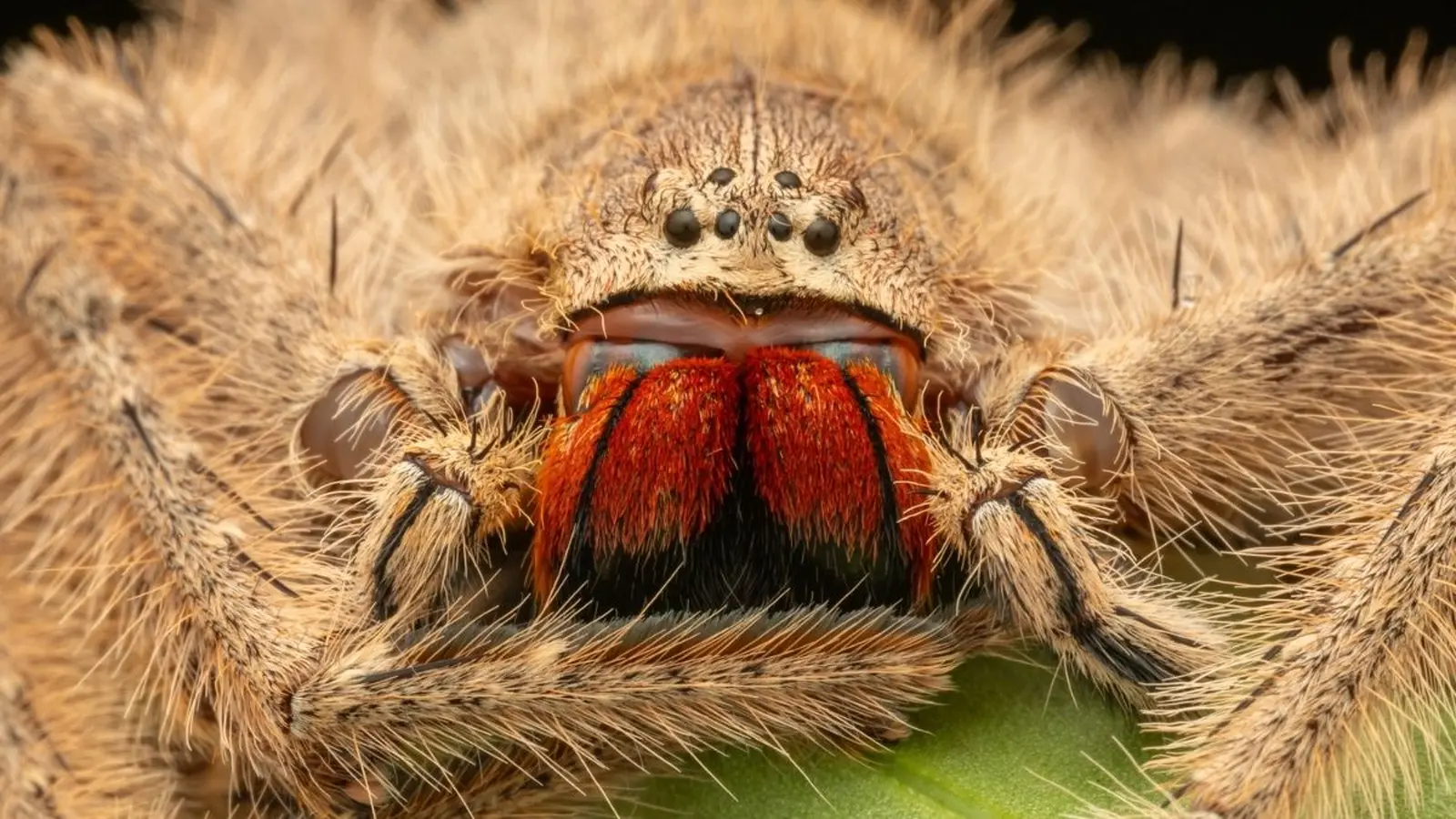
Researchers timed 258 spider species in a lab race: camera, grid paper, and a smooth tray or metal sheet. The clear winner was a huntsman (genus Heteropoda) from Queensland, clocking almost 3.6 meters per second. That's more than 8 miles per hour — faster than many of us jog. The Queensland huntsman sprinted at nearly 3.6 m/s, outpacing an average human walking speed with room to spare.

The experimental setup to measure spider speeds.
But this wasn't just a headline-grabbing stunt. The team wanted to understand why some spiders are built for speed and others for stealth. They combined direct measurements with published data, then mapped sprint performance onto the spider family tree to see how evolution and body shape shape pace.
Two clear patterns emerged. Bigger spiders tended to be quicker — up to a point — and leg length mattered more than leg thinness. Ground-hunters, the species that chase prey across open surfaces, were consistently fast for their size. By contrast, whether a spider prefers to move inverted or upright barely nudged its sprinting ability.
There were striking exceptions. The tiny orange goblin spider, Oonops pulcher, weighs roughly 30,000 times less than the record-setting huntsman yet is only about 18 times slower. That mismatch speaks to biomechanics: absolute mass isn't the whole story. Muscle energy, limb mechanics and evolutionary niche all set hard limits on top speed.

Larger spiders were broadly the fastest, except for the biggest species.
Previous favorites for the title, like the Moroccan flic-flac spider (Cebrennus rechenbergi), astonish with cartwheels and tumbling escapes; their average measured pace when rolling is around 1.7 m/s, which is fast, but not the same as straight-line running. By casting a wide phylogenetic net and standardizing how speed was measured, this study fills gaps in our view of arachnid locomotion.
The authors note that running performance reflects a tangle of factors: body size, leg proportions, ecological role and evolutionary history. Newer lineages showed more variation in sprinting ability, suggesting recent adaptations in hunting strategy or habitat use. And while machine learning and AI tools are increasingly powerful across biology, the team emphasizes that careful, hands-on experiments remain essential to understand the mechanics behind the data.
So next time a spider bolts past you, consider the evolutionary story under its legs — speed is as much a legacy of shape and lifestyle as it is a reflexive burst of energy.













Leave a Comment
Comments
No comments yet. Be the first.