
3 Minutes
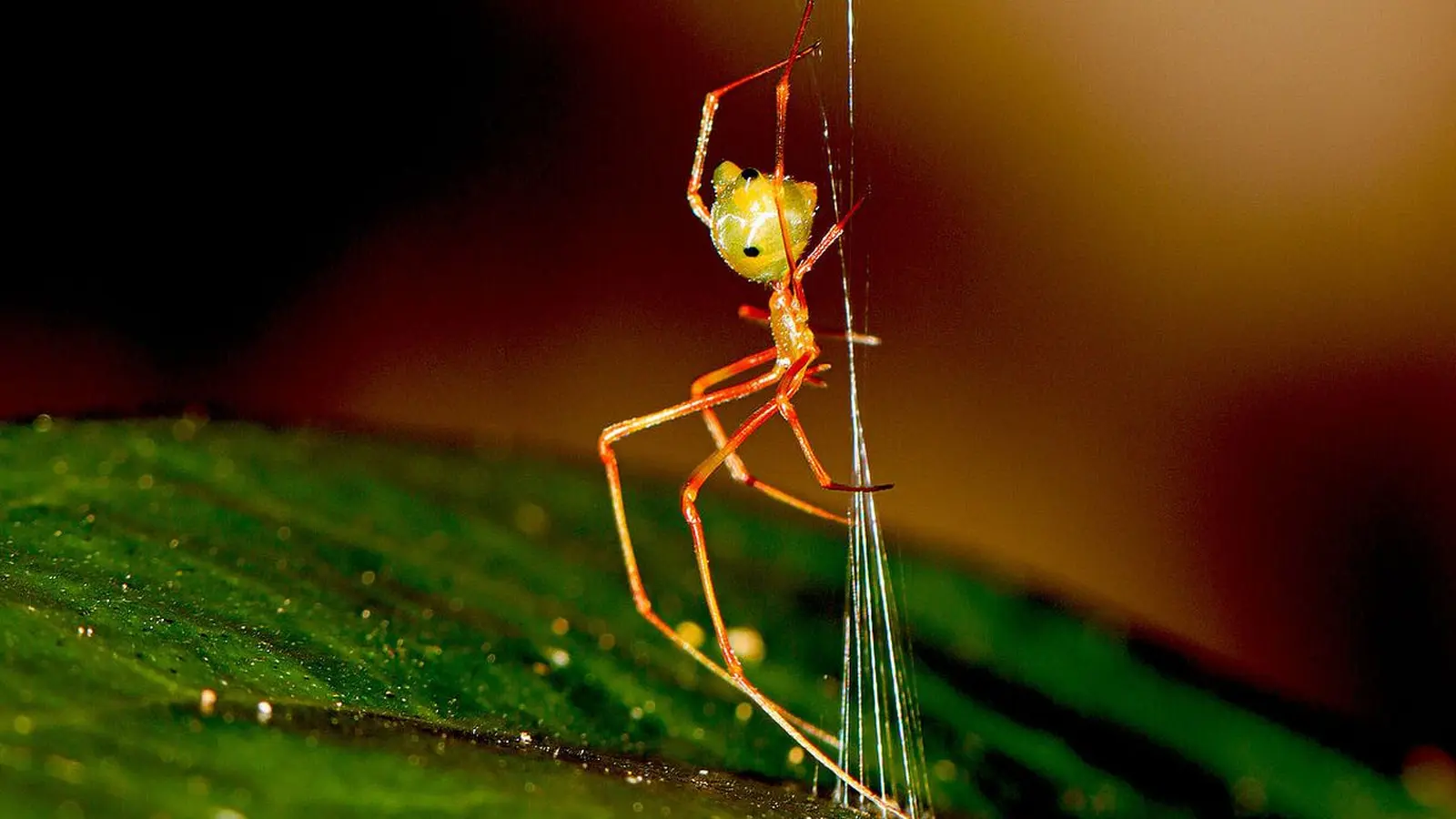
At night in a Cooktown rainforest, a tiny spider turns silk into a siege engine. It waits under a leaf, invisible and patient. Then it drops, weaves, and arms a trap so precise it looks improvised—until you study it.
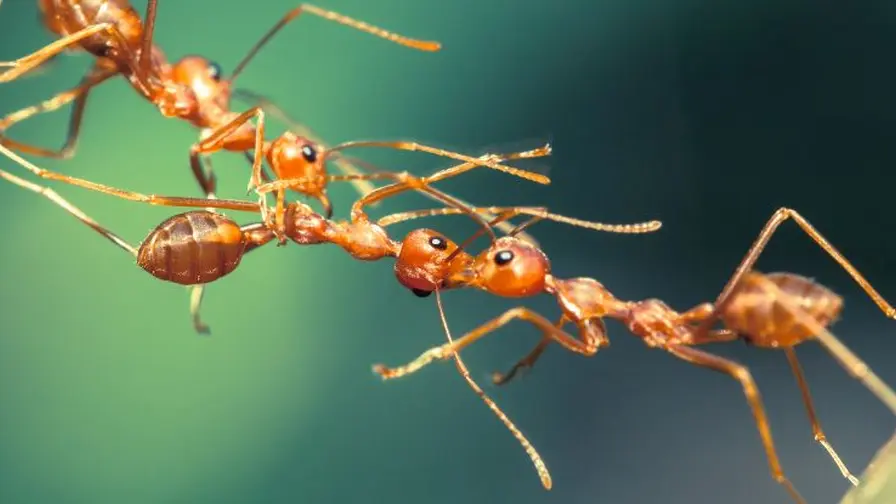
Researchers documenting this little ambusher call it the ballista spider, a provisional member of the genus Propostira. The prey is no accident: the trap is built to target one species only, the aggressive green tree ant Oecophylla smaragdina. Why single out such dangerous quarry? Because precision reduces risk. One ant, taken at a time, is far easier to manage than a frantic, reinforcements-calling swarm.
Field biologists from Macquarie University—led by Professor Ajay Narendra with postgraduate Pranav Joshi and first observed by spider taxonomist Greg Anderson—spent ten days and nights filming this drama with high-speed and infrared cameras. Their footage, published in Current Biology, reveals a sequence that reads like mechanical choreography.
After dusk the spider descends about half a metre to anchor points on leaves or the forest floor. It then constructs a vertical bundle of 15 to 60 tension lines shaped into a cone. Hours of patient work. The final act is deceptively simple: the cone is wrapped in a finer silk, the spider climbs away, and a foraging green tree ant is lured to bite the structure loose.

The bite triggers a sudden release. Stored elastic energy in the tensioned silk snaps the cone upward, flinging the ant over 30 centimetres into the spider’s waiting web. The motion is astonishingly fast. The ant is accelerated at more than 1300 meters per second squared. The spider does not pounce midair. It waits for the prey to tangle, then approaches and wraps it—one dangerous dinner handled at a time.
How does silk do the heavy lifting? Dr. Jonas Wolff, who studies silk biomechanics, collected samples for scanning electron microscopy and laboratory testing at the University of Greifswald. The answer lies in elastic energy stored in the bundled fibers—silk acting like a stacked series of tiny rubber bands ready to recoil. That sudden contraction must overcome adhesive pads on the ants' feet, which cling stubbornly to surfaces. The system therefore delivers power densities higher than any other known silk-based catapult in nature.
There’s also a likely chemical trick. The team suspects the spider adds a pheromone during the cone’s final construction to draw worker ants and provoke an attack, effectively turning the prey into the trigger. If confirmed, this would be a rare case where a web targets a single species and relies on the victim to set off the mechanism.
Beyond the spectacle, this strategy makes evolutionary sense. Ants are hazardous: they bite, spray chemicals and summon thousands of nestmates. By engineering a device that picks off individuals from a safe distance and delivers them already entangled, the spider reduces exposure to mass retaliation and chemical harm.
Small, nocturnal, and hyper-specialized, the ballista spider rewrites a few assumptions about spider diets and web design. It shows how animal behavior, biomechanics and chemistry can combine into a hunting toolkit that looks almost engineered. Would you want a closer look? Scientists will likely dig deeper, and the rainforest will keep its secrets for now.











Leave a Comment
Comments
No comments yet. Be the first.