
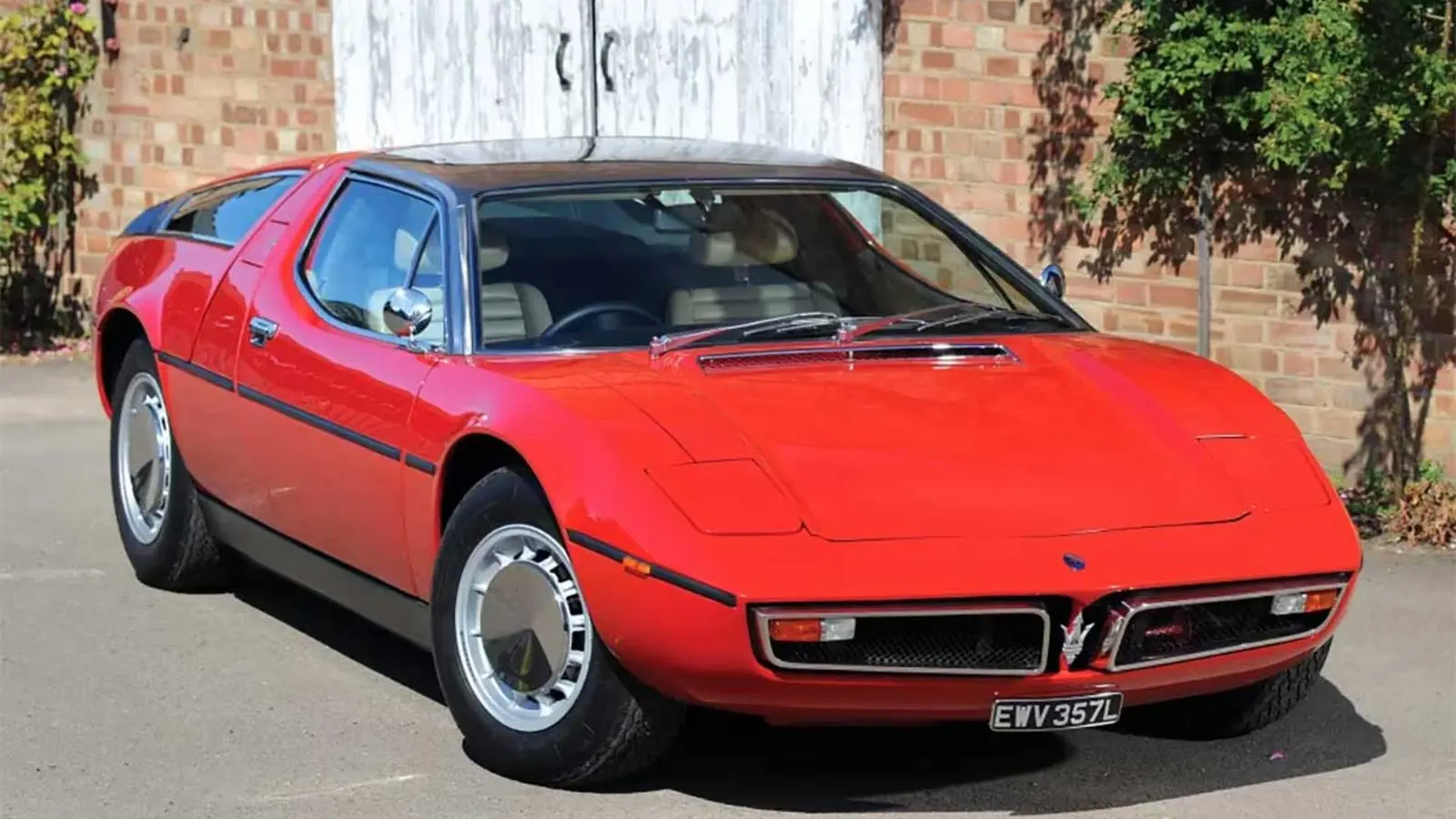
The moment that reshaped Maserati
Exactly 55 years after its debut at the 1971 Geneva Motor Show, the Maserati Bora still stands as one of the most influential Italian supercars. While that year is often remembered for Lamborghini's dramatic LP 500 concept and the wild Miura SV, the Bora quietly introduced a deeper revolution: a blend of modern engineering and comfort that few contemporaries could match.

Design that catches the eye, engineering that changed the game
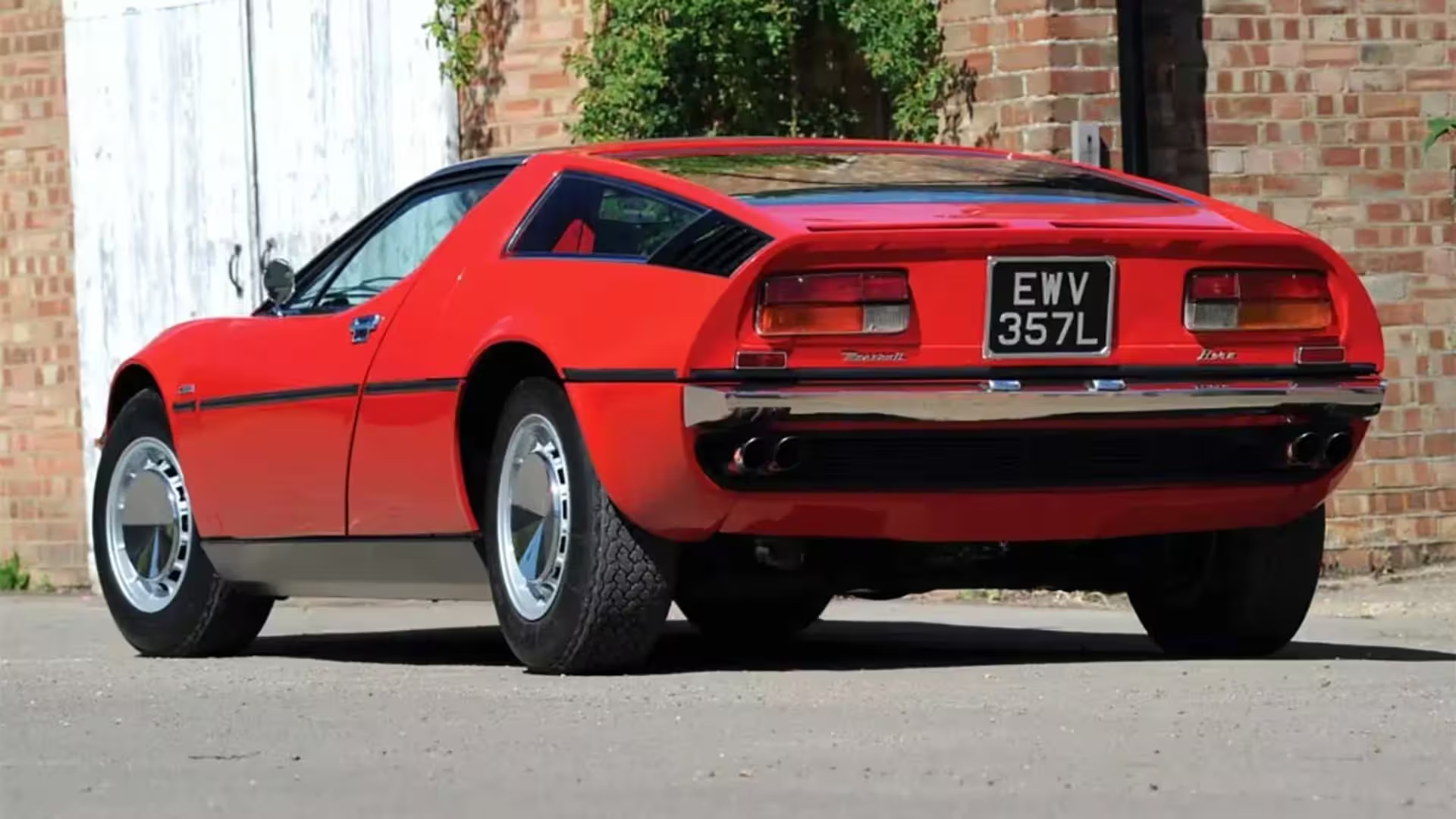
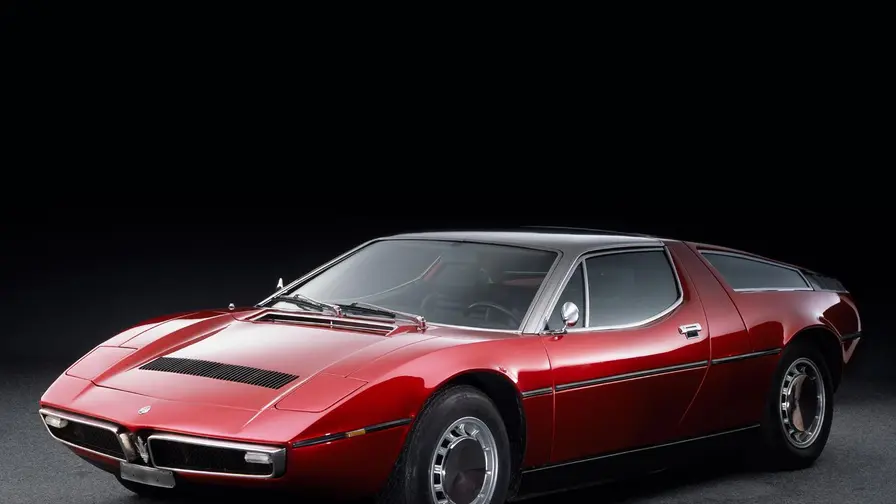
Giorgetto Giugiaro's wedge-shaped body made the Bora unmistakable, yet its true novelty lay beneath the coachwork. Maserati named the car after a famous Adriatic wind, continuing a tradition of evocative monikers, but the real legacy was the Bora's technical package. It was Maserati's first mass-produced mid-engine car and the marque's first model with fully independent suspension on all four wheels.

That transformation was possible because, in 1968, Citroën acquired a significant stake in Maserati. Citroën's avant-garde engineering outlook and experience with hydraulic systems influenced the Bora's development. Rather than using the hydropneumatic suspension for ride height as Citroën often did, Maserati applied high-pressure hydraulics to other systems: cooled disc brakes, electro-hydraulic adjustment for the driver?s seat, hydraulic actuation for the pedal cluster and even the pop-up headlamps. In 1971, these features felt futuristic—comfort and technology normally reserved for luxury saloons were now packaged in a two-seat supercar.

Practical performance: a supercar you could use every day
The Bora was conceived as a usable, everyday supercar in the spirit later embodied by the Porsche 911: a machine able to thrill without sacrificing driver comfort. Key convenience and ergonomic features included:
- Hydraulic adjustment of the pedal box at the push of a button
- Adjustable steering column for height and reach
- Electro-hydraulic driver seat positioning
Prototypes had used MacPherson front suspension, but production cars reverted to a double-wishbone front setup to better match wider front tires and steering geometry. The result balanced handling precision with a comfortable ride.
Powertrain and technical specs
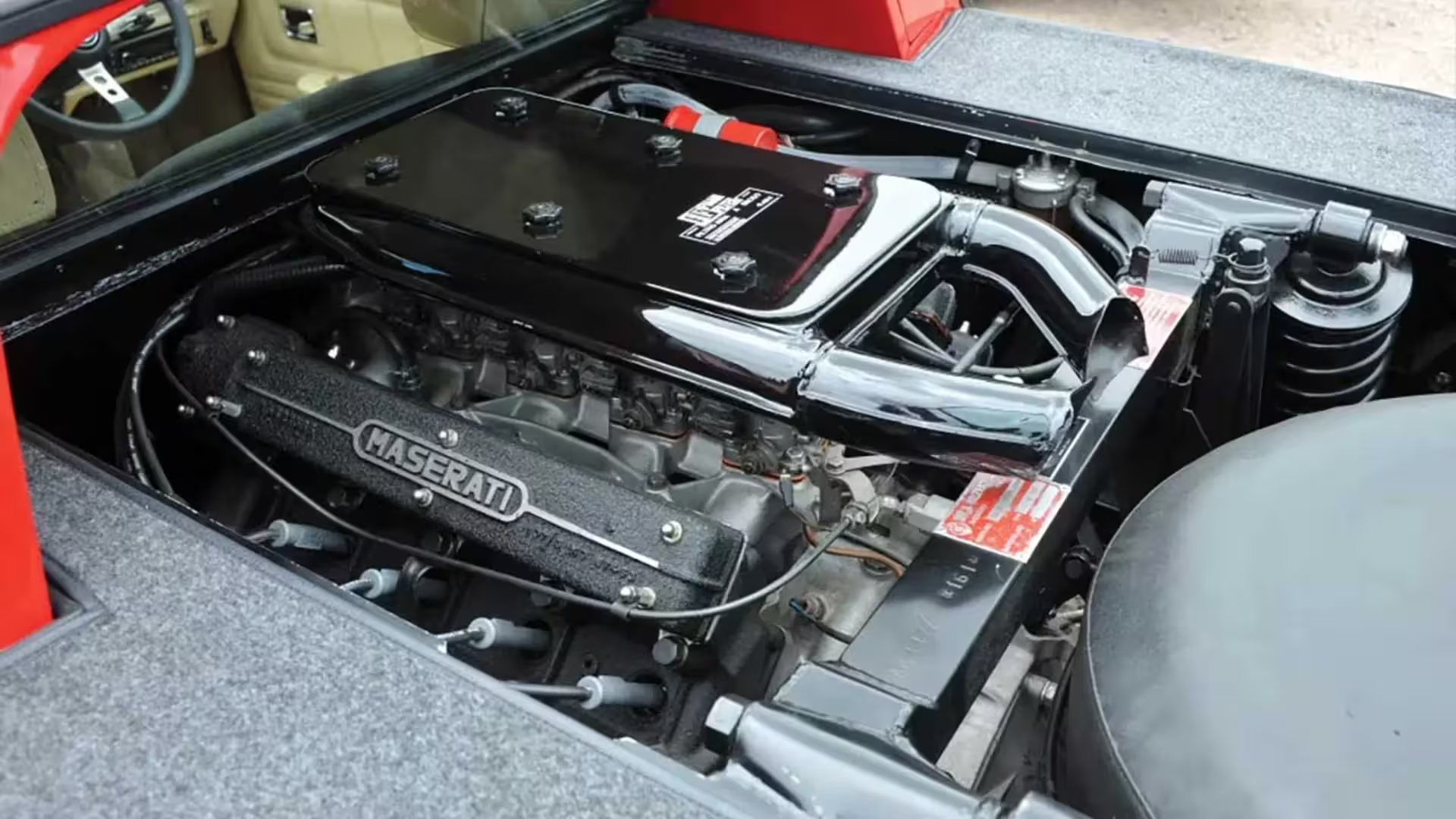
At the heart of the Bora was a longitudinally mounted 4.7-liter V8 with an aluminum block and semi-hemispherical combustion chambers. The engine sat behind the cockpit, mounted in a tubular rear subframe alongside a ZF five-speed manual transmission. Four Weber carburetors fed the V8, producing roughly 310 horsepower in its most potent configuration.
Key specifications (representative):
- Engine: 4.7L V8, aluminum block
- Power: circa 310 hp
- Transmission: ZF 5-speed manual
- Chassis: steel monocoque with tubular rear subframe
- Brakes: ventilated disc brakes with hydraulic assistance
Those four Weber carburetors, while potent, became a vulnerability when the 1970s oil crisis shifted the market toward smaller, more fuel-efficient cars. Sales momentum slowed as buyers prioritized economy over outright performance, and race ambitions for the platform were curtailed.
Market context and legacy
Despite commercial headwinds, the Bora paved the way for the 2+2 Merak and proved that Maserati could deliver a touring-focused supercar capable of challenging Ferrari and Lamborghini while retaining the marque?s grand touring soul. The Bora's synthesis of performance, comfort and innovative hydraulics created a template that resonated in Maserati's flagship models for decades.
Comparisons of the era put the Bora in an interesting position: it was less raw than Lamborghini's Miura and more technologically progressive than many Ferraris of the time. Where Lamborghini offered theatrical flair and Ferrari emphasized track-bred intensity, Maserati blended refinement with performance.
Why enthusiasts still care
The Bora is admired not just for looks or rarity but for its forward-thinking engineering. It offered features that competitors would only adopt years later and anticipated the modern supercar ideal: speed married to everyday usability. As a result:
- Collectors prize well-preserved Boras for both design and innovation
- Restorers often highlight the car's unique hydraulic systems as a technical marvel
- Maserati's contemporary flagship cars still echo the Bora's balance of GT comfort and sporting ability

'The Bora showed that a supercar could be civilized without losing its soul,' says one longtime Maserati enthusiast. That sentiment explains why the Bora's spirit endures in today's models: a focus on driving enjoyment wrapped in luxury and advanced engineering.
Final thoughts
At 55, the Maserati Bora is more than a classic; it is a milestone in automotive history. Conceived under Citroën's influence and crafted by Maserati's artisans, it bridged the worlds of grand touring and high-performance sports cars. For historians, collectors, and drivers who appreciate both form and substance, the Bora remains a seminal example of how innovation and Italian design can create an enduring automotive icon.


Leave a Comment
Comments (2)
hmm, Citroën influence makes sense but those 4 Webers + '70s fuel panic — is it really practical? curious what longterm owners say...
wow didnt expect Citroën tech in a Maserati, that hydraulic stuff is wild. A usable supercar? yes pls, if true then sign me up