
4 Minutes
Volkswagen finally adds full hybrids to Golf and T‑Roc
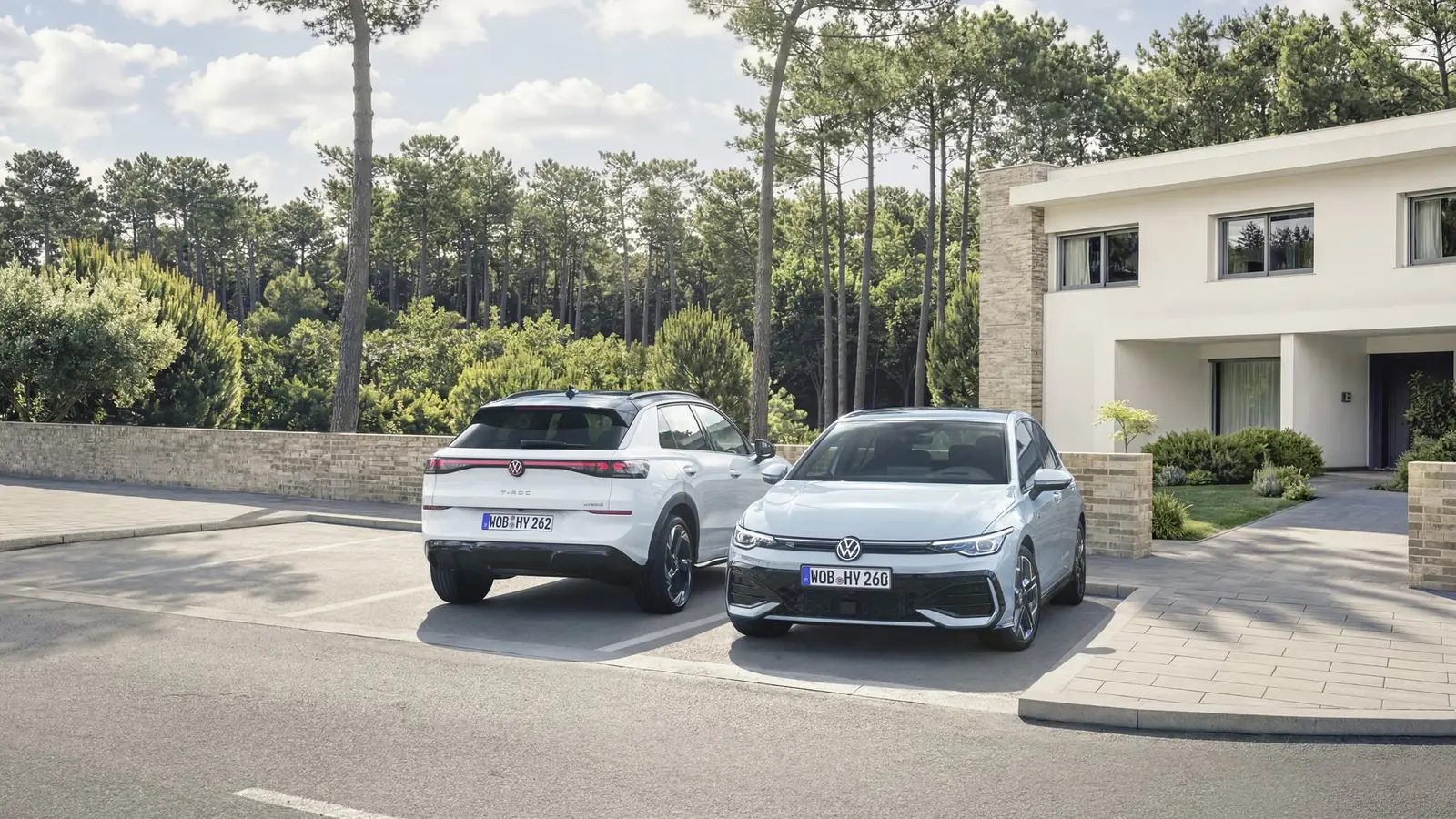
Volkswagen is broadening its powertrain lineup with conventional full-hybrid systems for two of its best-selling models in Europe: the Golf compact and the T‑Roc crossover. After years of focusing on conventional internal-combustion engines, mild hybrids (eTSI), plug-in hybrids (eHybrid) and battery-electric cars, VW has responded to market demand and developed a classic hybrid architecture to sit between mild-hybrid and plug-in options.

Pricing and launch details
Pre-sales have started in Germany. The first hybrid variants to hit the market will be the Golf Hybrid in R-Line trim and the T‑Roc Hybrid in Style specification, priced from €41,400 and €44,470 respectively. These models use a 125 kW (170 PS / 168 hp) combined drivetrain and carry a simple 'Hybrid' badge at the rear, filling the gap between eTSI mild-hybrid badging and the more powerful eHybrid plug-in variants.
How the new hybrid system works
VW’s new setup pairs a 1.5-liter TSI turbocharged petrol engine with two electric drive motors and a small high-voltage battery. The battery has a gross capacity of 1.6 kWh and is packaged in the rear floor, allowing the system to switch between three operating modes depending on driving conditions: electric assist, combustion-dominant drive, and blended hybrid operation. The architecture prioritizes packaging efficiency and everyday usability rather than pure EV range.

Highlights:
- Combined output: 125 kW (170 PS / 168 hp)
- Combined torque: 309 Nm (228 lb-ft)
- 0–100 km/h (62 mph) in around 7.5 seconds
- High-voltage battery: 1.6 kWh gross, under the rear floor
- CO2 reduction: claimed 10–15% vs the 110 kW Golf 1.5 eTSI mild hybrid
Performance and economy: real-world impact
Volkswagen says the new Hybrid Golf will cut CO2 emissions by roughly 10 to 15 percent versus the comparable 1.5 eTSI mild-hybrid model. The modest battery and twin-motor arrangement deliver useful electric torque and smoother stop-start behavior, while the combined power and 309 Nm of torque keep acceleration sprightly for the segment. The quoted 7.5-second sprint to 100 km/h positions the hybrid Golf closer to sportier petrol variants but without the complexity or weight of a plug-in hybrid.


For buyers, the system promises improved fuel economy in mixed urban and suburban use and a driving experience that feels more responsive than a pure mild hybrid. It also keeps total ownership costs and package complexity lower than a PHEV, making it a pragmatic choice for many European customers.
Where this fits in VW's lineup
The new Hybrid badge narrows the gap between economical eTSI models and the longer-range eHybrid plug-in variants. It should appeal to drivers who want meaningful CO2 and fuel consumption improvements without the charging considerations of a PHEV. For VW, adopting a conventional hybrid option also represents a strategic broadening of its powertrain portfolio as global markets continue to demand mixed solutions.
Related moves: ID. Polo and electric options
Meanwhile, VW continues to expand its electric family. The ID. Polo has been launched with a new entry-level configuration featuring a 37-kWh battery. The Trend version starts at €24,995 and delivers a WLTP range of up to 334 km (208 miles). The smaller pack supports DC fast charging up to 90 kW, reaching roughly 10–80% state of charge in about 23 minutes — a clear effort to create a more affordable entry into Volkswagen's EV range.

Quote: 'The hybrid Golf and T‑Roc are designed to give customers the best of both worlds: strong everyday efficiency with simple, familiar fueling and no external charging requirements.'
Volkswagen has also signaled other global moves, including pricing announcements for the 2027 Atlas in the US and the recent introduction of the ID. Cross subcompact EV as part of its push to cover multiple buyer needs. The Hybrids in Golf and T‑Roc show VW is now embracing a multi-path strategy — mild hybrid, full hybrid, plug-in and full-electric — to meet diverse market demands.
Whether you are a compact-car buyer looking for efficiency without charging, or a crossover shopper seeking a more responsive urban drive, the new VW Hybrid models are worth a look. Expect them to arrive in dealer showrooms across Europe following the pre-sale phase, and to appear as alternatives in markets where plug-in charging infrastructure remains inconsistent.

Leave a Comment
Comments (2)
Feels kinda overhyped: 1.6 kWh? That's tiny, more like a torque boost not real EV range. For the price I'd expect at least some usable electric miles... hm
Wow VW actually gave Golf and T‑Roc proper hybrids! Smart move for folks who hate charging, decent punch, price is a bit high tho... curious how it'll sell