
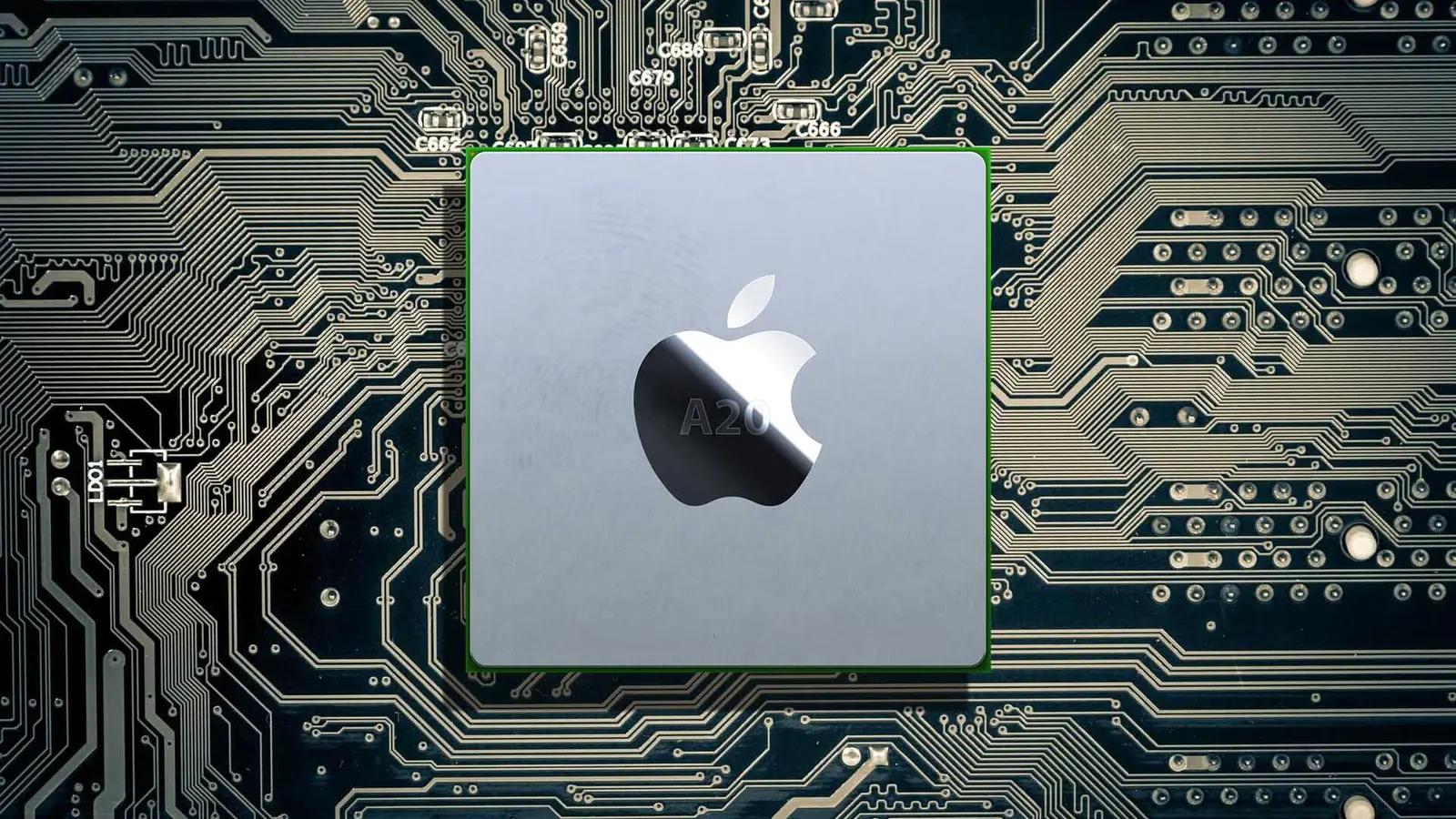
Apple might be about to make its next iPhone family quieter and smarter under the hood. Rumors now suggest the iPhone 18 and the cheaper iPhone 18e will share the same A20 processor, while the Pro models get a souped-up A20 Pro. A small change on paper. A potentially big one in practice.
Why does that matter? Because silicon defines experience. The A20 is said to be Apple’s first A-series chip built on TSMC’s 2-nanometer node. That jump alone promises better performance per watt, meaning faster day-to-day responsiveness and longer battery life without dramatically increasing heat. Shorter battery drains. Cooler phones.
But Apple appears to be splitting the family in a different way: same core silicon for the mainstream and budget models, and extra packaging and tuning for the flagship devices. The A20 Pro reportedly retains the 2nm process but layers in a new wafer-level multi-chip module, or WMCM. Think of WMCM as packaging that lets chips talk faster, stay cooler, and push more data between components.

Faster internal bandwidth. Improved thermal handling. More stable performance during prolonged heavy tasks like on-device AI, gaming marathons, or 4K editing. These are the practical upsides. In other words, the headline isn’t just 'new node'—it’s 'new node plus smarter packaging.'
This could significantly shrink the performance gap between standard and budget iPhones while keeping the Pro models clearly differentiated by package-level engineering.
For buyers, that means a tricky calculus. If the 18e shares the A20, its raw performance could be much closer to the base iPhone 18 than previous budget models have ever been. Apple would then rely on other levers—display tech, camera systems, memory bandwidth, or software features—to justify the premium for Pro models.
For competitors and chip-watchers, the move highlights another trend: incremental gains from process shrinks are increasingly married to advanced packaging to unlock real-world benefits. Smaller transistors are important. But how those transistors are assembled and cooled is becoming just as decisive.
None of this is official yet. Leaks and supply-chain whispers can miss details. Still, if Apple’s plan holds, the iPhone 18 generation might be the clearest example yet of how packaging choices shape product tiers as much as raw silicon does.
Watch this space—because the next big jump in smartphones may arrive as much from how chips are packaged as from their transistor count.

Leave a Comment
Comments
No comments yet. Be the first.