
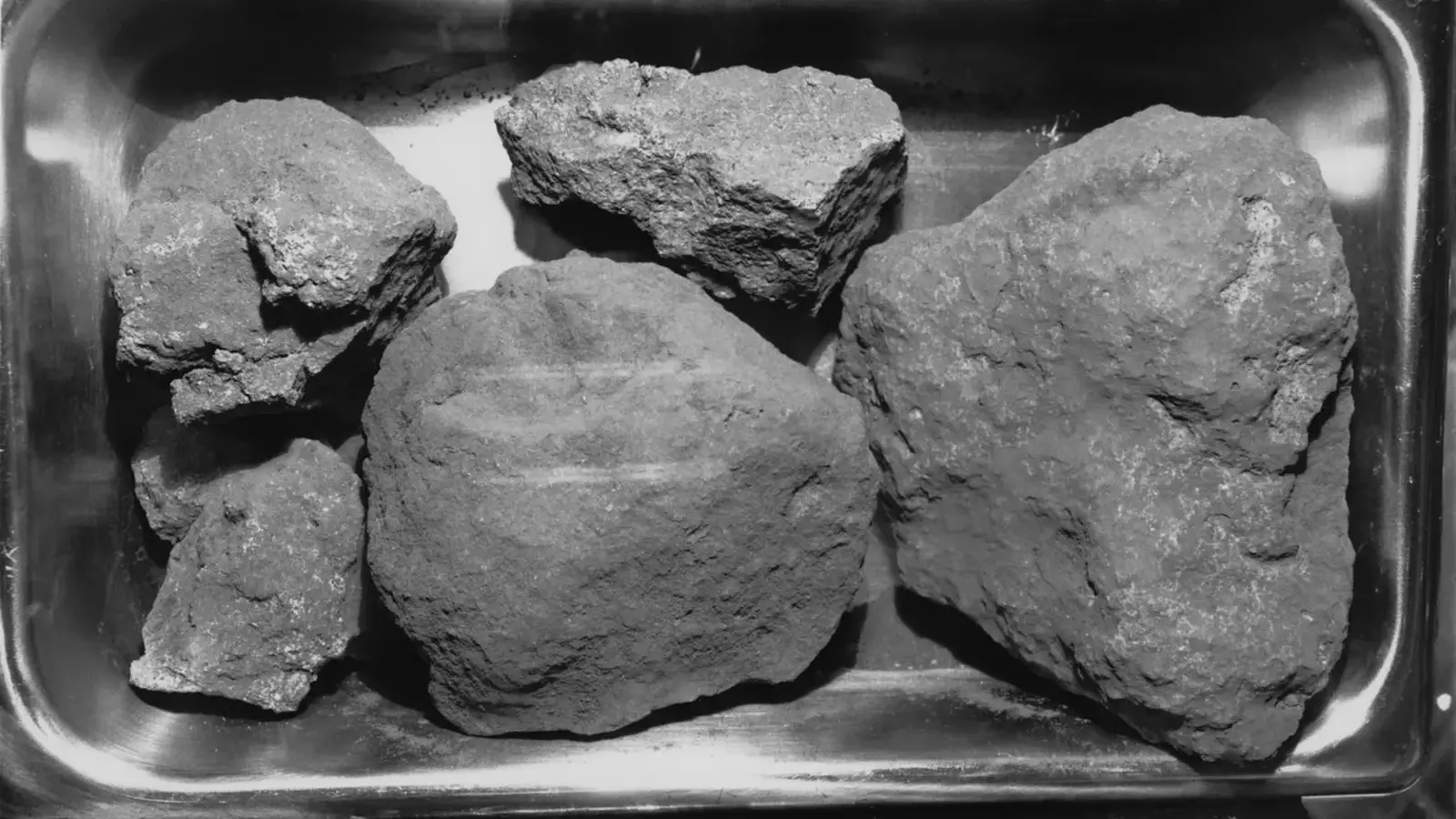
Imagine opening a sealed diary from 4 billion years ago. Short of time travel, that's what scientists are doing when they study rocks returned from the Moon's far side: pages of a tumultuous childhood of the Solar System, written in fractured minerals and shock-heated glass.
For decades the debate has hinged on two versions of that story. One paints the inner Solar System as suffering a sudden, brutal episode of impacts—a dramatic spike known as the late heavy bombardment. The other describes a long, drawn-out tail of collisions that gradually petered out as leftover rubble cleared. New samples from the Moon’s far hemisphere are tipping the scales toward the latter.
Why does this matter? Because impacts early on reshaped planets. They stripped atmospheres. They reset crusts. They delivered and destroyed volatiles, possibly influencing when and where habitable environments could form on Earth. On our planet, those scars have been largely erased by plate tectonics, erosion, and volcanic burial. The Moon, lacking these erasers, keeps the ledger.
Until recently, almost every lunar specimen in laboratories came from the near side—the face forever turned toward Earth. That gave a skewed view. The far side is different: older highlands, fewer maria, a record less edited by later volcanic floods. Samples returned from that hemisphere offer a fresh, less disturbed chronicle of impact events across eons.

Researchers analyzed microscopic fragments pulled from those far-side rocks and read the timestamps preserved inside. The signatures span an enormous range—from roughly 4.33 billion to about 1.13 billion years ago—allowing scientists to trace how bombardment intensity changed over more than three billion years.
The trend is clear. Rather than a single narrow spike of destruction, the record looks like a long fading echo: lots of impacts early on, then a steady decline. These far-side samples point to a long, fading bombardment—not a single catastrophic spike. The implication is simple but profound: the young Solar System cleaned itself gradually, not all at once.
That doesn’t mean there were no violent episodes. Big collisions still happened. But the idea of a brief, system-wide storm that reorganized every inner world is less persuasive in light of this wider dataset. And because Earth and Moon shared the same neighborhood, a gently tapering impact flux changes how we think about Earth’s early environment—when its crust stabilized, how often sterilizing collisions occurred, and when conditions could have become repeatedly hospitable to emerging life.
“The Moon acts like a time capsule,” says one of the study’s authors at Curtin University, noting that lunar rocks preserve events erased on Earth. That phrase understates the point: the lunar archive lets us peek at processes that sculpted planetary surfaces and atmospheres across billions of years. With far-side material now in hand, scientists can compare two distinct lunar provinces and test whether near-side inferences held up planet-wide.
These findings arrive amid a renaissance in lunar exploration. China’s Chang’e-6 mission— the first to bring back material from the far side—helped open a window that was shut for nearly half a century. As sample returns and in-situ studies multiply, the Moon’s story will be written in ever finer detail.
So where do we go from here? With a growing collection of samples and more precise dating techniques, researchers will refine the tempo and scale of ancient impacts, cross-check lunar histories against asteroid belt models, and rethink timelines for Earth’s surface evolution. The Moon still has many pages left to read. Will the rest of its diary continue to slow the rhythm of ancient chaos, or will it surprise us with new twists?


Leave a Comment
Comments
No comments yet. Be the first.