
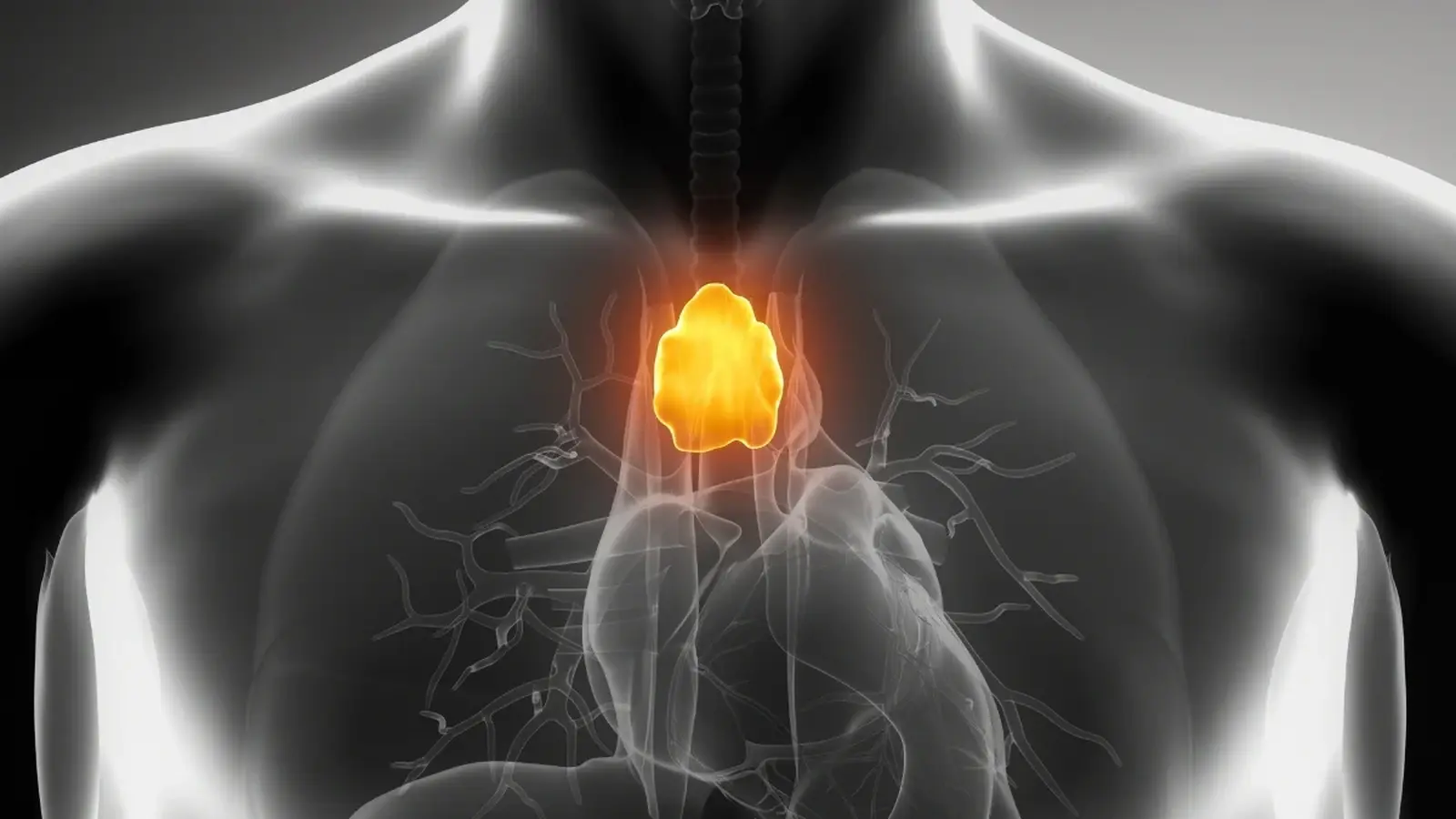
Doctors once treated the thymus as a childhood relic, a gland that quietly faded after puberty and then mostly vanished from adult medicine. That assumption is crumbling. New research links thymic condition to how well adults survive cancer treatments and to broader long-term health risks, forcing a rethink of an organ long written off.
It began with a striking clinical pattern: patients whose thymuses looked healthier on scans responded far better to immunotherapy and tended to live longer. That discovery surprised researchers. The thymus had been dismissed as irrelevant in adults. But when the team expanded their analysis to much larger population cohorts, the signal held. Better thymic status correlated not only with improved cancer outcomes but with lower overall mortality, reduced cardiovascular risk, and fewer severe illnesses across the board.
Why would a shrinking gland matter so much later in life? The evidence points to a continuing role for the thymus in generating and maintaining T cells, the immune system’s frontline soldiers. A landmark 2023 study found people who had their thymus removed faced a higher risk of death in the five years after surgery, suggesting the organ contributes to immune replenishment well into adulthood rather than shutting down completely after adolescence.

Illustrations of three representative examples of individuals with high, average, or low thymic health. The thymus bed is outlined in orange.
Think of it like a factory that slows production but doesn’t shut its doors. When production falters, the workforce thins, and the system becomes more vulnerable. That vulnerability appears to show up as poorer responses to cancer therapies and higher rates of other age-related illnesses.
Crucially, thymic decline does not look entirely inevitable. Lifestyle and health markers—smoking, obesity, and chronic inflammatory conditions among them—are associated with worse thymic health. The relationship seems reciprocal: a more robust thymus helps maintain immune function, while inflammation and harmful behaviors accelerate thymic deterioration.
Preserving thymic health could move from academic curiosity to clinical priority, allowing physicians to monitor immune resilience much like they monitor heart or kidney function.
If these findings continue to be confirmed, a new branch of preventive medicine may emerge, focused on measuring and sustaining immune organ health as a way to extend healthy lifespan. The thymus, small and often overlooked, might become a practical marker for how well our immune system will carry us through disease and aging.
There is still much to learn, but the message is clear: neglecting the thymus may be more consequential than medicine ever appreciated, and tending it might be one of the simplest, most powerful ways to support long-term health.

Leave a Comment
Comments
No comments yet. Be the first.