
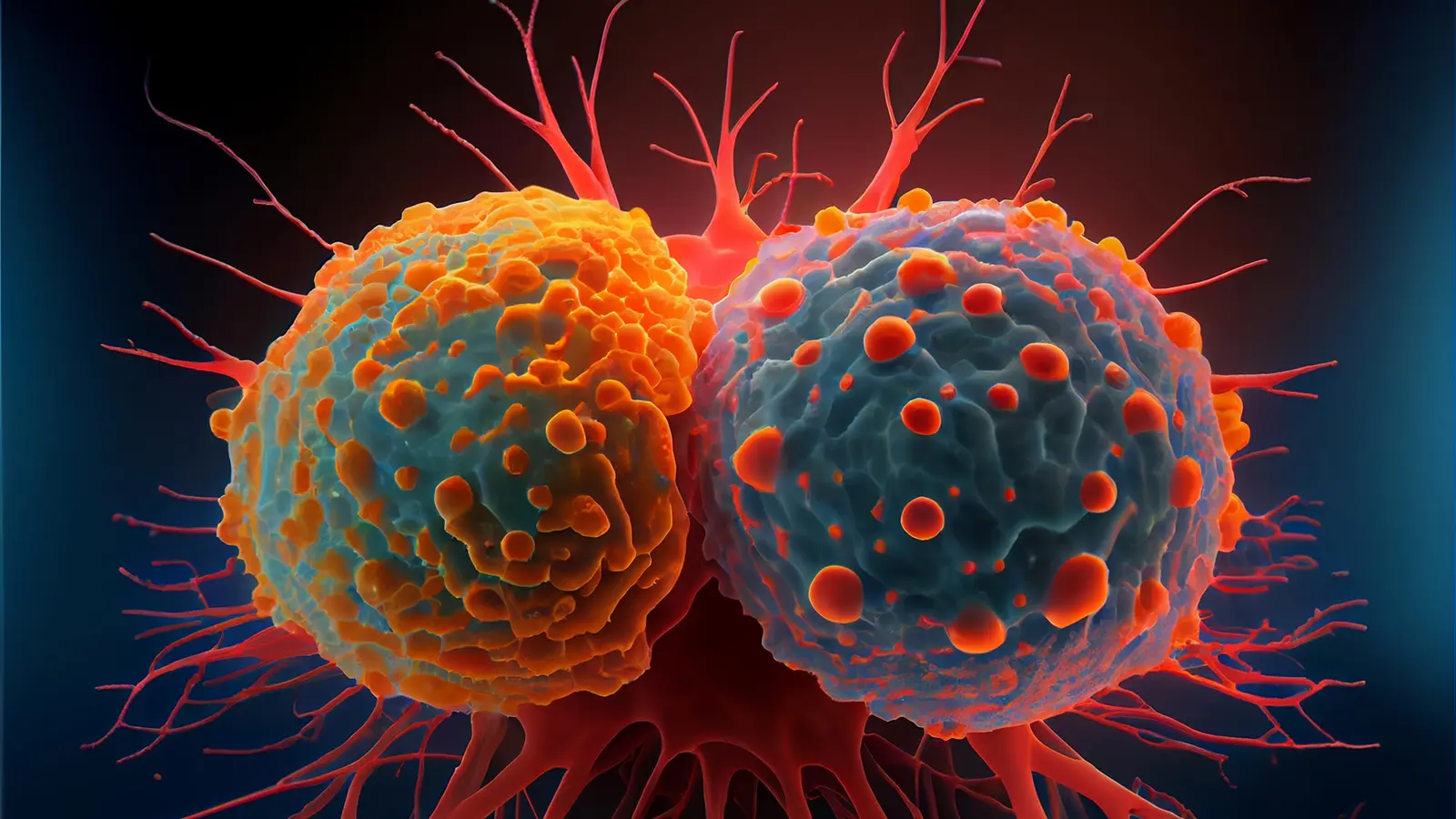
Imagine some cancer cells as wounded soldiers who stop fighting but keep passing messages. Strange behavior, right? Researchers at The Wistar Institute found that after chemotherapy, a subset of ovarian cancer cells enters a non-dividing, yet metabolically active state and begins secreting a familiar sugar: fructose. That sugar, it turns out, may be doing more than fueling cells — it might be nudging neighboring tumor cells to loosen their grip and migrate.
Short version: dying or senescent cancer cells don’t always go quietly. They release a cocktail of molecules — a senescence-associated secretome — and in preclinical experiments those secreted factors were enough to make nearby cancer cells detach and spread. The surprising culprit singled out by the team was fructose.
“Some cells survive chemotherapy and stop dividing, but they remain biologically active,” says Aidan Cole, Ph.D., a postdoctoral fellow in Katherine Aird’s lab and first author on the study published in Nature Aging. Those cells release molecules that act like notes slipped under a neighbor’s door. In this case, the note reads: loosen up.

Why does loosening matter? Adhesion is the first gatekeeper of metastasis. When tumor cells cling tightly to each other and to the tissue around them, they’re less likely to escape and seed new lesions. When those bonds weaken, escape becomes possible. In the lab, adding the fluid from treatment-surviving cells to healthy tumor cells — without transferring the survivors themselves — increased detachment and early spread. The team then traced that effect back to fructose released by the senescent cells.
Fructose is everywhere. It’s in fruit, yes, but it’s also a major component of sugary drinks and many processed foods in the form of high fructose corn syrup. The researchers tested whether dietary-like exposure could mimic the effect they saw from the secreted material and found that concentrations comparable to what’s found in sugary beverages could drive the same detachment behavior in experimental models. Suddenly a dietary molecule looks less like mere fuel and more like a messenger that can influence tumor behavior.
This raises an obvious question: could high fructose intake shape how an existing tumor behaves? It’s a provocative thought because diet is a modifiable factor. Unlike many genetic or environmental contributors to cancer progression, what you eat can be changed. But the authors caution that clinical studies are needed before changing medical advice or cancer care protocols.

The story deepens when you follow fructose inside the responding cells. Using large-scale tools — including a CRISPR screen — the team uncovered an intracellular consequence: fructose suppressed cholesterol synthesis. That might sound unrelated, but cholesterol plays a structural role in cell membranes and in the adhesive machinery that holds cells together. Lower cholesterol weakened those junctions, making cells more likely to part ways and migrate.
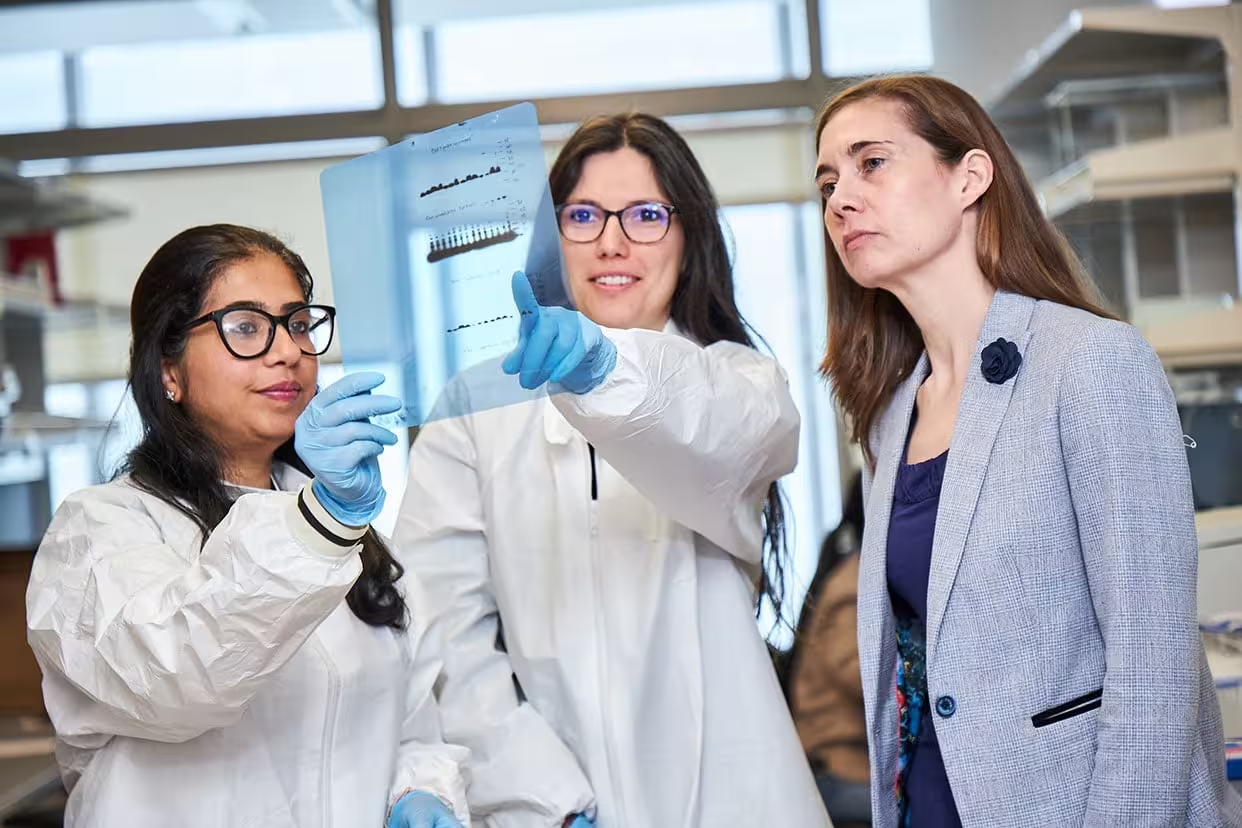
That mechanistic link led the researchers to a clinical crossroads: statins. These common cholesterol-lowering drugs are taken by tens of millions of people and work by inhibiting the same cholesterol production pathways the team found suppressed by fructose. In their models, statins alone reduced adhesion between ovarian cancer cells and promoted detachment — a finding that prompts caution about how cholesterol-lowering therapies and chemotherapy might interact.
“We haven’t tested this in patients, but it raises real questions about combining statins with chemotherapy,” says Katherine Aird, Ph.D., the study’s senior author. Ovarian cancer tends to affect postmenopausal women, a group commonly prescribed statins, which makes the potential overlap clinically relevant.
Finally, this phenomenon may not be unique to ovarian cancer. The team suspects similar fructose-driven detachment could occur in other tumors that spread across the torso — pancreatic, colon, liver — though they stop short of claiming universality. The larger point is that cells once dismissed as inert can, in fact, reshape their environment long after treatment ends.
Research like this reorients how we think about tumor ecology: it’s not just mutations and proliferation rates, but also the chemical neighborhood that matters. If a simple dietary sugar or a routine medication can alter that neighborhood, clinicians and patients may one day consider diet or drug timing as part of a broader strategy to limit metastasis. For now, the paper opens a door rather than closing a case, and the next steps will be clinical studies to test whether these laboratory signals translate into patient outcomes.
Science rarely hands out straightforward villains and heroes. Fructose is a nutrient and a signal. Statins are life-saving drugs, yet they might also alter tumor behavior under certain conditions. That duality is exactly the reason we need careful, human-centered trials before changing practice — and it’s why this discovery will be discussed at oncology tables for some time to come.

Leave a Comment
Comments
No comments yet. Be the first.