
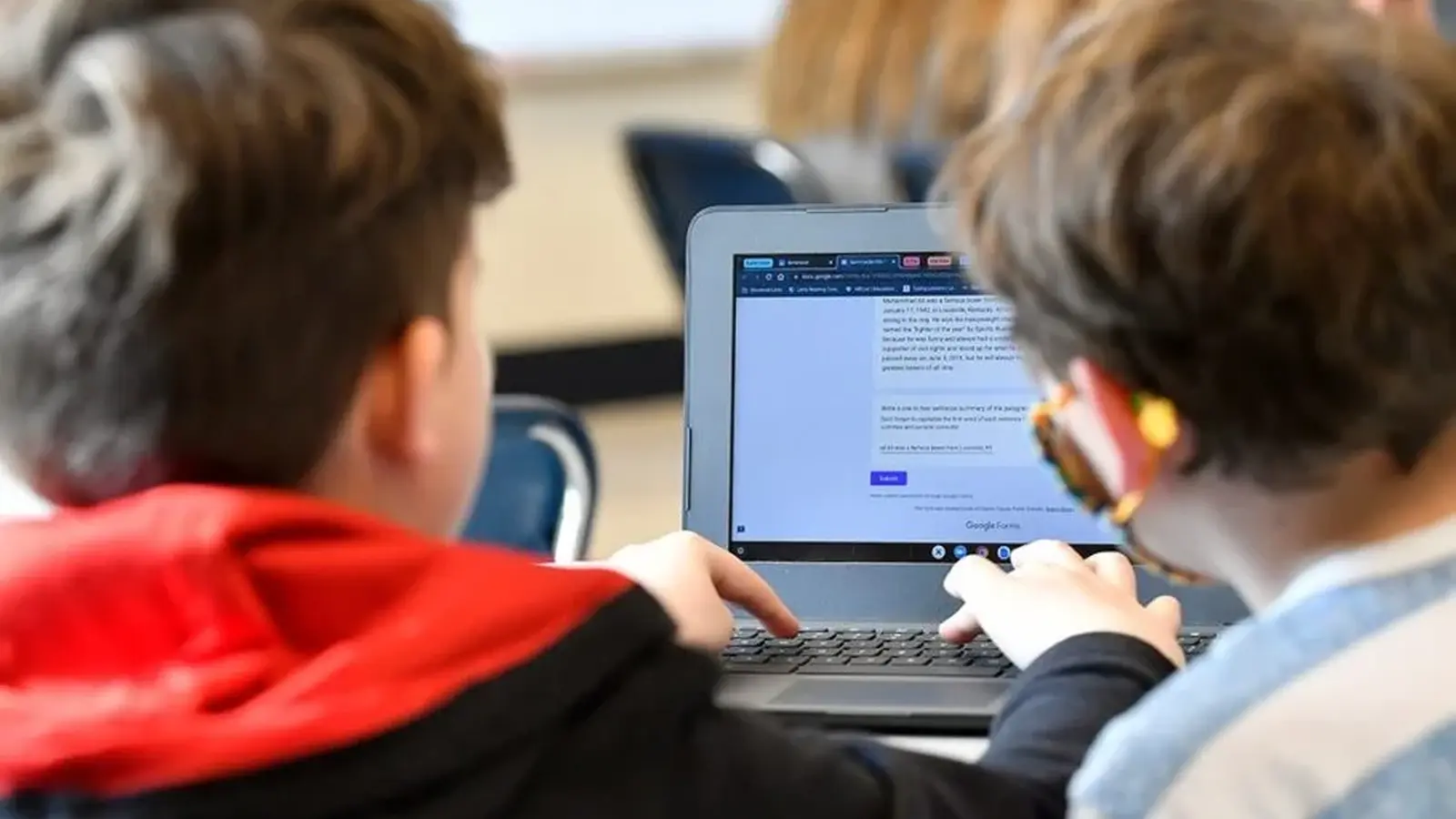
More answers. Faster homework. Lower exam marks. That paradox sits at the heart of a fresh international study that tracked what happens when students lean on artificial intelligence to do their schoolwork.
Researchers from Stockholm University and Hong Kong University followed roughly 27,000 Chinese students aged 12 to 18 over six months. About 80 percent of the cohort used AI writing and tutoring tools—platforms such as DeepSeek and Doubao from ByteDance—while the remaining 20 percent served as a control group that relied on traditional methods.
The short-term gains were obvious. Homework grades climbed by an average of 18 percent across subjects, and the average time students spent on assignments fell from 64 minutes to 45 minutes—nearly a 30 percent reduction. Quick wins. Immediate gratification.
But those wins came with a cost: monthly exam scores for AI users were about 20 percent lower than classmates who didn’t use the tools.
The pattern was not uniform. The steepest declines showed up in social sciences, followed by STEM subjects and languages. Students who still invested roughly the same amount of time on homework despite using AI experienced smaller drops in learning, though they did not escape a decline entirely. In short: shortcuts helped surface performance on take-home tasks but often failed to translate into durable knowledge measured in proctored assessments.

Similar signals have trickled into higher education. At Brown University, one instructor who saw a midterm average north of 90 percent when the exam was offered online reverted to an in-person final—and the class average plunged to 48 percent. Historically, that final rarely fell below 65 percent. An MIT neuroscience study adds a biological layer: students who used AI when drafting essays showed reduced brain activity when later recalling material, and that blunted engagement lingered in subsequent writing sessions.
Other research ties routine AI assistance to eroded critical thinking and patchy memory retention, while faculty reports note a surge in top-tier grades since conversational AI tools became widespread—an uptick of roughly 30 percent in some courses. The Stockholm–Hong Kong findings were published on SSRN and join a growing chorus of evidence that convenience can mask weaker learning.
Why might this be happening? One plausible explanation is that generative AI becomes a cognitive crutch: it speeds production and polishes output, but it short-circuits the deep encoding and retrieval practice that durable learning requires. Another possibility is assessment misalignment—homework optimized for quick feedback and polished answers may not prepare students for closed-book, high-stakes exams.
So where does education go from here? The research doesn’t outlaw AI; rather, it urges a rethink of pedagogy and assessment. Design matters. Prompts that scaffold thinking, assignments that require process evidence, and assessments that measure reasoning rather than only final answers could help. Teachers, administrators, and edtech designers face a choice: treat AI as a tool that enhances learning processes, or allow it to become a substitute for the mental work that builds expertise.
As classrooms and university halls adapt, the central question lingers: can we harness AI to deepen understanding instead of merely accelerating performance?


Leave a Comment
Comments
No comments yet. Be the first.