
AMG returns to the Nordschleife with an autonomous GT 63
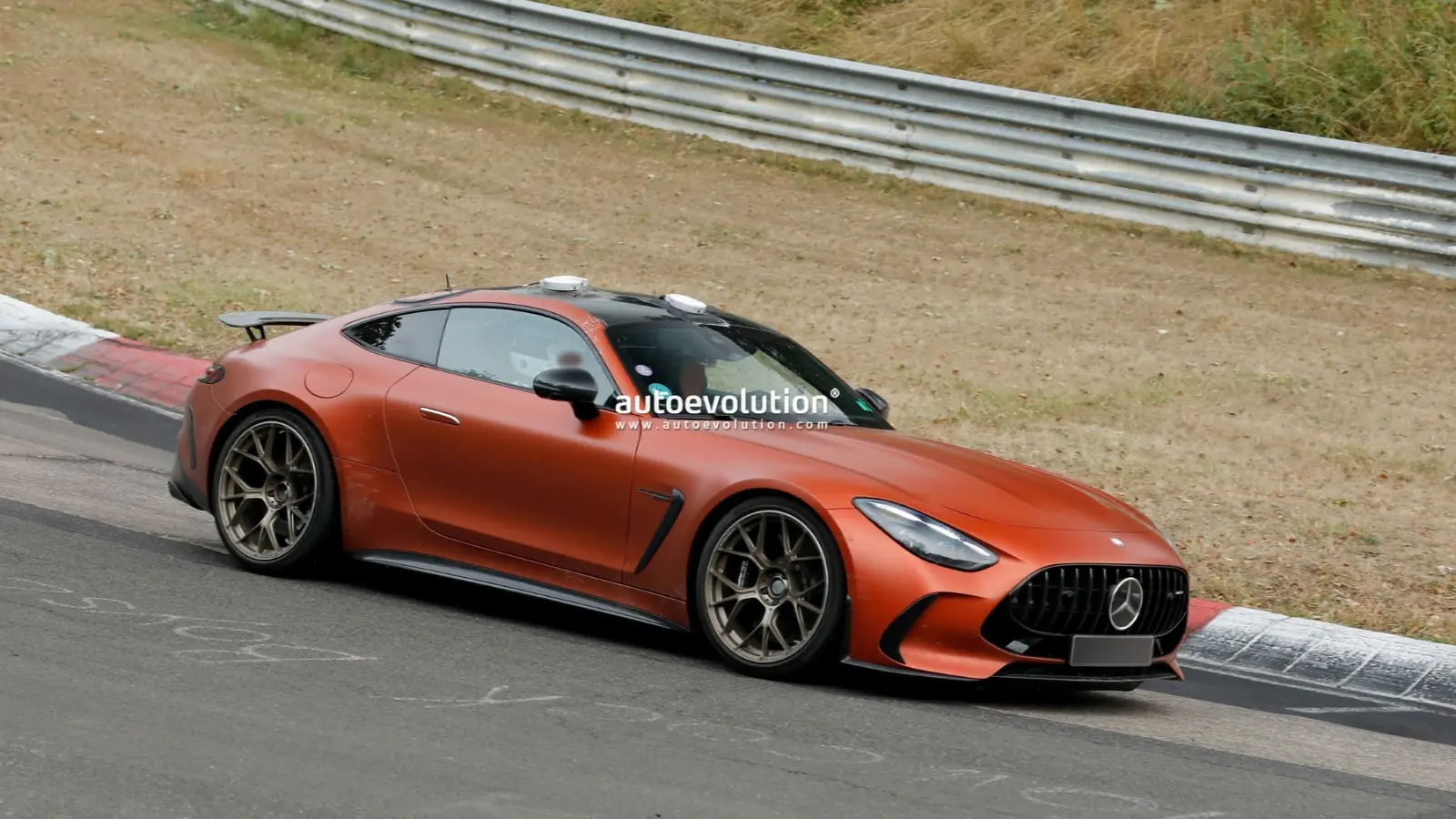
Spy photos from the Nurburgring show a matte-copper Mercedes-AMG GT 63 Coupe fitted with roof-mounted mapping hardware and a subdued test program designed to convert digital mapping data into dependable, hands-free laps. This isn’t a publicity stunt for fastest-lap bragging rights — it’s a methodical data collection and validation exercise aimed at making autonomous track driving reliable.
The GT 63 used in testing appears heavily instrumented: external sensor pods, visible roof-mounted equipment and multiple cameras. Photographs capture a helmeted test driver with hands hovering near the leather-wrapped steering wheel rather than gripping it, and a camera mounted behind the wheel — a clear sign the human was present as a safety fallback, not the active controller.

Mapping passes, then cautious autonomous laps
AMG's engineers began by running slow, deliberate passes along the far left and right edges of the 20.8 km Nordschleife. Each side of the circuit reportedly required roughly 25 minutes to survey. Driving close to the track edges maximizes positional data capture, which high-precision mapping systems need to build an accurate digital twin of the circuit.
Once mapping was complete, the same GT 63 went back out for hands-free laps at a deliberately conservative pace. The driving behavior was telling: early braking, cautious throttle application on corner exits and a focus on stability over outright speed. The first autonomous lap reportedly took just under 20 minutes. After data analysis and software tweaks in the pits, a second lap ran faster but remained far from the times a skilled human could extract from the GT 63.

What hardware and software are likely involved?
While Mercedes has not confirmed the exact specification, the visible kit suggests a mix of:
- High-precision GPS and RTK corrections
- Lidar or advanced radar for close-range object mapping
- Multiple video cameras for visual localization and lane/edge detection
- Dedicated compute and drive-by-wire actuators for throttle, brakes and steering

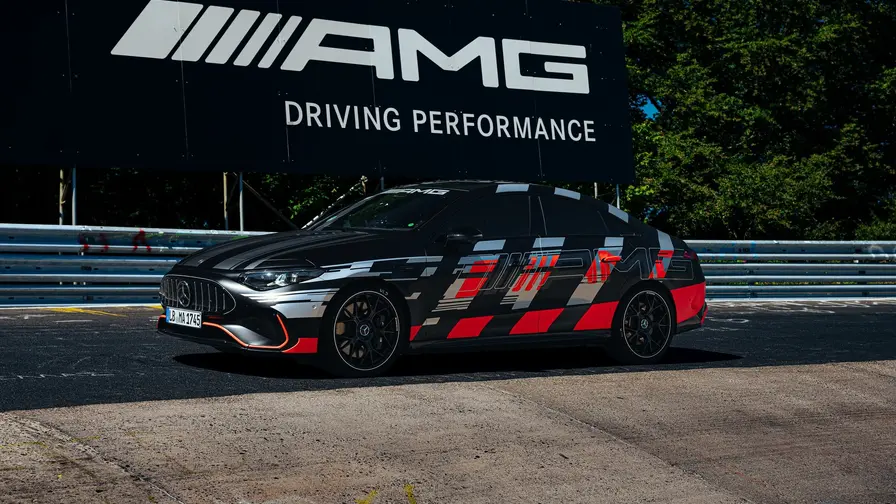
Previously, AMG demonstrated autonomous capability with a GT 63 S 4-Door Coupe in 2022, limited to 170 km/h, using similar high-precision mapping and drive-by-wire systems. This latest program looks like an evolution: next-generation sensors, tighter mapping density and software tuned for the unique demands of the Nordschleife.
"This wasn't about outright speed — it was about data and dependability," a source familiar with the tests explained. That sums up the cautious approach on display: the goal is a repeatable autonomous system that understands the circuit down to centimeters.

Context: lap records and previous autonomous efforts
For context, the autonomous lap benchmark currently belongs to the Xiaomi YU7 GT with a 10:29 lap in June 2026. The Nordschleife's length and complexity make it an extreme proving ground for autonomous systems; official record attempts require strict timing and verification. Mercedes-AMG has both the engineering resources and high-performance heritage to chase such targets, and Affalterbach has a precedent of using its performance cars as testbeds for cutting-edge autonomy.
Why the Nordschleife?
The Nordschleife offers unparalleled variation in elevation, corner type and surface transitions — perfect for stress-testing perception, mapping and stability control under dynamic load. For an autonomous system, learning this track is less about top speed and more about mastering predictive behavior, precision inputs and fail-safe strategies.
Key takeaways:
- AMG is collecting high-density mapping data around both edges of the track.
- Early tests are conservative: stability and reliability first, speed later.
- The program builds on AMG's 2022 autonomous GT 63 work but appears to use more advanced sensors and software.

What to watch next
Expect AMG to iterate rapidly: sharper mapping, software updates after each lap, and gradually more aggressive lap profiles as confidence grows. Whether the program culminates in a verified autonomous lap record is open, but AMG’s investment signals serious intent to push high-performance autonomy toward real-world track applications.
For enthusiasts, the story is compelling: the same engineering that produces blistering performance will be used to make cars that can also think — and learn — on one of the toughest circuits in the world.

Leave a Comment
Comments
No comments yet. Be the first.