
When a dark smudge on a slab of West Texas rock first caught a collector's eye in 1985, no one expected it to rewrite a chapter of insect evolution. For decades that smudge lived under a familiar label — thought to be a juvenile crustacean called Tesnusocaris goldichi. It fit the neighborhood: the slab also held other crustacean fossils and the impression was shadowy, hard to parse.
But science is patient. A fresh look with cross-polarized light imaging — a technique that tames glare and teases out subtle contrasts — revealed anatomy hidden in plain sight. What emerged was not a shrimp-like juvenile at all. It was an oddball insect with a body plan that feels like a bridge between worlds.
Researchers named the specimen Chosha praecursor. The name marks more than taxonomy. It signals an organism that carried two evolutionary stories at once: traits familiar from modern insects, and a suite of archaic appendages that point to a semi-aquatic lifestyle.

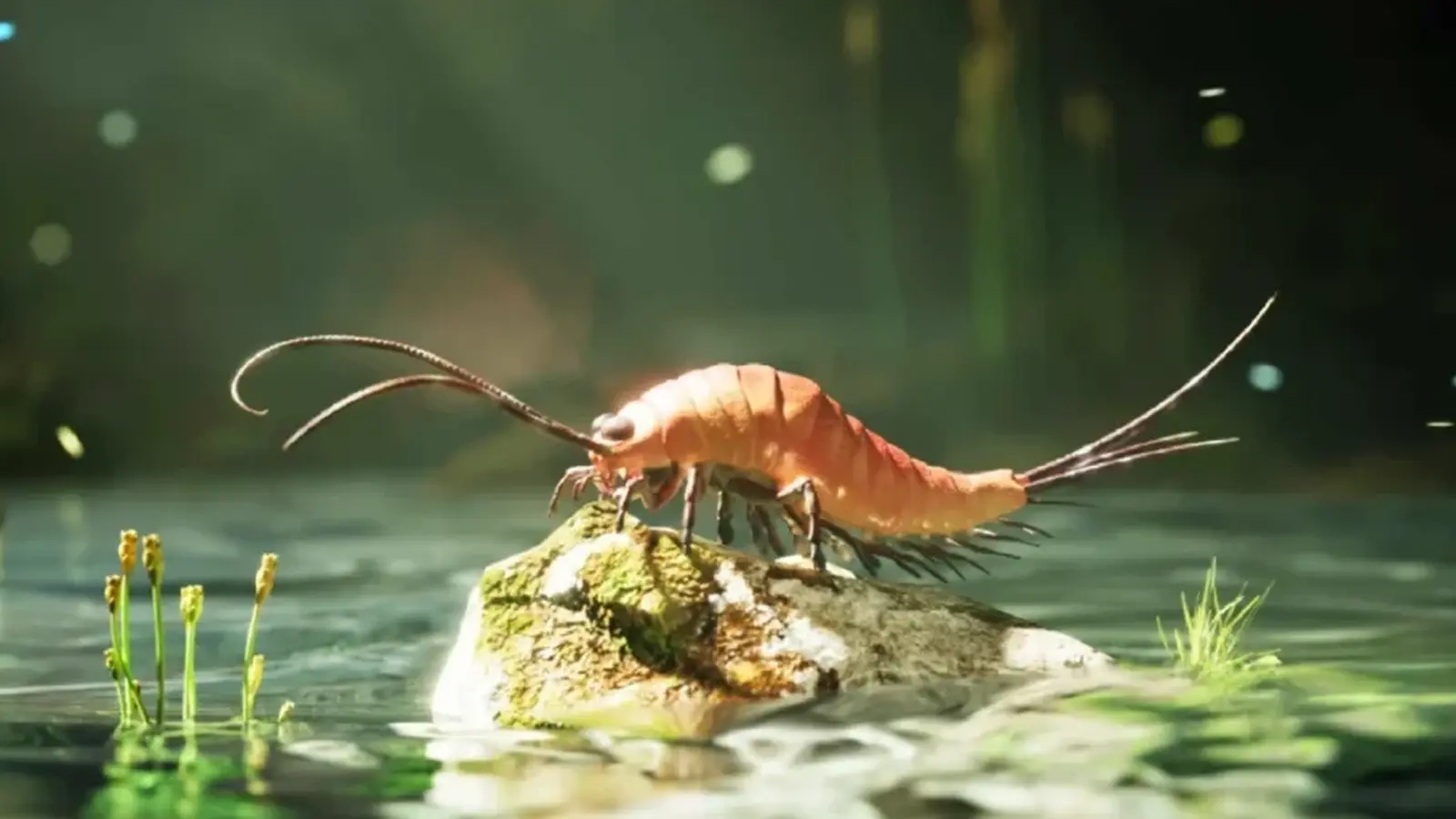
Here’s the image that turned the puzzle: instead of six legs, this creature bore 24 paddle-shaped limbs, arranged along an abdomen that looked crustacean-like in silhouette. Some of those appendages were gill-like. The whole anatomy suggests a walker that was also a swimmer — a marshy, coastal forager rather than a purely landlubber insect.
Placing Chosha praecursor on the tree of life required more than observation. The team compared the fossil’s features with evolutionary models and with several related six-legged Carboniferous fossils. The result: Chosha sits within Hexapoda, the group that contains true insects, but it occupies an early and unexpected nook of that lineage.
Why does this matter? Because it widens our view of what early hexapods looked like and how they lived. The Paleozoic world was more varied than the neat six-legged image we carry today. Some of the first insects appear to have been half in, half out of water — crawling among dead plants in coastal pools and swamps, using paddle-like limbs and abdominal gills to navigate both mud and shallows.

Those ecological habits have implications. If primitive hexapods were semi-aquatic, the shift to fully terrestrial life involved a complex sequence of anatomical and behavioral changes. Chosha’s body offers a snapshot of those early experiments: limbs doubling as paddles, structures that hint at respiratory adaptations, and a morphology that straddles crustacean and insect features.
The reassessment also reminds us how much of paleontology depends on tools and perspective. A fossil long boxed into an established category was freed simply by changing the way we looked at it. The study, published in Nature, adds not just a new name to the fossil record but a richer narrative for the origin of insects.
So next time you picture the first insects crawling from the water onto land, imagine Chosha: four dozen paddles flicking through a Carboniferous pool, an awkward, ingenious body testing the rules of a new realm.

Leave a Comment
Comments
No comments yet. Be the first.