
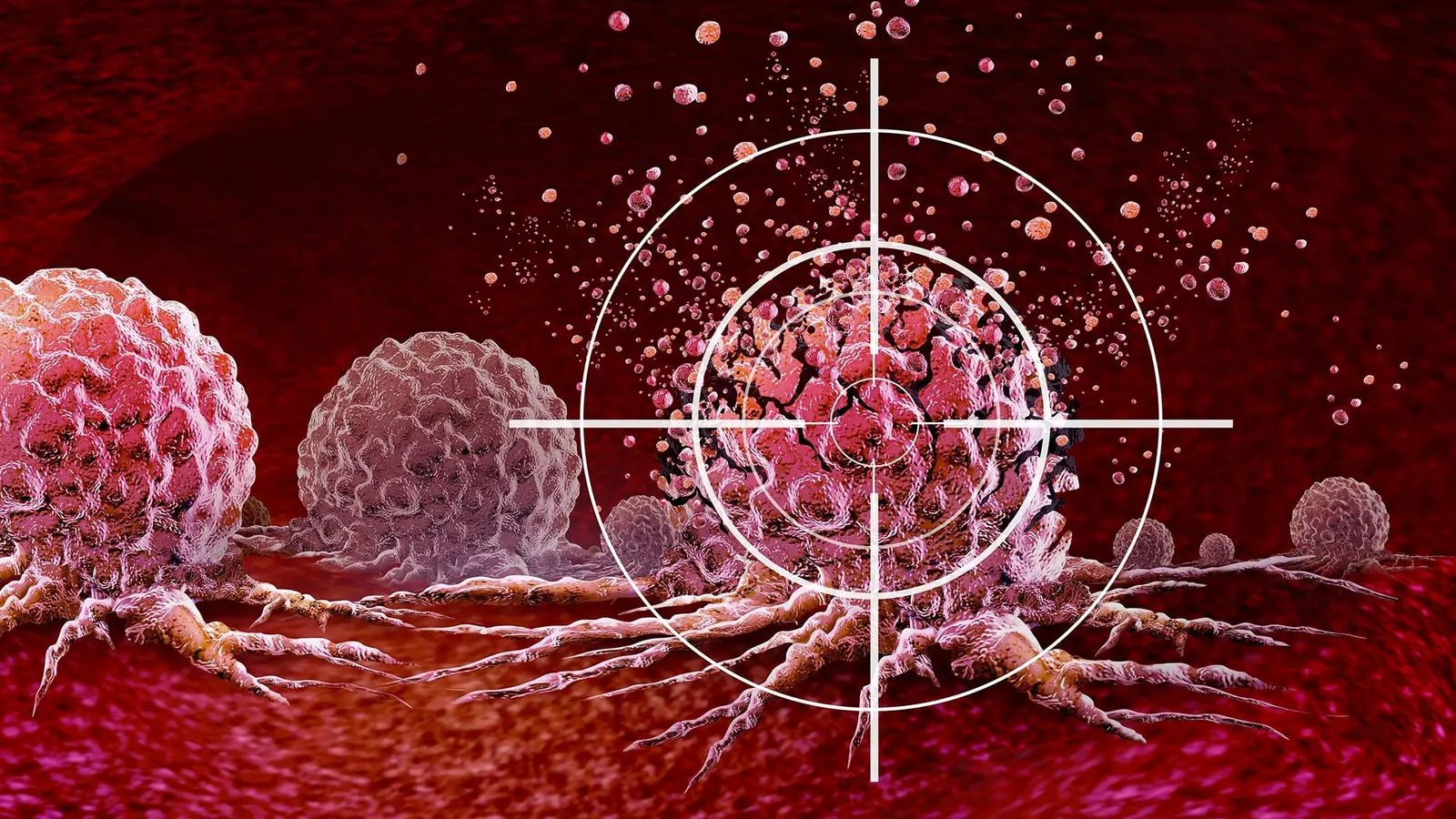
They were gone in 11 days. Small, aggressive tumors that had been steadily growing in mice disappeared after a twice-daily treatment with a designer molecule developed at Stanford Medicine.
It sounds like a plot twist. But this is chemistry meeting cellular fate: instead of merely blocking a cancer-promoting protein, researchers coaxed that very protein to flip its role and turn on genes that trigger the cancer cell’s self-destruction. The protein at the center of the story is BCL6, a transcriptional regulator that normally silences genes responsible for stopping growth or initiating apoptosis during an immune response. In certain B-cell lymphomas, BCL6 stays stuck in the “on” position, and cells that should die keep multiplying.
The new compound, called TCIP3, is bivalent — two functional ends joined by a linker. One end latches onto BCL6. The other recruits proteins known as P300 and CBP, enzymes that deposit acetyl marks on nearby proteins and on histones, loosening chromatin and making previously repressed genes accessible. The result is not just relief from repression; it is active induction of the cell death program. Think of it less as releasing a brake and more as slamming down the accelerator toward apoptosis.

Gerald Crabtree, Meredith Nix and Sai Gourisankar.
Structural biology revealed a surprise. X-ray crystallography showed that once TCIP3 brought BCL6 into proximity with P300/CBP, additional contacts formed between the proteins themselves. Those extra handshakes made the assembly sturdier than expected, so the chemists tightened the compound’s linker to preserve these interactions. The molecule behaved like molecular glue — anchoring a hybrid complex that drives dramatic changes in gene expression at very low concentrations in cultured lymphoma cells.
In treated mice, aggressive human lymphoma xenografts vanished after 11 days of twice-daily dosing with TCIP3. The animals showed no obvious signs of toxicity and blood tests did not reveal inflammatory surges, even though the drug also dismantled germinal centers — the very clusters of rapidly dividing B cells that depend on BCL6 and are implicated both in lymphoma and in some autoimmune disorders.
That overlap hints at a broader opportunity. By selectively rewiring a transcriptional repressor, similar compounds might one day dampen pathogenic immune responses in diseases such as rheumatoid arthritis or myasthenia gravis. But caveats remain. TCIP3 and related molecules still need chemical optimization, more extensive safety testing across species, and careful evaluation of off-target effects before human trials could be contemplated.
The study, co-led by Gerald Crabtree, Nathanael Gray, Stephen Hinshaw and Michael Green, with lead contributions from Meredith Nix and Sai Gourisankar, appears in Cell. The team sees this as proof of principle: bivalent molecules that redirect a disease-driving protein toward a therapeutically useful activity rather than simply destroying or blocking it.
Could this be the start of a new drug-design playbook, where the villain is recruited as its own undoing? The experiments in mice suggest the idea is plausible. The next challenge is the long, precise work of turning plausibility into safe, effective treatments for people.


Leave a Comment
Comments
No comments yet. Be the first.