
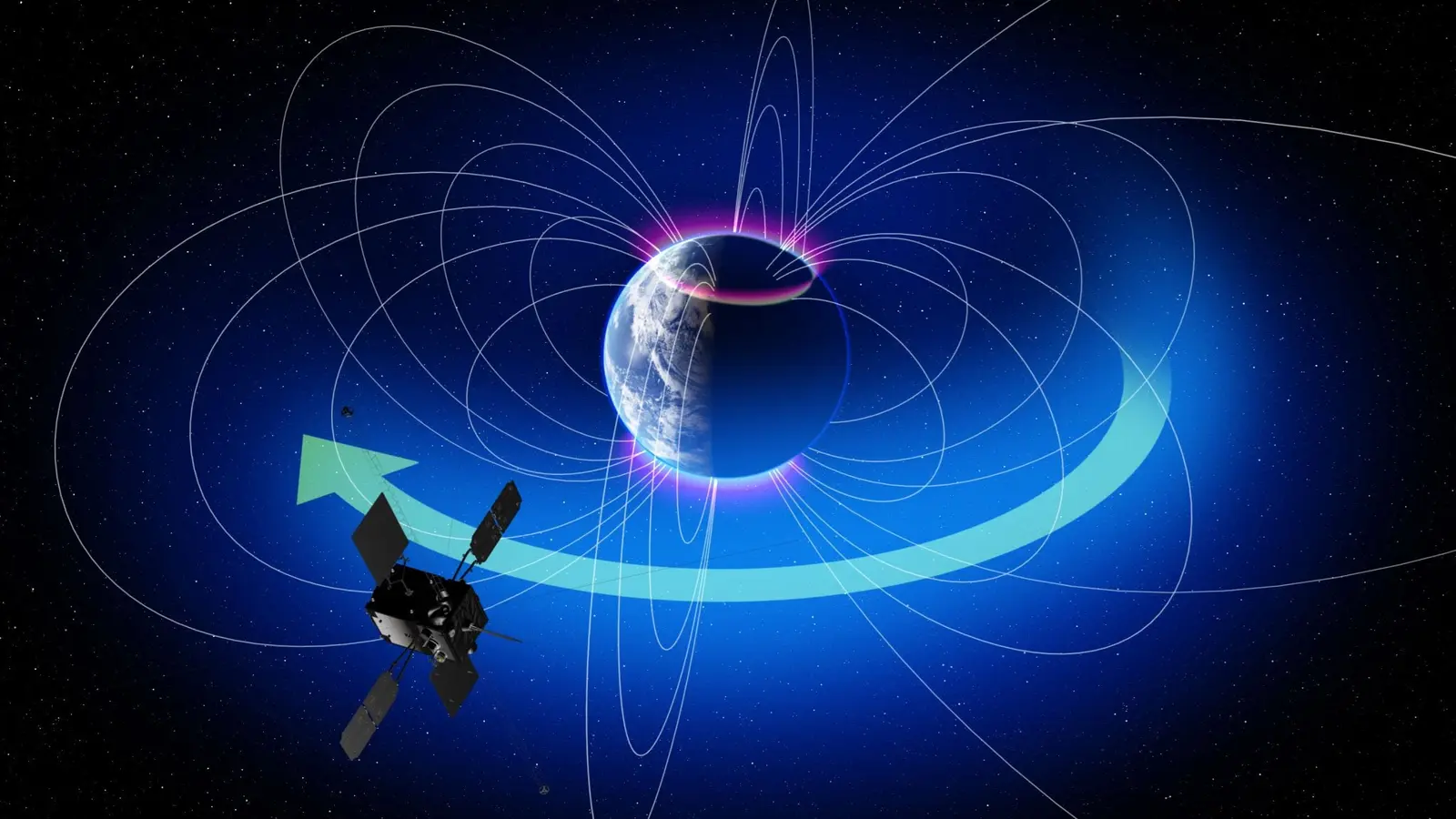
Imagine a space storm where the surprising villain is the air above your head. Strange, but true: new observations show that during one of the largest geomagnetic storms on record, the bulk of the energetic ions swarming the near-Earth environment didn’t arrive from deep space — they came from our own ionosphere.
Scientists working with the Arase spacecraft captured the event in remarkable detail. The team reported a near-simultaneous measurement of ring-current ions and incoming solar wind during the storm, and the numbers were startling. Approximately 85% of the detected ring-current ions were oxygen originating in Earth’s ionosphere. That shifts the spotlight from the Sun to the planet itself.
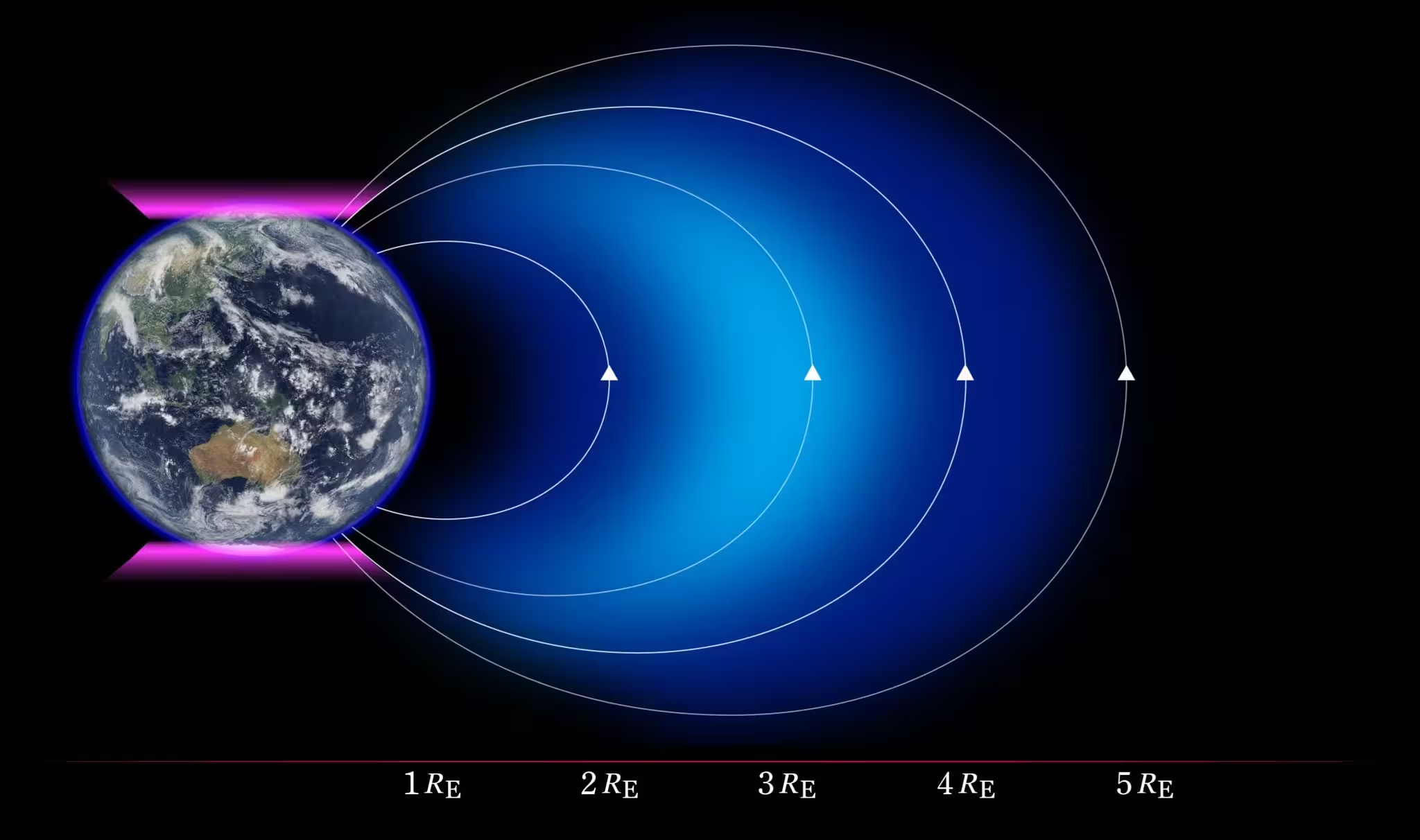
Schematic image of ring current ions on the dusk side during the peak of the May 2024 super geomagnetic storm, viewed from the Sun’s perspective.
At the storm’s peak, Arase recorded a dramatic 40% drop in magnetic field intensity about 16,000 kilometers above Earth. That collapse occurred closer to the planet than comparable drops seen in past storms. Short sentence. Big difference.
In the same neighborhood of space, high-energy electrons vanished almost as quickly as the magnetic field sagged. When the magnetic cage around charged particles weakens, their orderly drift can break down and they can escape along new paths. Did the warped field eject those electrons directly? The link is plausible, but scientists say the causal chain is not yet proven.
Why does this matter beyond satisfying scientific curiosity? Because our space weather forecasts lean heavily on what the solar wind does. If the atmosphere can inject large quantities of heavy ions — oxygen, in this case — into the magnetosphere and alter the magnetic environment itself, then models that ignore those terrestrial inputs will miss a key piece of the puzzle. Forecasts may need to account for the atmosphere’s role as both source and sculptor of storm dynamics.

Japan’s Arase satellite lifts off in December 2016. The spacecraft orbited for more than seven years before the May 2024 super geomagnetic storm finally provided the opportunity to measure ring current composition directly.
Those findings also lend momentum to FACTORS, a proposed two-satellite mission under consideration by JAXA. FACTORS aims to follow how ions escape the upper atmosphere and feed the ring current, offering a more complete picture of how storms grow and how severe they can become. Better observations could mean better warnings for satellites, power grids, and navigation systems.
The takeaway is simple and a little humbling: sometimes the fiercest players in near-Earth space are not strangers from the Sun but the oxygen and particles circulating just above our heads — and scientists are only beginning to learn how influential that familiar air can be.

Leave a Comment
Comments
No comments yet. Be the first.