
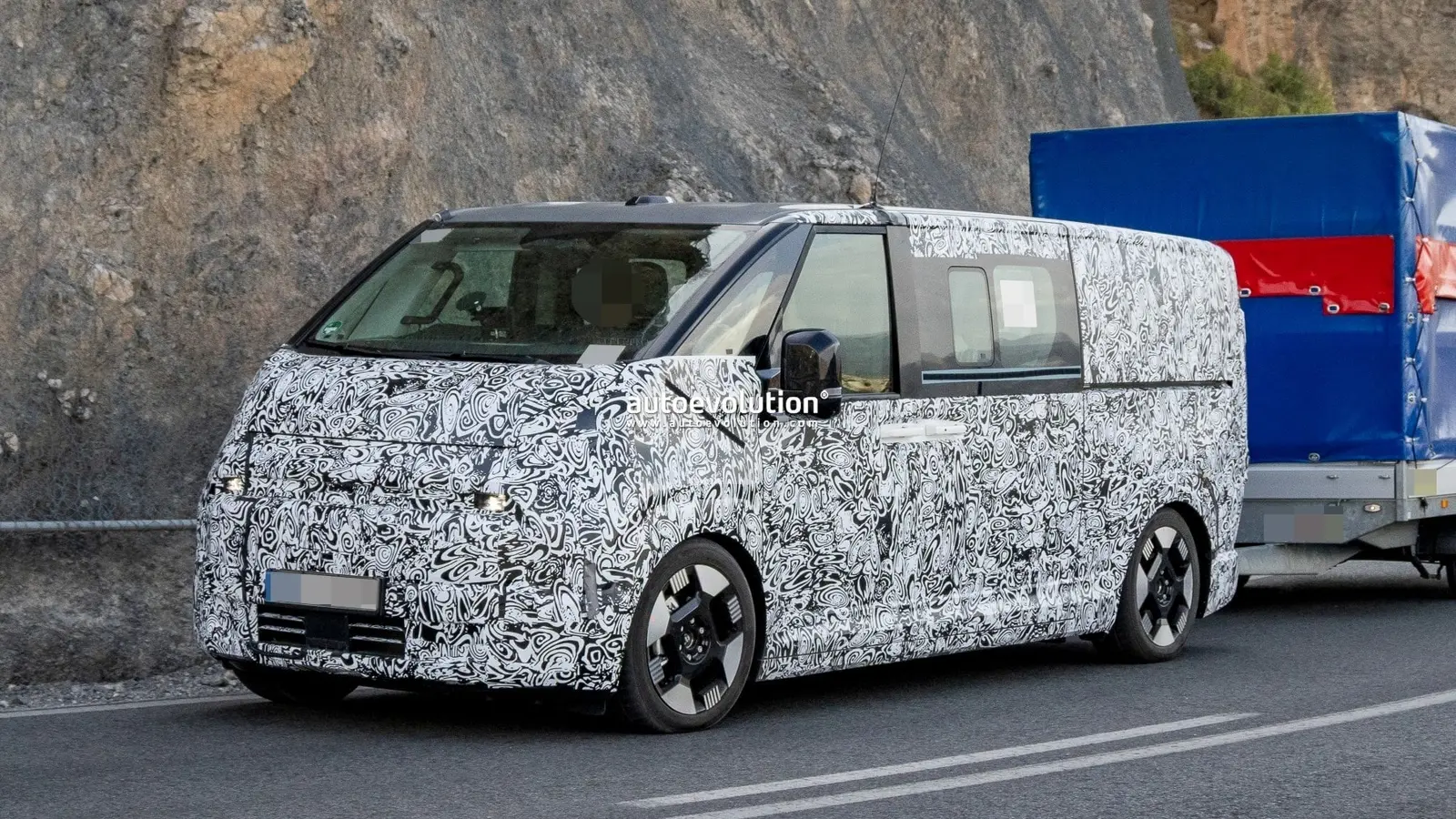
Spy photos show Kia's new electric workhorse testing with a trailer
Kia has begun quietly rolling out its next electric van, and spy photographers have already captured a near-production PV7 undergoing hot-weather validation while towing a trailer in Europe. Heavily camouflaged but unmistakably boxy, the prototype offers a clear preview of what Kia intends to bring to commercial fleets and lifestyle buyers when the PV7 makes its public debut on September 14 at IAA Transportation 2026 in Hannover.

Design: functional, squared-off, and fleet-ready
The PV7 wears a simple, pragmatic silhouette that prioritizes usable volume over flashy curves. Key visual cues visible beneath the wrap include:
- A stepped front end with a short overhang and a tall, expansive windshield for improved forward visibility
- Dual sliding side doors and pronounced glazed sections between them for light and access
- A largely flat roof and upright sides to maximize cargo capacity
- Chunky rear pillars, narrow vertical taillights, and a vertical liftgate designed for easy loading and unloading
- Heavy black trim around the upper body that visually lifts the roofline and gives the van a floating-roof effect

Viewed from the side, the PV7 reads as a scaled-up, more capable sibling to the PV5 — not a stretched passenger vehicle but a purpose-built commercial hauler. That unapologetically square packaging is a deliberate choice: in the light-commercial segment, cubic meters matter more than glamour.
How the PV7 differs from the PV5
Kia positions the PV7 as the second entry in its Platform Beyond Vehicle all-electric family, designed from the start for modular commercial use. Compared with the PV5, expect the PV7 to deliver broader cargo volume, increased payload and more practical features for professional operators, while still offering passenger or lifestyle variants for non-commercial buyers.

Platform, batteries and expected engineering
Underpinning the PV7 is Kia's Electric-Global Modular Platform for Service, the commercial-oriented counterpart to the E-GMP that powers the EV6 and other Hyundai Motor Group EVs. Early indications suggest multiple battery pack options will be offered, with electric drive units tuned to prioritize torque and low-end pulling power over outright peak output — exactly what fleet customers need for city deliveries and loaded starts.
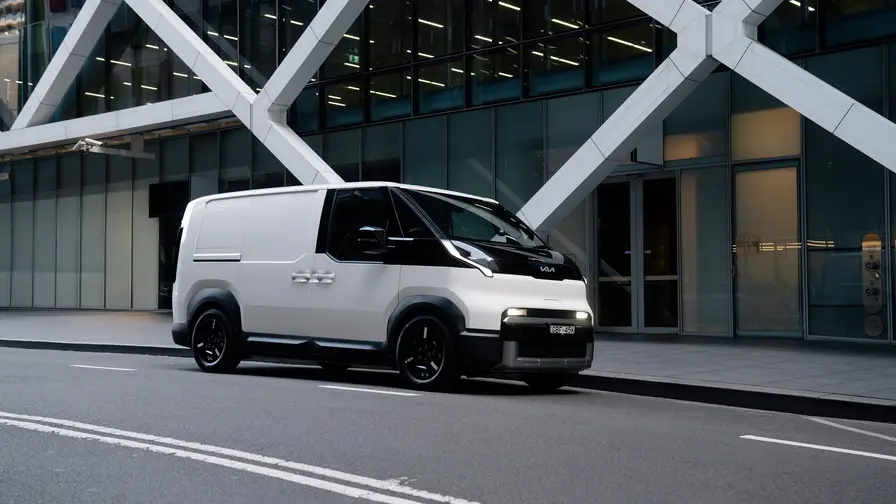
Regenerative braking is likely to be tuned for frequent stop-start driving and urban routes, and Kia is clearly running towing validation to ensure the PV7 behaves predictably under real-world loads. While the spy shots don't reveal official towing or payload figures, expect competitive numbers aimed at small businesses and service fleets.

Practical numbers and comparisons
Kia has already set a benchmark with the PV5: cargo versions can carry around 750 kg payload, and PV5 Cargo variants reach roughly 790 kg on some configurations, with high-roof, long-wheelbase models offering approximately 5.2 cubic meters of cargo space. The PV7 should surpass those figures in at least some trims, especially in L2/H2 high-roof layouts.
The PV7 is also expected to closely follow the PV7 concept footprint, with an overall length near 5,270 mm, which puts it squarely in the large-van category and in contention with other commercial EVs from established players.

Market positioning and who should watch this van
Kia is targeting commercial operators first — couriers, tradespeople, last-mile delivery services — but it will likely broaden the lineup to include passenger and lifestyle-focused variants that use the same practical bones. The combination of a modular platform, multiple battery choices and towing validation suggests Kia wants the PV7 to be a flexible tool for a variety of use cases.
Highlights at a glance:
- Launch: September 14, 2026 at IAA Transportation, Hannover
- Platform: Electric-Global Modular Platform for Service (commercial-focused)
- Expected length: around 5,270 mm
- Design: boxy, high-roof options, dual sliding doors, vertical liftgate
- Focus: payload, cargo volume, towing validation, torque-focused powertrains

Kia calls the PV7 an evolution of the PV5 concept, built to handle heavier workloads without sacrificing the modularity modern buyers expect. If Kia nails the payload and towing balance while keeping costs and charging practicality in check, the PV7 could be a strong contender in the growing market for commercial electric vans.
Watch for Kia's full reveal at IAA Transportation, where we should get official specs on cargo volume, payload limits, battery options and any towing ratings that will matter to fleet buyers and small businesses alike.


Leave a Comment
Comments (2)
Useful looking, but is that 5,270 mm for real? Seems huge. How will it handle tight city streets, loading bays, and charging infrastructure… curious.
Wow this actually looks like a proper work van, boxy but smart. If Kia nails payload and towing, could be huge for couriers. Hope range and charging dont kill it tho, and price?