
3 Minutes
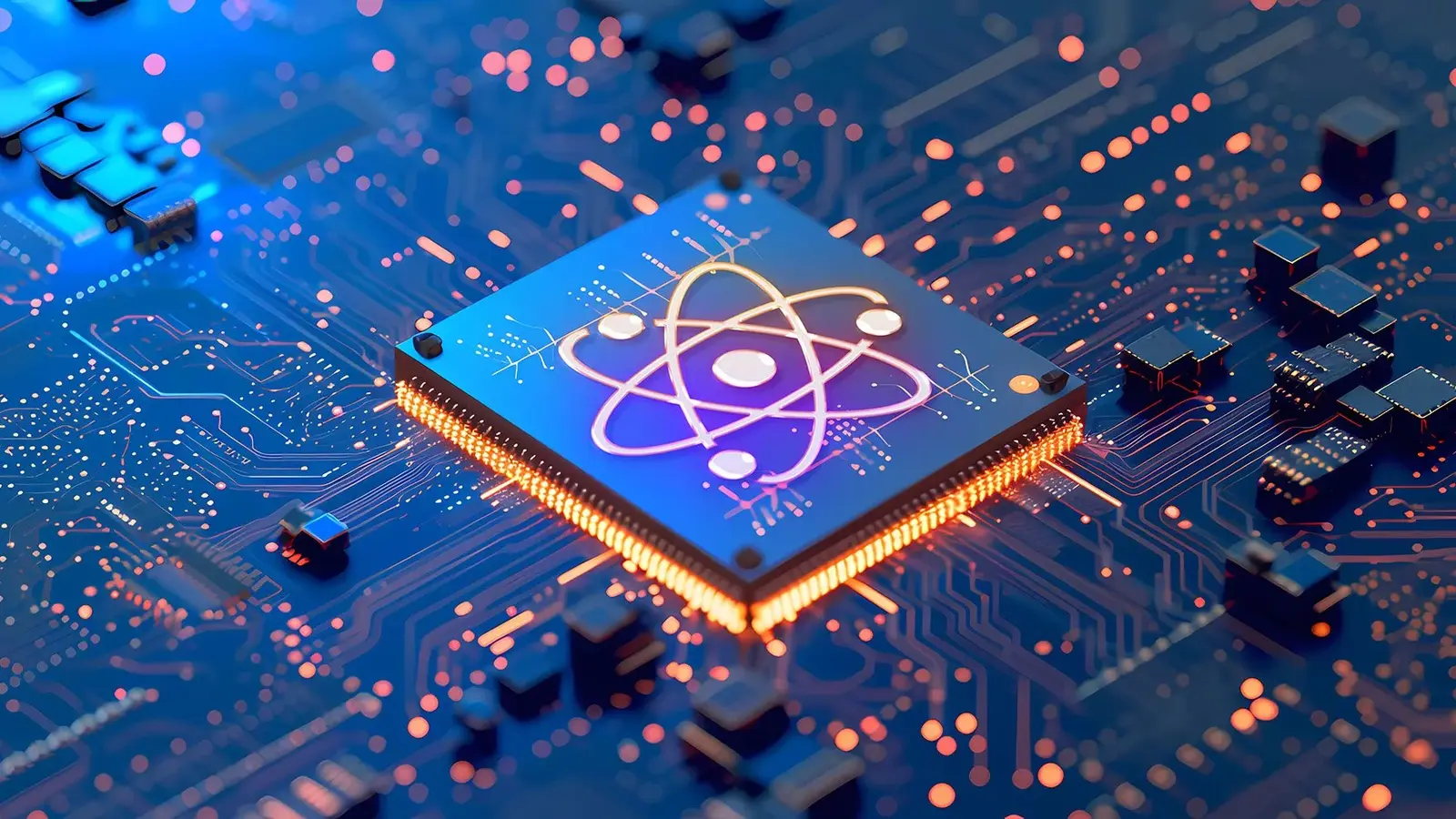
Picture a gleaming chip cooled near absolute zero, humming with fragile quantum states and, against the odds, carrying out a piece of geometry. It isn't a sci-fi prop. It's a 121-qubit superconducting processor run by a team from Zhejiang and Tsinghua universities, and it was used to carry out machine-checkable proofs of two geometric theorems — one a textbook fact about a square, the other a knot of logic from the 1978 International Mathematical Olympiad.
This isn’t about a machine stumbling onto an unexpected answer. The researchers already knew what the correct conclusions looked like. Speed wasn’t the headline either; classical computers can beat this quantum device on raw throughput. The real milestone is philosophical: logical chains of mathematical reasoning were instantiated and executed on quantum hardware itself.
Start small. The first problem tested the quantum algebraic machinery: draw a square, connect the diagonals, show they meet at a right angle. To do this the team employed a hybrid strategy rooted in the classical Wu method for algebraic geometry, recast so that quantum circuits could represent algebraic manipulations. Short circuits suggested transformations. Measurements checked them. Step by step, the processor enacted an algebraic proof.
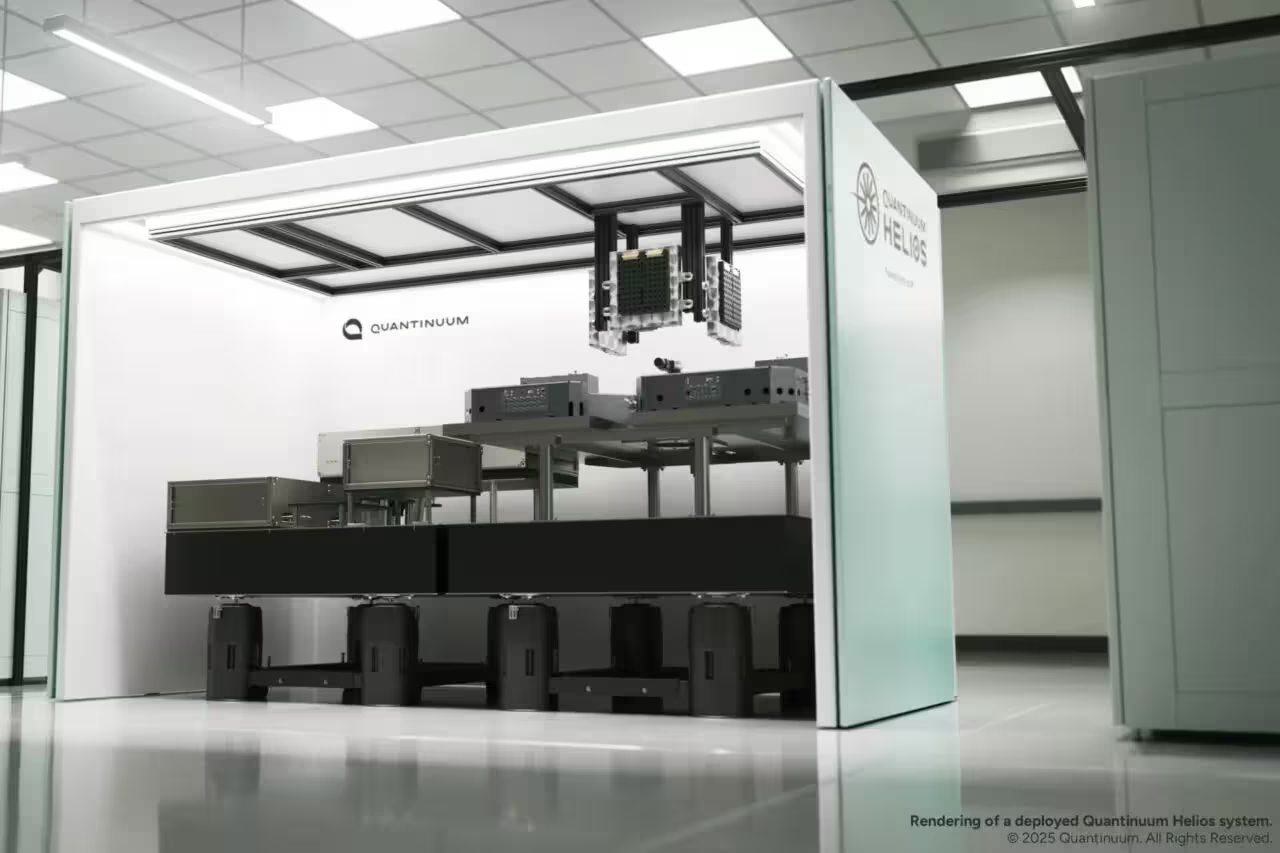
The second challenge was rougher going. An IMO-style geometry problem with intersecting circles and triangles demands more intricate symbolic maneuvering. Here the researchers used a symbolic proof-search approach in which quantum circuits proposed candidate steps, applied transformation rules, and evaluated whether those steps advanced the argument. Think of the circuits as experimental apprentices: make a move, test it, keep it if it helps.
Why does this matter? Because it shows quantum machines can do more than accelerate arithmetic or simulate chemistry — they can be engineered to manipulate abstract formulas and chains of logic. That flips a common view of quantum processors as specialized number crunchers. With careful encoding, qubits can carry and test logical inference, even when faced with noise and instability that have long made such encodings seem impractical.
There are important caveats. The proofs were guided heavily by human design, and classical systems remain far faster and more reliable for these tasks. But this experiment demonstrates that logical proof structures can be mapped onto quantum hardware and executed experimentally. As qubit counts rise and error correction matures, hybrid classical–quantum theorem provers could move from curious demonstrations to practical tools that explore proofs in novel ways.
Which longstanding problem will next be nudged, piece by piece, by a quantum circuit? The question now seems less speculative than it did a few years ago.

Leave a Comment
Comments
No comments yet. Be the first.