

5 Minutes
Not a landing. A dress rehearsal. In 2027, NASA plans to stage a dramatic run-through in low Earth orbit that will put Orion, SpaceX's Starship test article, and Blue Origin's Blue Moon prototype through their paces—without ever touching lunar soil.
The mission is being treated like a live-fire drill for future Moonwalks. Astronauts will ride Orion atop the Space Launch System, while two U.S. commercial teams fly test versions of their human landing systems on separate rockets. The goal is simple and stubborn: practice the rendezvous and docking choreography that will one day deliver crew from lunar orbit down to the surface.
Why rehearse in Earth orbit instead of going straight to the Moon? Safety and repeatability. Earth orbit gives engineers more launch windows, easier recovery options, and the chance to probe how very different spacecraft behave when physically linked. It is lower risk but high fidelity—exactly what mission planners need before committing a crew to the harsher environment around the Moon.
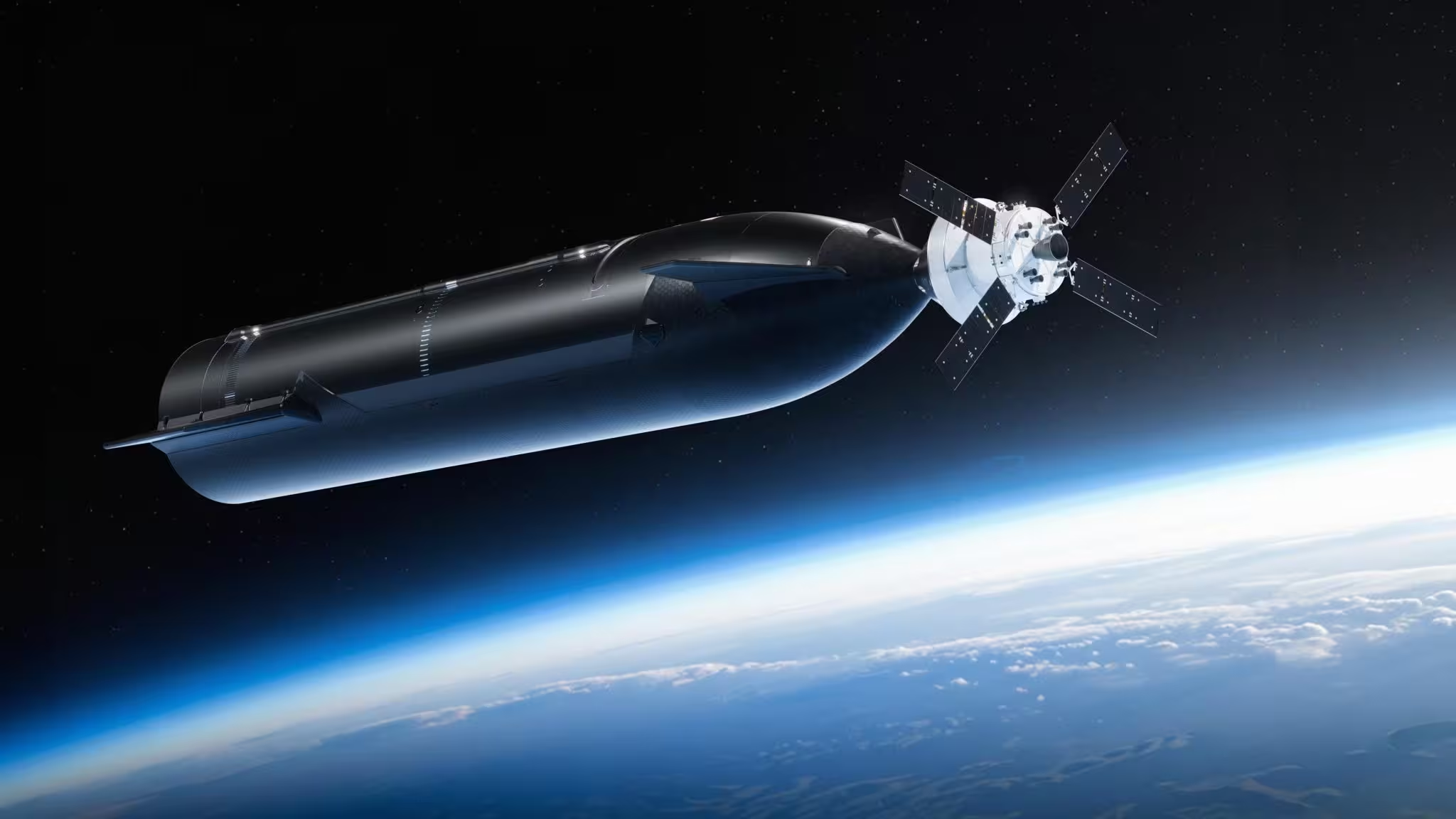
This artist’s concept depicts NASA’s Orion spacecraft and SpaceX’s Starship human landing system test article during docking operations as part of NASA’s upcoming Artemis III demonstration mission in low Earth orbit.
Blue Origin and SpaceX are taking different routes to the same destination. Blue Origin will fly a Mark 2 Blue Moon test lander equipped with avionics, flight software, and the control systems planners want to validate. Two Artemis III crew members may open the hatch and step into the Blue Moon cabin, gathering hands-on experience with the environmental systems and interior layout that future missions will rely on. Blue Origin will also carry an instrumented suit mass simulator to measure conditions inside that cabin, a pragmatic echo of the Moonikin used on earlier Artemis flights.
SpaceX is sending a Version 3 Starship test article fitted with a docking system on its nose. This will not be a crewed ingress opportunity; instead, Orion will rendezvous and dock nose-to-nose with the Starship test vehicle to let engineers study control, communications, and how the combined stack handles as a single flying machine. Expect long, detailed software and dynamics checks while teams watch how attitude control, propulsion firings, and data links hold up when two very different spacecraft are physically connected.
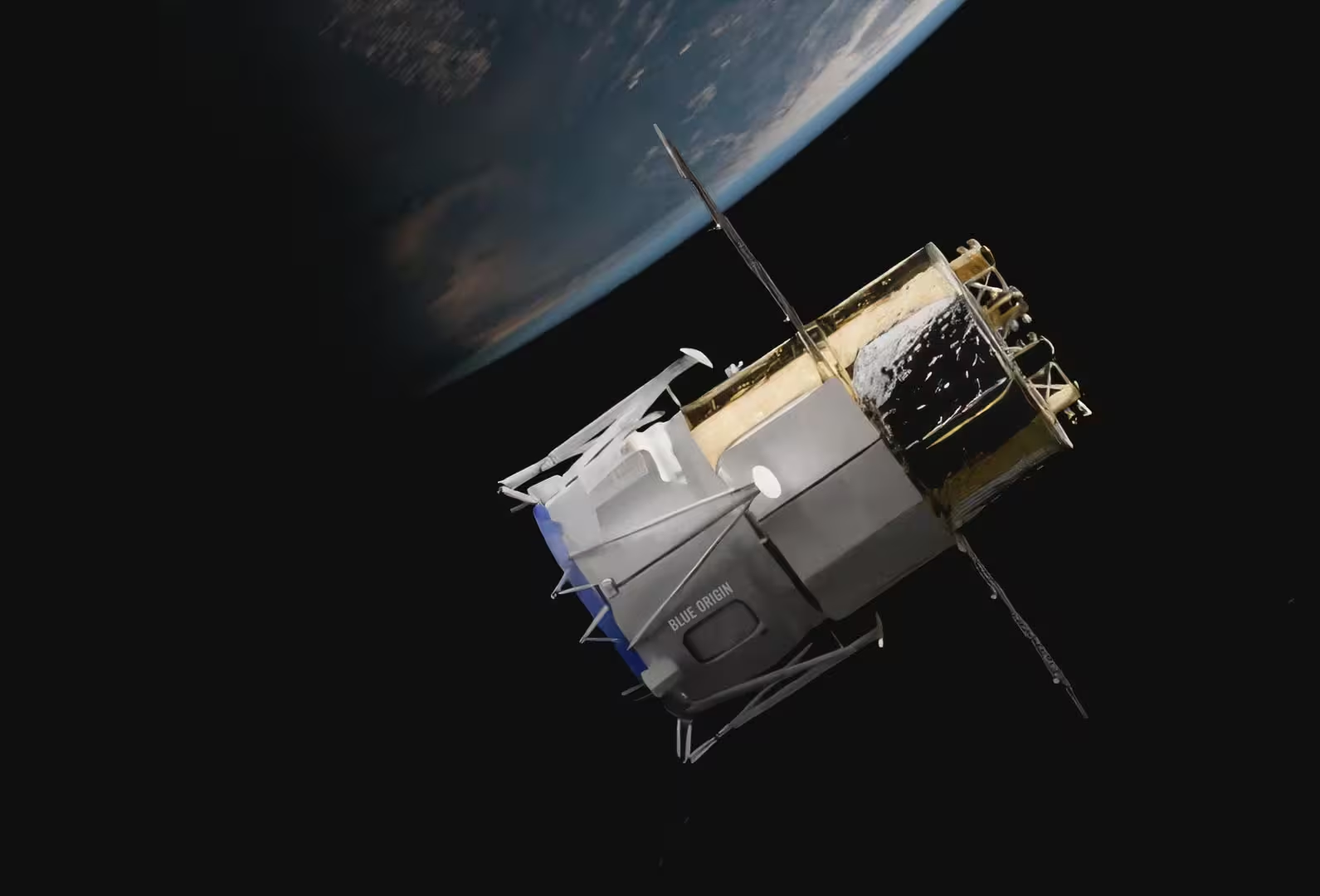
This artist’s concept depicts Blue Origin’s Blue Moon Mark 2 human landing system test article in Earth orbit as part of NASA’s upcoming Artemis III demonstration mission in low Earth orbit.
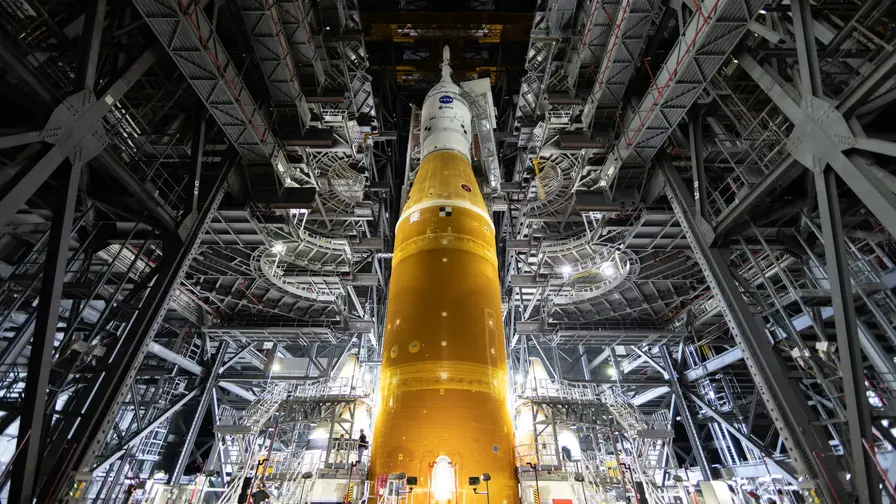
There is choreography to this that reads like a ballet for rockets. Blue Origin's lander goes first and parks in a designated orbit for up to 30 days while teams perform systems checks. Next, the Artemis III crew launches aboard SLS and Orion from Launch Complex 39B. Finally, SpaceX lofts its Starship test article. In short order three of the most powerful rockets in the world will have flown to support a single integrated demonstration, stressing not just hardware but ground processing, mission control, and national communications and data-sharing networks.
During docking sequences Orion will act as the chaser spacecraft, matching orbits and coming into contact with each commercial test article. Orion docks to the side of the Blue Moon vehicle near its crew cabin, while the Starship meeting is a nose-to-nose affair. Software responsibilities will swap depending on the partner: when docked to Blue Moon, Orion's guidance will command the joined stack; when linked to Starship, control shifts to the Starship test article. Those transitions are more than protocol; they are essential tests of interoperability between NASA systems and commercial designs.
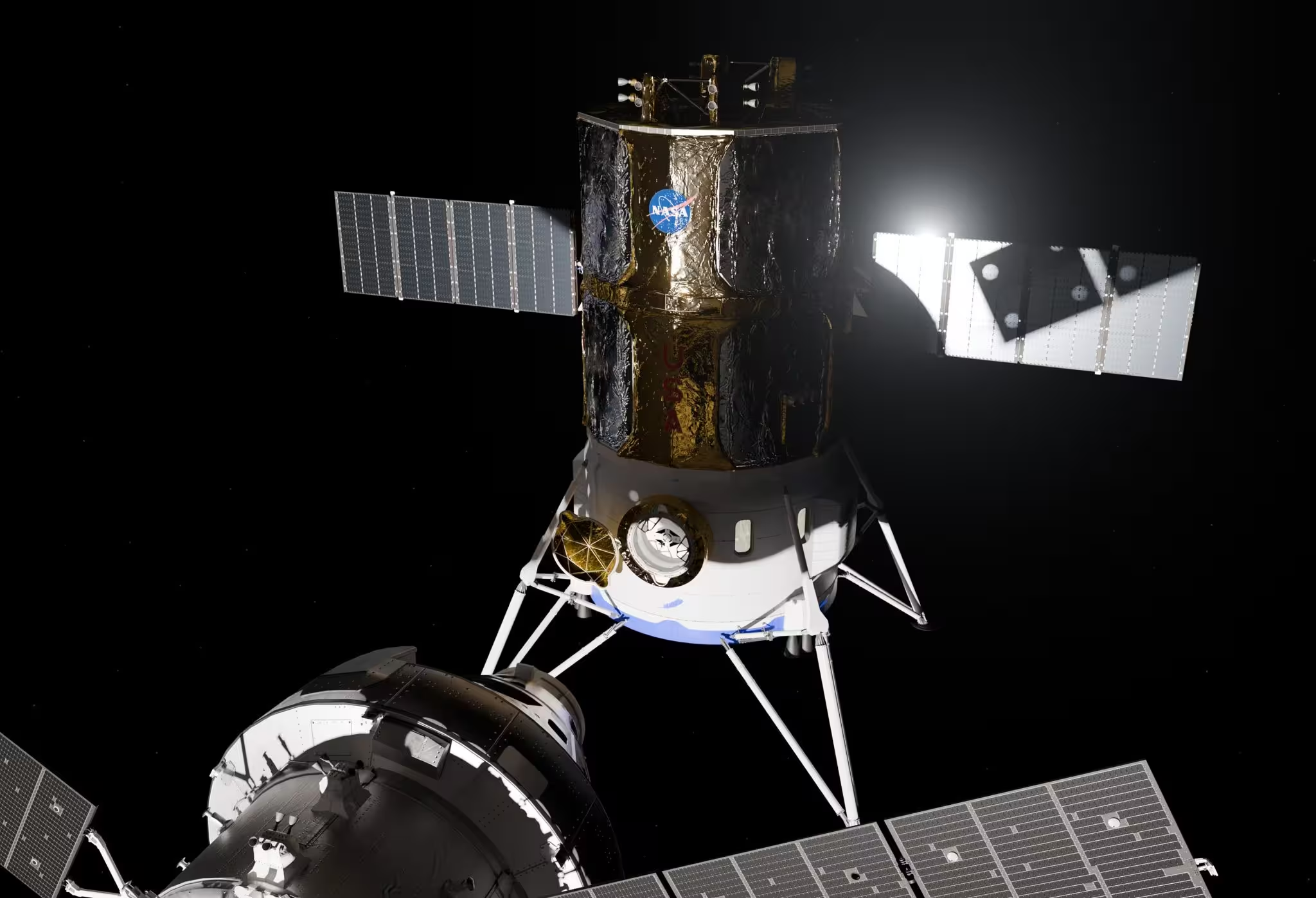
This artist’s concept depicts Blue Origin’s Blue Moon Mark 2 human landing system test article docked with NASA’s Orion spacecraft as part of NASA’s upcoming Artemis III demonstration mission in low Earth orbit.
Before a single hatch opens, NASA will run thorough safety reviews. Engineers will evaluate hardware and software against performance requirements and hazard controls to ensure crew protection inside Orion during every docking maneuver. Both companies have already completed ground qualification of their docking systems, but in-orbit behavior can introduce subtleties no test bench can replicate.
Beyond the rendezvous, Artemis III is a proving ground for how multiple launch providers and mission centers work together under a tight timeline. Ground teams will rehearse pad operations, propellant flows, telemetry handoffs, and countdown procedures across different facilities—all vital when missions scale up to sustained lunar operations. If you think of the Moon program as an orchestra, Artemis III is the first full rehearsal with all sections playing.
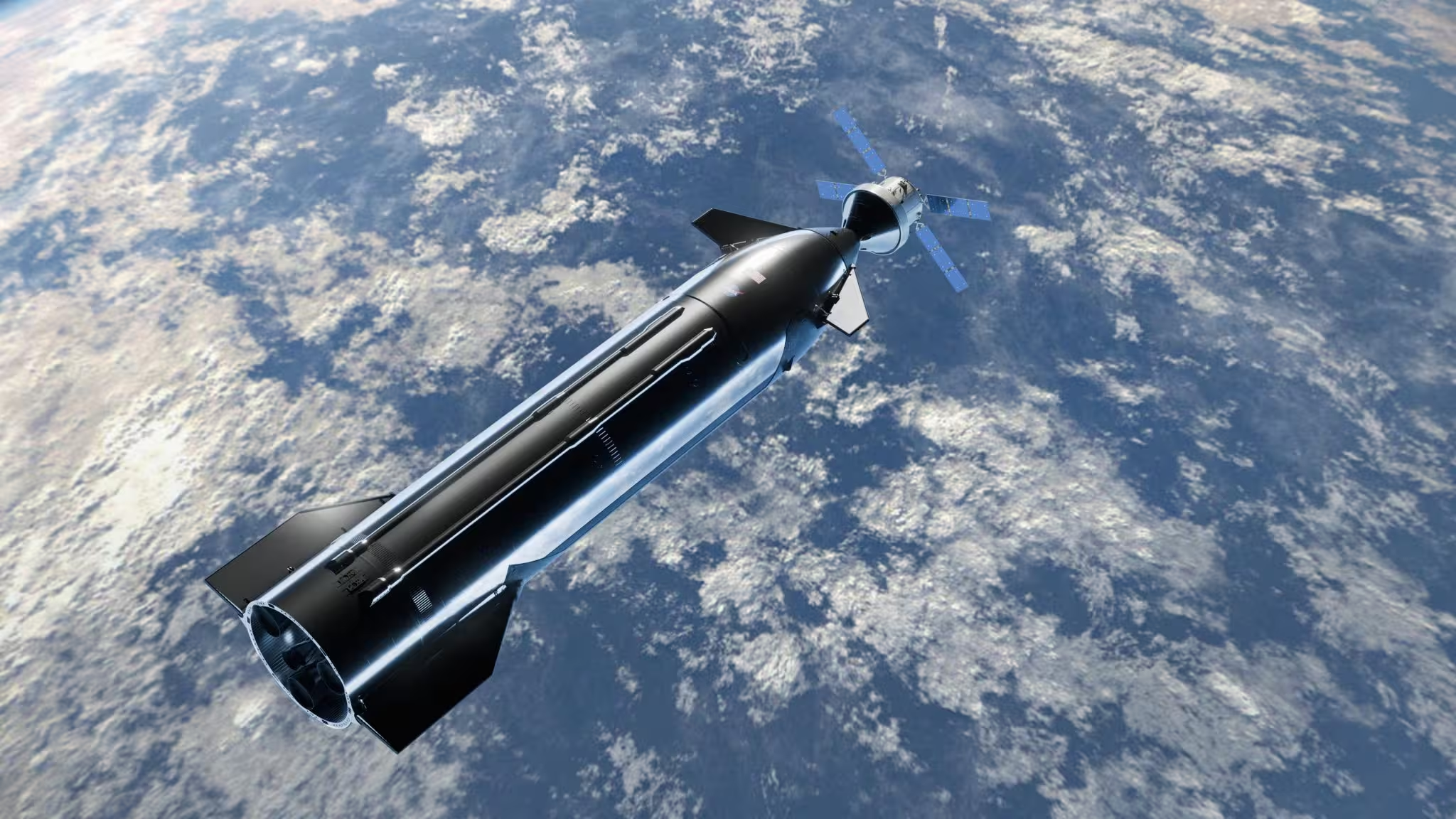
This artist’s concept depicts NASA’s Orion spacecraft and SpaceX’s Starship human landing system test article during docking operations as part of NASA’s upcoming Artemis III demonstration mission in low Earth orbit.
These demonstrations feed a larger ambition. Data, lessons learned, and the refinements that come from them will feed into uncrewed lunar demonstrations and the planned crewed landing that follows. The objective is practical: make future lunar landings safer and more predictable, and build the operating experience needed for even bolder goals, including human missions to Mars.

It will be messy at times. It will also be illuminating. This is where engineering meets real-world unpredictability, and where partnerships between public agencies and commercial builders get tested under pressure. If Artemis III goes according to plan, the next time astronauts head to the Moon they will do so with far more confidence than today—because someone already rehearsed the steps in orbit above our home.

Leave a Comment
Comments
No comments yet. Be the first.