
3 Minutes
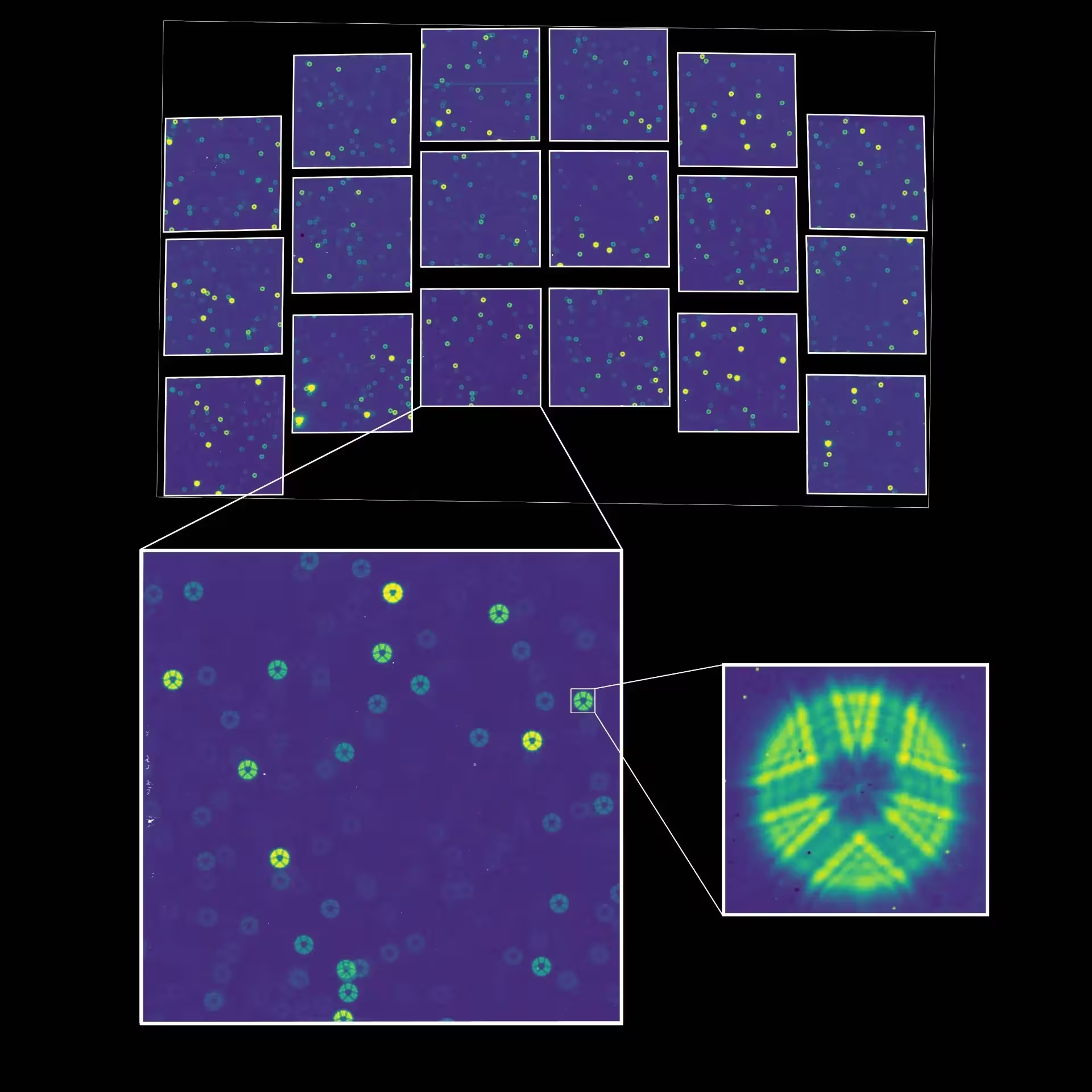
A faint, donut-shaped glow. Not a polished portrait of distant galaxies, not yet. But enough to prove the camera is alive.
Early this month, NASA’s Nancy Grace Roman Space Telescope sent back its first experimental images, a milestone engineers call “first light.” The Wide Field Instrument (WFI) — a 300-megapixel infrared camera built to capture vast swaths of sky — recorded the first photons from stars even while its detector array remained stowed and far from optimal focus. The result: blurred halos in green, yellow and blue against a soft blue background. Charming, imperfect, and promising.
The images confirm the WFI works in space.
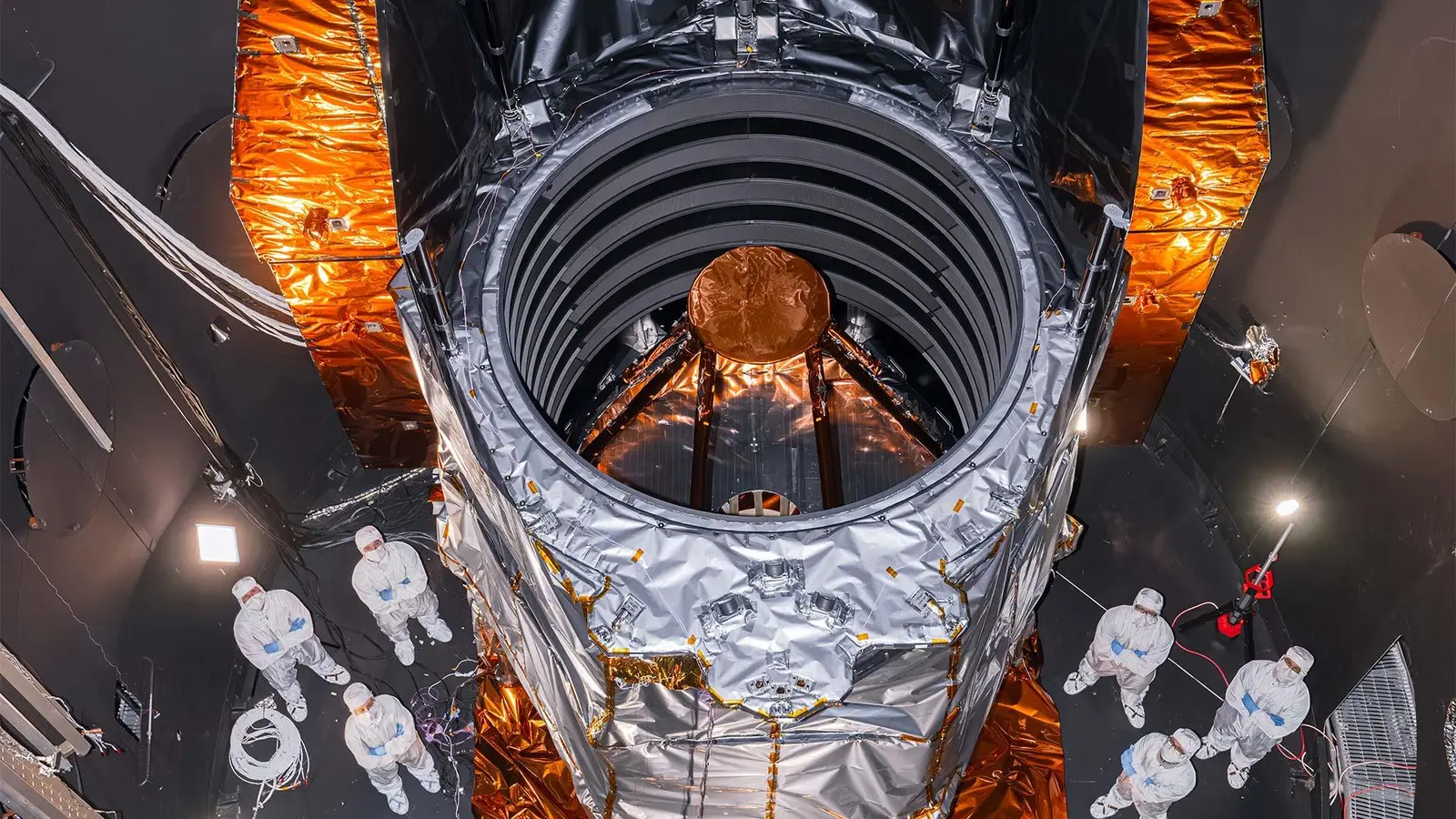
That simple fact didn’t come easily. Roman left Earth and began its 1.5 million–kilometre cruise toward the Sun–Earth L2 point earlier this month. In the weeks since launch, teams at NASA’s Goddard Space Flight Center and partner institutions have methodically powered up systems, let hardware cool to safe temperatures, and run diagnostics to ensure the telescope can survive and operate in the deep-freeze of space.
Engineers waited roughly ten days before powering the WFI so its infrared detectors — roughly laptop-sized — would not face thermal stress. Even so, the camera was still in its stowed configuration when it took the test frames. Those donut-like star images are exactly what teams expected at this stage: the detectors are gathering photons, but focus and fine calibration are still to come. Once Roman turns on its precision guidance and the instrument is fully calibrated, those playful donuts will sharpen into crisp pinpoints and wide, detailed fields.
What makes Roman unusual is scale. Its infrared field of view is nearly 100 times larger than Hubble’s, and some astronomers have likened its survey power to having hundreds of Hubbles working in concert. Where Webb peers deeply into narrow patches of sky, Roman will sweep enormous areas with high resolution — ideal for mapping dark matter, tracking the universe’s expansion, and hunting exoplanets across millions of stars.
The path here was not smooth. The mission weathered budget pressure and program turbulence in the years leading up to launch, and at one point survival was uncertain. It pushed forward, however, and lifted off earlier than originally planned. Now Roman is on a careful commissioning schedule: teams will monitor thermal control, refine pointing and focus, and bring the WFI through a sequence of calibrations over the coming weeks and months.
For now, the images carry a different kind of value. They are confirmation and encouragement. They are the first physical proof that the telescope’s instruments, painstakingly built and tested on Earth, can gather light after the rigours of launch. They let scientists breathe a little easier — and dream a lot bigger.
Once fully operational, Roman will pursue three broad goals: unraveling the distribution of dark matter, mapping how the cosmos expands over time, and finding and characterizing worlds beyond our solar system. With extra propellant and an efficient trajectory, the mission could operate far longer than the baseline decade — possibly doubling its lifespan — letting Roman deliver a long, productive archive of wide-field infrared surveys.
These first, blurred photons are modest. But they are the opening notes of a much larger symphony that will redraw our cosmic maps and sharpen questions about how the universe came to be, and what hidden worlds lie in the dark between the stars.

Leave a Comment
Comments
No comments yet. Be the first.