
3 Minutes
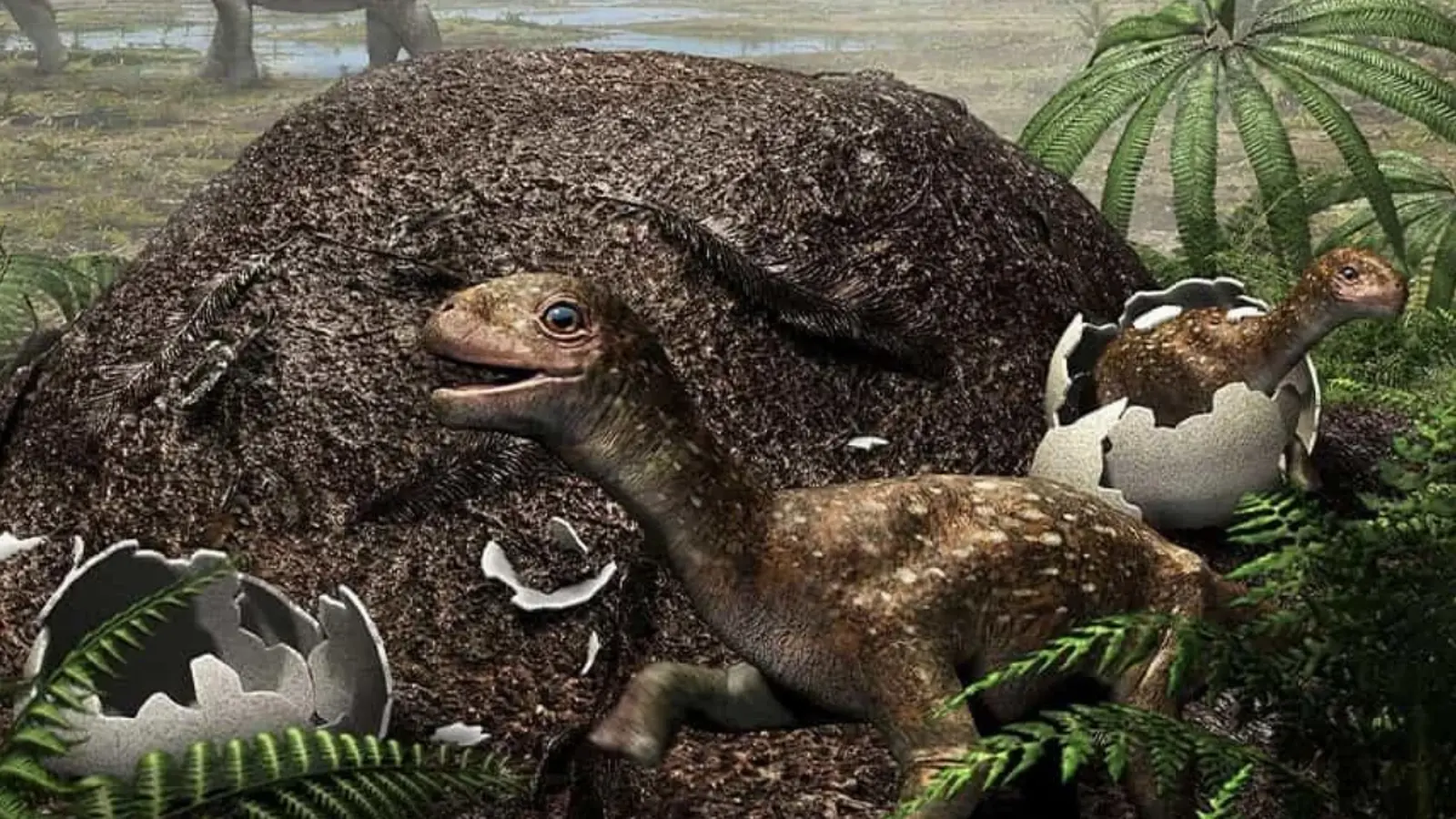
Picture a heap of steaming vegetation on a windswept plain, heat rising from rot and microbes rather than from sun-warmed sand. That unlikely image may describe how giant sauropods kept their eggs warm tens of millions of years ago.
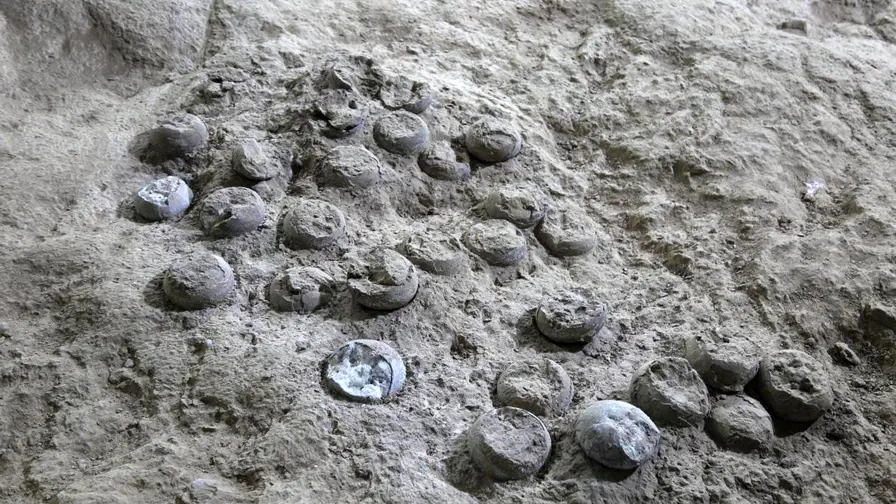
More than 250 fragments of massive eggshells, recovered from the Upper Cretaceous (Maastrichtian) Chorrillo Formation at the tip of Patagonia, have rewritten assumptions about where non-avian dinosaurs could nest. The team led by Kohei Tanaka of the University of Tsukuba reports these fossils represent the most southerly dinosaur eggs ever documented, laid at roughly 55–60° south paleolatitude — a place that, in climatic terms, would be comparable to modern-day New York rather than the tropics.
The eggs, classified as Fusioolithus and about the size of a soccer ball, almost certainly belong to titanosaurs — the last great lineage of long-necked sauropods. Finding such remains so close to the South Pole is rare. Even rarer is the hint in the microstructure of the shells: exceptionally large pores.
Why does pore size matter? Because it speaks to how the eggs were incubated. Large pores let in oxygen more freely, which is essential when an egg is buried and relies on microbial respiration within surrounding material. Smaller pores are typical of exposed eggs where moisture loss is the bigger danger. Tanaka and colleagues link the porous shells to fully buried, mound-style nests — essentially dinosaur compost heaps — rather than nests warmed only by sunlight or geothermal vents.
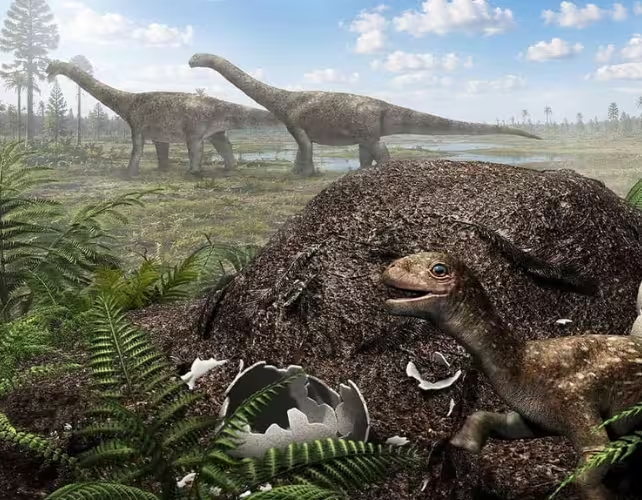
There is a living precedent. Saltwater crocodiles and brushturkeys deliberately pile decaying plant matter over their eggs; as that material ferments it generates substantial heat, sometimes reaching temperatures more commonly associated with active incubating adults. Could titanosaurs have used the same trick? The team thinks so. With short winter days and lower insolation at high latitudes, solar warming alone seems unlikely to have supplied enough energy, and the region lacks signs of geothermal assistance. Microbial decay inside a shallow mound would close that energy gap.
“The nest would be one big omelette,” paleontologist Darla Zelenitsky, a coauthor on the study, told CBC — a wry but apt image for buried clutches steaming away beneath dead foliage. The pattern matches earlier work by Tanaka linking high eggshell porosity to covered nests, and it helps explain how giant herbivores persisted in cooler, seasonal environments at the close of the Cretaceous.
The discovery does more than push a geographic boundary. It reframes the behavioral flexibility of titanosaurs, showing they could engineer thermal microenvironments with biological and ecological know-how rather than mere brute size. The Chorrillo eggs reveal that titanosaurs nested farther south than previously suspected and that compost-style incubation was likely their strategy for beating the cold.
Published in Royal Society Open Science, the paper invites a fresh question: if large dinosaurs were tucking their eggs into steaming mounds at the edge of the ancient world, what other adaptive surprises lie hidden in the fossil record beneath Patagonia’s plains?

Leave a Comment
Comments
No comments yet. Be the first.