
3 Minutes
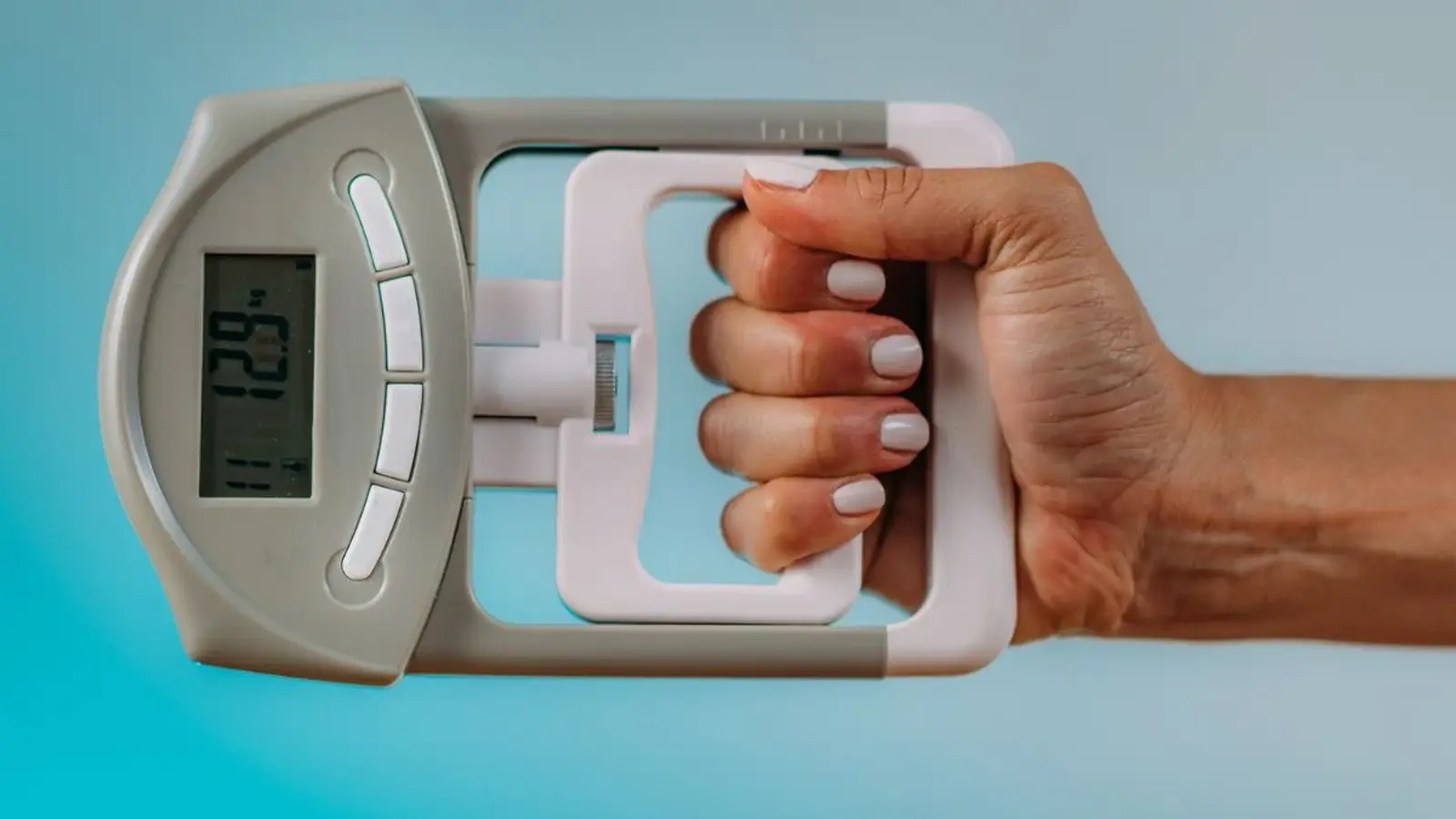
Picture two quick checks at a clinic: a soft tape measure across the belly and a firm squeeze on a hand dynamometer. Simple gestures. Big implications.
Researchers in China followed 5,674 adults in the United States for nearly seven years and recorded 373 deaths during that time. They paired a measure of abdominal girth — the sagittal abdominal diameter (SAD), essentially the front-to-back thickness of the midsection — with grip strength scaled to body size. The result was striking.
People with both excess abdominal diameter and low relative grip strength faced about a 97 percent higher risk of death than those without those traits.
Neither metric alone told the whole story. SAD by itself did not show a statistically significant link to mortality in this cohort. Low relative grip strength, however, did: the weakest participants for their body size had roughly a 60 percent higher risk of dying during the study period. Relative grip strength requires a simple calculation that factors in body mass, so it flags weakness that absolute numbers can miss.
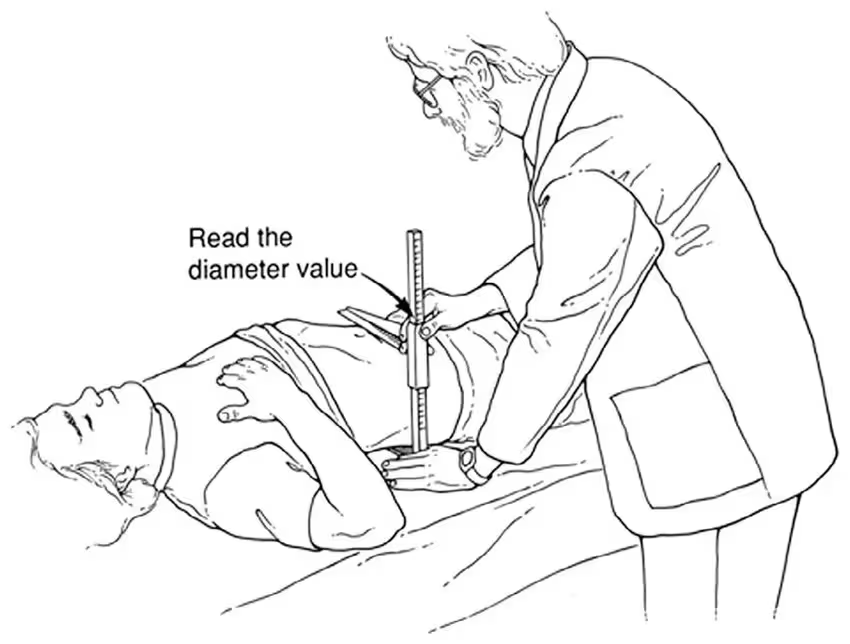
Measurement of the sagittal abdominal diameter (SAD).
The team adjusted for age, socioeconomic status, lifestyle habits and existing health conditions, and the combined signal — excess abdominal thickness plus weak relative grip — remained robust. The authors argue that SAD may better capture harmful visceral fat, while relative grip strength exposes functional weakness in people who carry more mass.
There’s a name for this pairing: dynapenic obesity. It’s not new. A meta-analysis using waist circumference to define excess fat previously reported a roughly 73 percent higher mortality for people with dynapenic obesity, though studies have varied in how they measure strength and adiposity. Still, the current finding appears somewhat stronger than pooled estimates that rely on BMI, waist circumference or raw grip strength alone.
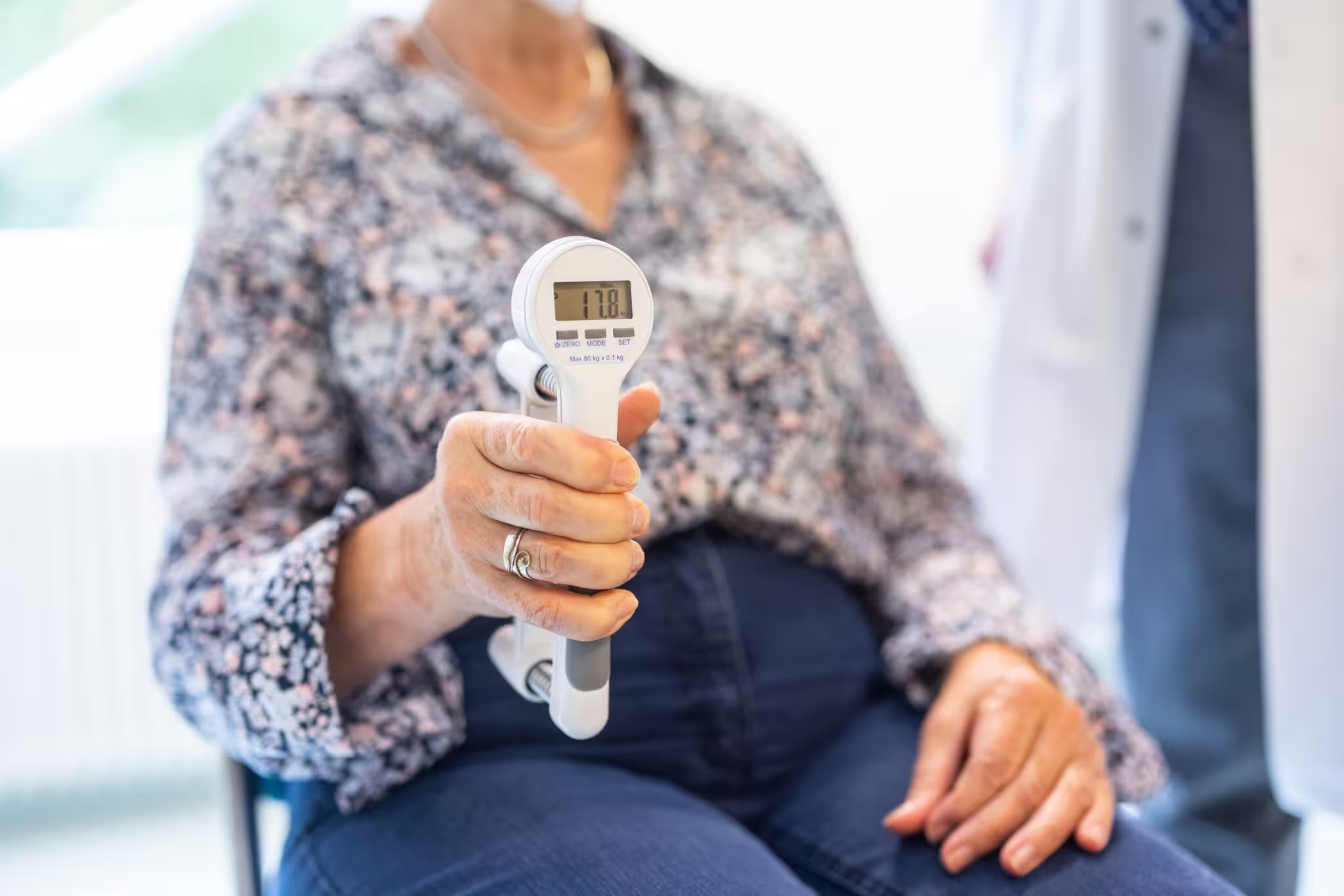
Using a hand dynamometer for grip strength test in clinic.
Experts caution against treating any single number as destiny. University of Rhode Island kinesiologist Bryan Blissmer notes that BMI remains a useful tool but should be read alongside waist measures, weight trajectories, muscular strength and functional ability. His recent work even found that an overweight BMI was sometimes linked with lower mortality, underscoring how context matters — especially for older adults, where preserving muscle, mobility and nutrition can be decisive.
From a clinical perspective, both measurements are low-cost and easy to perform: a sagittal diameter assessment and a handgrip test can be done in minutes. But before these checks become routine, larger and longer studies will need to confirm who benefits most from adding them to standard risk profiling.
Numbers help, but perhaps what matters most is how those numbers reflect how we carry ourselves — and whether we keep the strength to keep moving.


Leave a Comment
Comments
No comments yet. Be the first.