
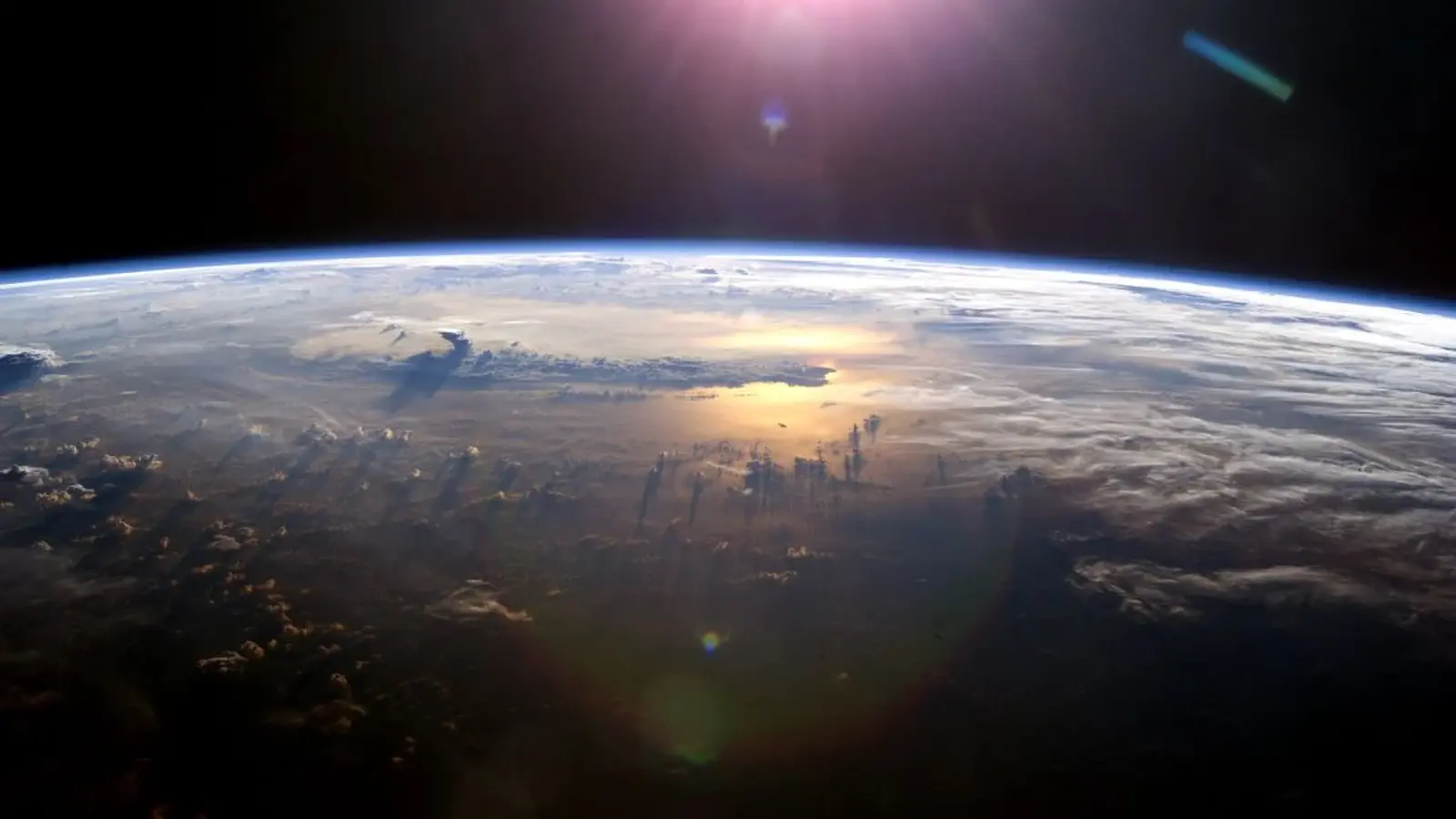
Imagine the planet breathing — not with lungs, but with slow, patient shifts of rock and water that nudge its outline imperceptibly over decades. The image of Earth as a perfect globe is comforting. It's also wrong.
Spin the planet and centrifugal force makes it bulge at the equator and flatten at the poles. That familiar oblate shape is a steady feature of planetary physics. But new work from geologist Christopher Kotsakis at Aristotle University of Thessaloniki shows that this shape is not fixed; it's changing, and in a way that looks contradictory at first glance.
Kotsakis analyzed two decades of high-precision ground measurements from the global GNSS network — the constellation of surveying stations that can detect millimetre-scale vertical motion. His dataset covers 1997 to 2015 and reveals an accelerating pattern: polar regions are rising faster, while areas near the equator are subsiding more. Between 1997 and 2000, polar uplift ran at roughly 0.5 millimetres per year. By 2015 that rate had about doubled to 1 millimetre per year.
Short sentences. Big meaning.
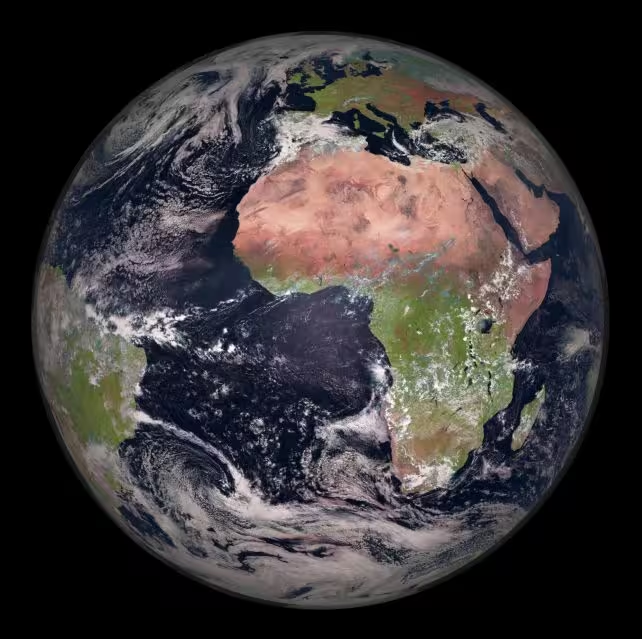
Earth imaged from space by the European Space Agency's Meteosat.
Why does this matter? Because when the poles lift and the equator sinks, the rocky shell of the planet becomes slightly less flattened — closer to a sphere in terms of its solid surface. But the planet's gravity field, known as the geoid, is telling a different story: satellite gravity measurements over recent decades show the geoid becoming more flattened, not rounder.
Two incompatible-looking trends. Two compatible processes.
The reconciliation lies in mass redistribution. Ice sheets in Greenland and Antarctica have been losing mass at accelerating rates. When enormous ice loads melt, the crust beneath them rebounds in a process called glacial isostatic adjustment. The solid Earth rises. Simple. But meltwater doesn't vanish. It flows into the oceans and tends to pile up at lower latitudes. That transferred mass increases gravity at those latitudes and depresses the seafloor, changing the geoid.
So the solid surface and the gravity field respond differently to the same redistribution of mass. The land beneath the poles springs back, reducing the physical flattening of Earth's crust. Meanwhile, the relocated water amplifies mass toward the equator, making the geoid more oblate — a gravitational flattening that satellites can detect.
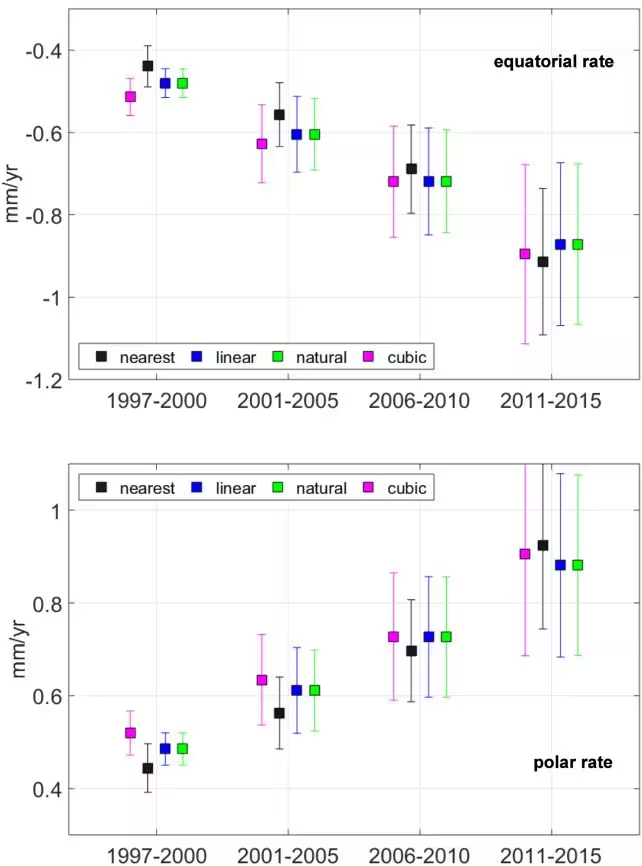
GNSS measurements show increasing subsidence around Earth's equator (top) and increasing uplift towards the poles (bottom) between 1997 and 2015.
Kotsakis's paper, published in the Journal of Geophysical Research: Solid Earth, underscores how important it is to look at Earth through multiple observational lenses. GNSS stations read the surface motions: tiny vertical movements of rock and sediment. Gravity satellites read mass itself: how weight shifts across the globe. Neither dataset alone gives the full picture.
This discovery also reframes how we think about ice loss and sea-level rise. The consequences of melting reach beyond rising coastlines; they subtly reconfigure the planet's figure, its gravity, and the distribution of stress in the crust. Over centuries, those changes will feed back into tectonics, ocean circulation, and even how we define mean sea level.
The takeaway is simple and a little unsettling: our planet's silhouette is not static. It is being sculpted by melting ice, migrating oceans, and the slow elastic rebound of rock. Measuring these shifts requires patience, precision, and the willingness to read conflicting signals together. As the ice continues to melt, Earth will keep changing its shape — quietly, irresistibly, and remarkably human in its stubborn resistance to staying the same.

Leave a Comment
Comments
No comments yet. Be the first.